Human flea
Pulex irritans
- Size
- Generally less than 4 mm long
- Color
- Brownish to reddish brown
- Habitat
- Carpets, pet bedding, and animal housing
- Diet
- Blood of mammals and birds
- Life cycle
- Complete metamorphosis from egg to adult
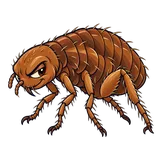
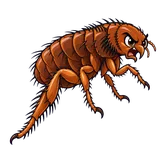
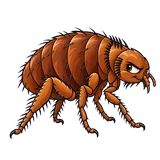
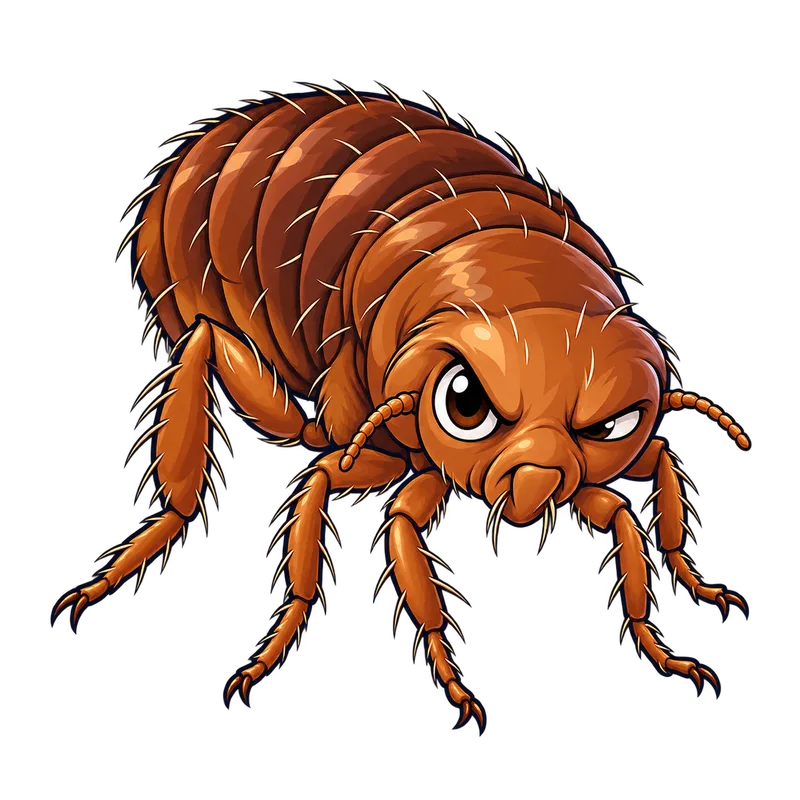
Fleas belong to the order Siphonaptera, a group of wingless insects built specifically for slipping through dense hair, feathers, or clothing. If you manage to catch one, you will notice it is flattened from side to side, much like a coin balanced on its edge. That side-to-side compression is what lets them move through an animal's fur without getting stuck. They have six legs, and the hind pair is noticeably enlarged and thickened at the joints, acting like loaded springboards that can launch the insect almost 30 cm in a single bound.
Identity
People often confuse fleas with bed bugs, but the two are shaped entirely differently. Bed bugs are flattened from top to bottom, resembling an apple seed, and they can only crawl. Fleas are narrow, tall, and jump. You cannot identify a flea species or any other biter from a skin mark or a photograph. Human immune systems react wildly differently to the same stimulus, meaning one person might develop raised wheals within 30 minutes while another shows no reaction at all. To know what you are looking at, you need a physical specimen examined under magnification. Technical keys separate cat fleas from other species by looking for tiny combs of spines on the head and thorax, though specific data on the human flea itself requires specialist confirmation since primary sources note a gap in local records for that exact variant.
Adult cat fleas measure generally less than 4 mm long and display a brownish color, while stickfast fleas are reddish brown with a sharply angled, squarish head. Unlike free-roaming cat fleas, stickfast fleas embed their mouthparts and remain stationary on host skin for up to 19 days. Across the entire order Siphonaptera, species are completely wingless. Identifying features include the laterally flattened body and the enlarged leaping legs. For the human flea specifically, data on precise measurements and diagnostic ctenidia combs remains unstated in the available records, meaning physical specimens must be submitted to a professional laboratory for verification.
Habitat & behaviour
Adult fleas survive as obligate parasites, meaning a steady blood meal is their only ticket to survival and reproduction. You will rarely catch one wandering about on a bare kitchen tile. Instead, they cluster tightly where host animals spend their time sleeping or resting. Indoors, you will find them tucked away in deep carpet fibers, rug underlays, furniture cushions, and floorboard cracks. Outdoors, stickfast fleas take to the sandy, unpaved dirt floors of animal housing and shaded soil.
You might wonder how a vacant cabin can suddenly swarm your ankles with biting insects the moment you walk through the door after months of emptiness. That happens because fully developed adult fleas can sit dormant inside their silk cocoons for up to a year. They wake up nearly instantaneously the second they sense specific cues like radiant body heat, shifting light intensity, or the physical vibration of footsteps on the floor.
Visual variations
No flea ever grows wings at any point in its life. Adults are small, oval, and brownish, fitted out with piercing-sucking mouthparts. Both males and females take blood meals, though female cat fleas achieve much higher fertility when feeding on their preferred hosts instead of settling for secondary options. Stickfast fleas take a more permanent approach by embedding their mouthparts firmly into the skin of hosts like poultry and staying put.
The immature stages look nothing like the adults. Flea eggs are tiny, oval, and pale. Because females drop non-adherent eggs right on the host or in their bedding, those eggs easily roll off and collect in carpet fibers or soil. Once the eggs hatch, they become slender, legless larvae that shy away from light and feed on organic detritus and dried, regurgitated blood droppings left behind by the adults. After the larval phase, the insect spins a silk cocoon. The outside of that cocoon is sticky, so it quickly gathers dust and dirt until the pupa becomes practically invisible whether it rests in a wool rug or garden soil.
Why it matters
Flea bites on humans tend to concentrate on the lower legs, usually between the ankle and the knee, showing up as small red marks with localized swelling and fierce itching. Beyond the misery of bites, certain species carry real health risks. Cat fleas can harbor the larval stage of the dog and cat tapeworm, which can infect young children who play with pets and accidentally swallow an infected flea. Meanwhile, rodent fleas transmit murine typhus when their feces or crushed bodies find their way into broken skin during scratching.
If you are dealing with bites or skin swelling, check in with a healthcare professional for guidance. Any treatment for companion animals must go through a licensed veterinarian, especially since certain formulations designed for dogs can prove severely toxic to cats or birds. When an infestation involves heavy structural areas or outdoor harborages, a professional pest manager can step in to evaluate the situation.