Striped bark scorpion
Centruroides vittatus
- Size
- Typically 2½ inches
- Color
- Yellow-brown with dark head triangle and stripes
- Habitat
- Woodpiles, debris, and residential structures
- Diet
- Small arthropods
- Life cycle
- Non-insect arachnid development
The striped bark scorpion, scientifically known as Centruroides vittatus and also referred to as the plains scorpion, is the most common scorpion you are likely to run into across a large stretch of the United States, with a distribution that extends into Mexico. You will find them thriving in states like Arkansas, Colorado, Illinois, Kansas, Louisiana, Mississippi, Missouri, Nebraska, New Mexico, Oklahoma, and Tennessee. They are animals built for slipping through narrow gaps, favoring dark hideouts where they can stay out of sight during the daylight hours.
Identity
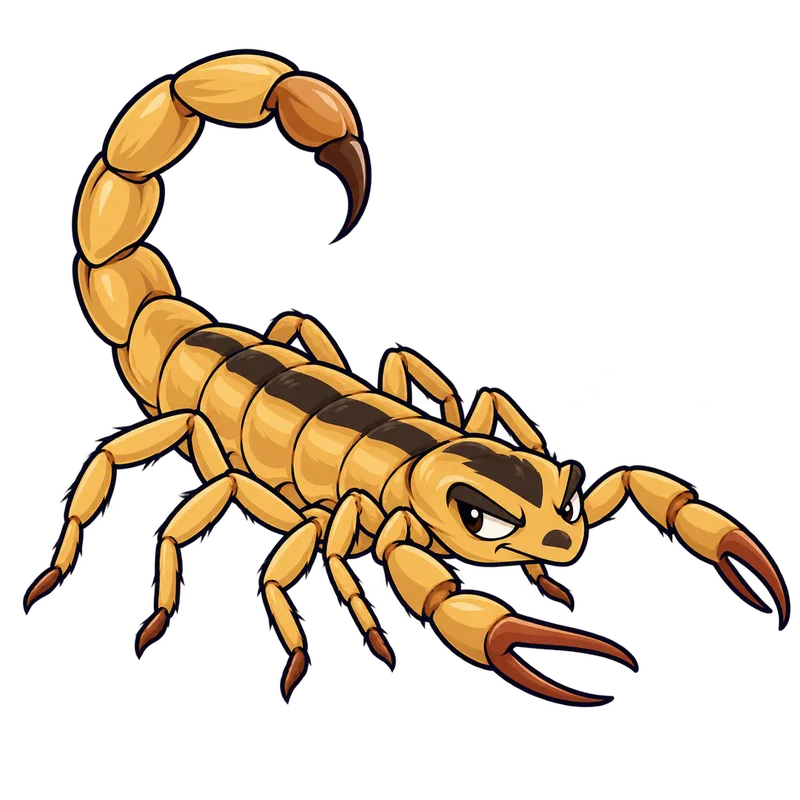
You do not need a microscope to figure out what you are looking at if you spot one of these resting on a basement wall or under an overturned flowerpot in the garden. An adult typically measures 2½ inches long. The body has a flattened, elongated oval shape supported by eight walking legs, with a pair of large, grasping pincers upfront and a long, curling tail that ends in a curved stinger.
The color is generally yellow-brown, but the real giveaway is the pattern painted on top. Look closely at the head, and you will see a distinct dark triangle. Follow your eye down the back, and you will find two parallel dark longitudinal stripes running the length of the abdomen. These markings are visible to the naked eye on any intact adult specimen, making field identification straightforward once you know where to look.
Habitat & behaviour
These scorpions are strictly nocturnal, meaning they spend the bright hours tucked away in natural crevices, under loose bark on fallen trees, or beneath heaps of firewood, rocks, and yard debris. When summer nights turn warm, their activity peaks. They are reclusive by nature and prefer to scurry away when disturbed, but they will react defensively by rearing their tail if you accidentally press a hand against them while moving lumber or step on one.
Houses offer an appealing extension of their natural habitat. If a foundation has small gaps, or if boxes and clutter sit undisturbed in a dark garage or crawlspace, these creatures will readily move indoors. They use vegetation and brush piles strictly for environmental cover, but the presence of structural gaps and dark voids in and around a house can make a crawlspace or a messy garage feel like home.
Visual variations
Like all arachnids, these scorpions skip wings entirely at every stage of their lives. You will never find a flying scorpion, no matter how large or intimidating the specimen looks on your porch wall.
As for differences between males and females, or the specific details of how juveniles change as they grow, available records leave those traits unstated. We know they do not form social colonies or castes with workers and soldiers, living instead as solitary creatures. Distinguishing sex by casual visual inspection remains a job for a specialist rather than a homeowner with a flashlight.
Why it matters
Finding a striped bark scorpion in your house usually means there are minor entry points around your foundation or plenty of dark, cluttered storage areas that need clearing out. While they are venomous, their venom has relatively low toxicity compared to their more dangerous desert relatives. A typical sting produces a sharp stinging pain and a localized red welt that usually subsides within 15 to 20 minutes, though sensitive individuals can experience allergic reactions ranging from face or throat itching to severe systemic responses including anaphylactic shock, alongside a standard tetanus exposure risk.
The most common mix-up involves confusing this species with the Arizona bark scorpion, which lives in the desert Southwest and packs a severely neurotoxic venom causing abnormal eye movements, muscle twitching, and respiratory distress that requires hospital antivenom known as Anascorp. The striped bark scorpion never demands such extreme medical measures under normal circumstances, causing only local discomfort unless an allergy is triggered. If a sting occurs, cleaning the site, applying a cold compress, checking your tetanus booster history if you have not had a shot in the last 5 years, and calling the Poison Control helpline at 1-800-222-1222 covers the sensible first steps, while immediate emergency care is required for severe allergic signs. Never try to diagnose a medical issue or identify an unknown bug from a skin lesion or a blurry photograph, as bacterial infections and other skin conditions are frequently mistaken for stings.