
Scorpions
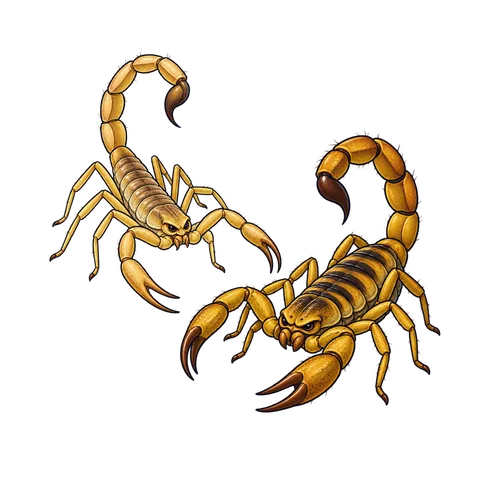
Picture stepping out to the garage in your bare feet late at night, shining a blacklight along the drywall, and watching a pale, eight-legged silhouette suddenly light up in a glowing neon green. What pulls these creatures into a single group is not a dry laboratory list, but a very specific physical blueprint you can spot with your own eyes: a fused head and chest, four pairs of walking legs, a pair of forward-facing grasping claws, and that signature segmented tail ending in a curved stinger. You will also find they all move with a quick, skittering gait and share a nocturnal habit of hugging walls and baseboards rather than spinning webs.
You can easily tell them apart from their crawling neighbors, such as spiders or daddy-long-legs, because none of those other visitors pack both front pincers and a tail stinger in one package. People often mistake camel spiders or large harvestmen for them when finding something scuttling across the basement floor, but a quick glance at the rear end clears up the confusion instantly. If it lacks a tail extension and a visible stinger, you are looking at something else entirely, no matter how many legs it happens to have.
Explore scorpions
Questions about scorpions
Research sources
This page was researched with publications from these institutions, then written and reviewed by The Pest Guide Team:
- University of Illinois
- U.S. Centers for Disease Control and Prevention (CDC)
- Rutgers New Jersey Agricultural Experiment Station
- U.S. National Library of Medicine (NIH)
- Washington State Department of Health