
Are striped bark scorpions poisonous?
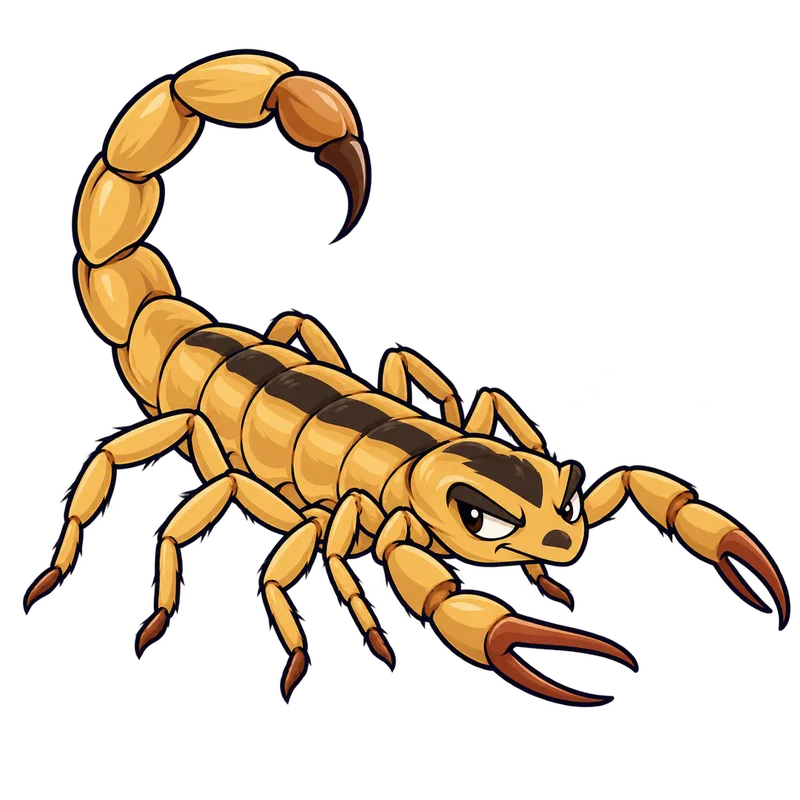
Striped bark scorpions are venomous rather than poisonous, meaning they inject toxins through a tail stinger rather than causing illness by touch or ingestion. The venom has relatively low toxicity for humans, causing pain and swelling that fades within fifteen to twenty minutes.
What is actually going on
Picture yourself walking into the garage on a warm summer evening, reaching down to grab the garden hose, and feeling a sudden, sharp prick on your thumb like a hot needle. You pull your hand back fast, heart pounding, and spot a slender brownish scorpion scurrying back under a stack of old flower pots. The immediate question running through your head is whether that creature just pumped a dangerous poison into your bloodstream.
To set the record straight right away, striped bark scorpions are venomous rather than poisonous. It is a distinction that matters. A poisonous animal makes you sick if you eat it or touch its skin, whereas a venomous creature has to inject its toxin directly into you using specialized equipment. In this case, that means a sharp stinger at the tip of its tail.
When a striped bark scorpion stings you, it is delivering a cocktail of proteins through that tail appendage, but the venom itself has relatively low toxicity for humans. For most people, the experience involves an intense, localized stinging pain and a bit of swelling that peaks and then fades away within fifteen to twenty minutes. You are not going to deal with systemic nervous system failure or medical emergencies from a typical striped bark scorpion encounter unless you have a rare allergic reaction.
Public confusion usually stems from lumping every bark scorpion into one terrifying category. While the striped bark scorpion found across the Central, Midwestern, and Southern states is a mild-mannered nuisance, its cousin out in the Sonoran Desert, the Arizona bark scorpion, packs a punch that genuinely warrants emergency medical care. Mixing the two up leads to unnecessary panic.
How to tell for sure
If you manage to spot the culprit before it disappears into a dark crack, identifying a striped bark scorpion usually comes down to a few distinct visual cues you can easily check without specialized laboratory gear. Adults usually measure about two and a half inches long from head to tail, with a pale yellow or light yellowish-brown body.
Look closely at the top of its head, and you will usually see a dark triangular marking. Right behind that, running down the back toward the tail, are two dark parallel stripes. Those stripes are the giveaway that separates this species from the uniform tan or straw-colored Arizona bark scorpion, which lacks any stripes on its back and features noticeably longer, thinner pincers.
Behavior also gives them away. These scorpions are nocturnal and reclusive by nature. Outdoors, they hide under loose tree bark, rock piles, and fallen logs. Inside a house, they usually turn up in damp or dark zones like basements, crawlspaces, and around stored cardboard boxes.
One trick for finding them after dark involves a blacklight flashlight emitting ultraviolet light. Because of the special makeup of their outer shell, scorpions usually glow with a bright, fluorescent neon-green color under ultraviolet rays, which makes perimeter sweeps around a home remarkably straightforward.
What usually comes next
When someone cops a sting from a striped bark scorpion, the main decision comes down to basic first aid versus a panic-driven trip to the emergency room, and for the vast majority of encounters, calm first aid is all you really need.
Wash the sting site thoroughly with plain soap and water to clear away any surface bacteria. Next, grab an ice pack or a cold compress wrapped in a thin towel and hold it against the skin for ten to fifteen minutes to damp down the localized swelling and sharp ache. Elevating the arm or leg if the sting happened on a limb helps keep the throbbing down, and over-the-counter pain relievers can usually handle whatever discomfort lingers.
One detail people frequently overlook is their tetanus vaccination history. Because a scorpion sting breaks the skin barrier just like a rusty nail, you should check when you had your last tetanus booster. If it has been more than five years, a quick call to your doctor or a trip to a local clinic to update the shot is a smart precaution.
You do not need to hunt down antivenom. The specialized intravenous antivenom used for severe scorpion stings, known as Anascorp, is an expensive hospital drug reserved exclusively for extreme, life-threatening envenomations involving cranial nerve and muscle spasms, which simply do not happen with the striped bark scorpion.
When to get help
While striped bark scorpion stings are generally mild, certain situations demand immediate professional medical intervention rather than a wait-and-see approach.
If a sting happens to a young child under five years old, an elderly person, or someone with pre-existing heart or respiratory conditions, contact a medical professional or head to the nearest emergency department right away. Small bodies process venoms differently, and vulnerable individuals face higher risks of complications.
You also need to call for emergency services if the victim shows signs of a severe systemic allergic reaction, such as widespread hives, swelling of the face or throat, wheezing, or difficulty breathing. Even though venom toxicity is low, any insect or arachnid sting can trigger an unexpected anaphylactic shock in a sensitive person.
For property management, if you are seeing scorpions inside your living spaces on a regular basis, bringing in a licensed pest control professional makes sense. They can evaluate structural gaps, seal utility penetrations, and apply perimeter treatments safely within local regulatory guidelines, keeping these reclusive arachnids outside where they belong.