
How big do bark scorpions get?
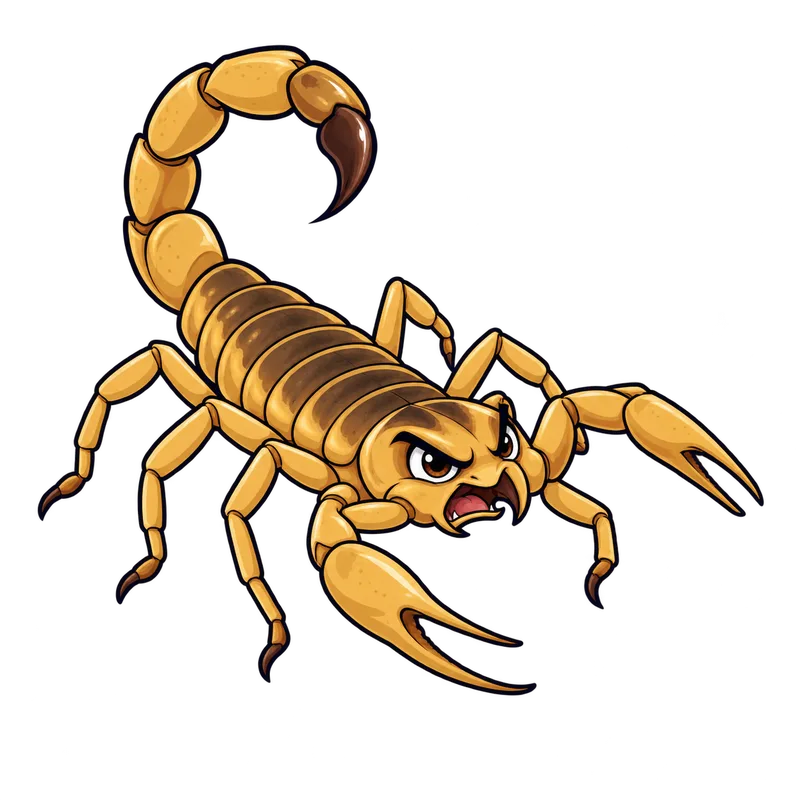
Striped bark scorpions reach about 2.5 inches in total adult body length, while Arizona bark scorpions are smaller and remarkably slender. The exact size depends on which species you are looking at in your area.
What is actually going on
Picture walking into the kitchen late at night to grab a glass of water, switching on the overhead light, and spotting something small and pale darting across the baseboard toward a gap near the pantry. If you live in parts of the American Southwest, that quick visitor might well be a bark scorpion. You naturally wonder how much of a handful these creatures actually are once they reach their full growth, especially when you are trying to gauge whether the one scuttling across your floor is a juvenile or a fully grown adult ready to cause trouble.
The short answer depends entirely on which kind of bark scorpion you are looking at, because North America hosts a couple of different common species with very different profiles. Striped bark scorpions, which are the most widely distributed species in the United States, typically reach about 2.5 inches in total adult body length. To picture that, imagine roughly the top two joints of an adult thumb or the short edge of a standard credit card. On the other hand, the infamous Arizona bark scorpion, which holds the title of the most venomous scorpion species on the continent, is notoriously described in technical and medical literature as small and slender. You can safely picture them as remarkably thin, often compared in thickness to a paperclip or a toothpick, rather than as bulky desert dwellers.
Why such a size difference matters comes down to how these animals fit into your living space. Bark scorpions have remarkably flat, elongated bodies that let them squeeze through structural gaps and tight woodpile crevices that would stop bulkier insects and spiders dead in their tracks. When they move through a room or inside a wall void, they rely on a behavioral trait that means they prefer to travel while keeping continuous physical contact with a vertical surface, much like a person feeling their way down a pitch-black hallway with one hand dragging along the wallpaper. That habit keeps them hugging your baseboards, door frames, and interior perimeters rather than crawling out into the open center of a room.
How to tell for sure
Telling a striped bark scorpion apart from its more dangerous southwestern cousin usually comes down to geography and markings, though you should always remember that scorpions sting with the stinger at the tip of their curling tail, rather than biting with mouthpart fangs. Striped bark scorpions usually display a yellowish-brown color with two dark, lengthwise stripes running down their back and a distinct dark triangular patch right on top of their head. They also possess notably slender pincers, which set them apart from the heavy, thick claws seen on large burrowing desert scorpions that prefer digging in open sand.
The Arizona bark scorpion is similarly slender and sports a pale yellow or light brown hue, but it usually lacks those prominent dorsal stripes. Because these animals are nocturnal and hide away during daylight hours, daylight sightings are often accidental. If you want to confirm whether you have an active population hiding in your garage, crawlspace, or around your masonry at night, you can usually spot them easily using an ultraviolet blacklight. Their outer skeletons contain natural compounds that cause them to glow bright neon green under UV illumination, turning a dark yard search into a glowing treasure hunt.
What usually comes next
Finding a stray scorpion indoors usually forces a choice between ignoring it as an isolated incident or tightening up your home exterior to keep more from wandering inside. Because these creatures thrive around moisture, dense brush, and woodpiles, the most practical step you can take usually involves changing the immediate landscape right outside your foundation. Clear away old leaf litter, stack firewood well away from the house walls, and make sure your exterior doors are fitted with tight weatherstripping and door sweeps that make flush contact with the threshold.
If you decide to remove a visitor yourself rather than panicking, you can use a safe, non-contact capture method without risking a sting. Simply place a wide-mouth glass container directly over the wandering creature, slide a stiff piece of cardboard carefully underneath the opening, invert the glass, and carry it outside to relocate it far away from your living areas. Over-the-counter pesticide sprays applied haphazardly often fail to solve the underlying entry problem because they rarely reach the deep wall voids where these flat-bodied arachnids love to rest during the heat of the day.
When to get help
Most adult bark scorpion stings result in localized pain and swelling that usually fades within twenty minutes, and basic first aid such as washing the area with soap and water, applying a cool compress, elevating the limb, and taking over-the-counter pain relievers is usually all that is needed. However, situations involving the highly neurotoxic Arizona bark scorpion require a completely different level of vigilance. You should seek immediate emergency medical care or call nine-one-one if a sting victim exhibits severe systemic red flags such as involuntary limb jerking, uncontrollable muscle spasms, roving or darting eye movements, excessive drooling, difficulty swallowing, or sudden trouble breathing.
Children under five years of age face the highest risk of severe systemic poisoning because their lower body mass concentrates the venom much faster, and any sting in a young child warrants an immediate trip to the emergency room. For non-emergency questions or guidance on how to manage a suspicious sting in your area, you can always reach out to your local poison control center. If you are seeing scorpions inside your home on a regular basis, contact a licensed professional pest control operator who can legally assess structural entry points and apply registered products in accordance with the product label directions.