Long-tailed silverfish
Ctenolepisma longicaudatum
- Size
- Up to 20 mm in length
- Color
- Dull, mottled grey or dark brown-grey
- Habitat
- Centrally heated homes, warm offices, dry attics
- Diet
- Starches, dextrin, cellulose, paper, bookbinding glue
- Life cycle
- Multi-year lifespan with numerous molts
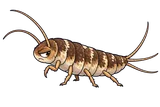
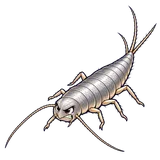
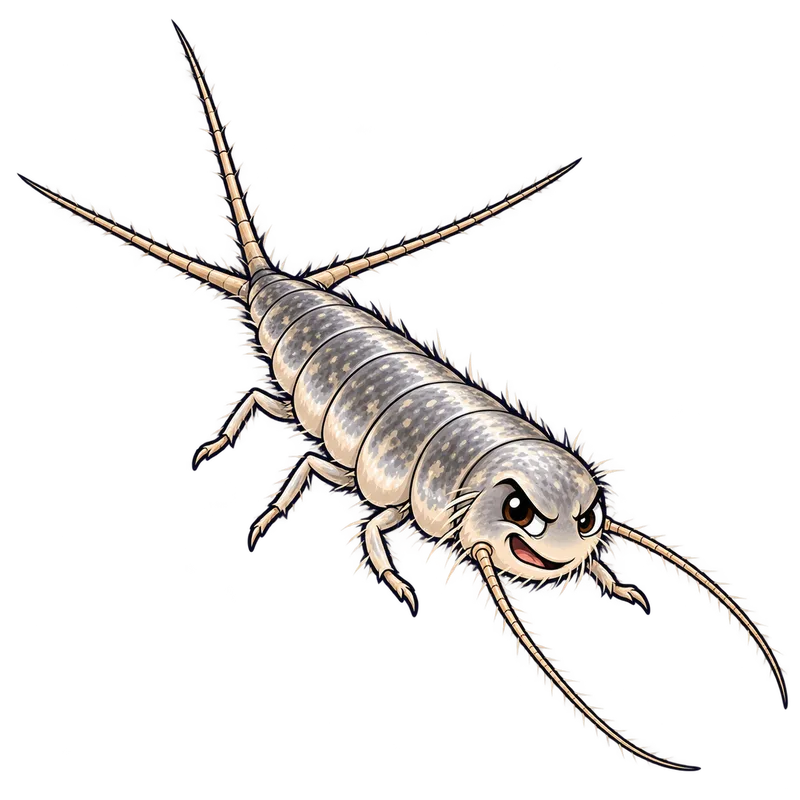
The long-tailed silverfish is a wingless insect that reaches up to 20 mm in length as an adult, making it noticeably larger than the common silverfish found in damp basements. You will spot it darting across living room floors, library shelves, or office carpets. Its coat is a dull, mottled grey or dark brown-grey, completely lacking the bright metallic shine of its smaller cousin. If you look closely or use a magnifying glass, you can see the dense clusters of bristles on its head and the flat, ribbed scales that drift off if you accidentally touch the insect. The most striking features are its appendages. Its whip-like antennae and its three tail filaments, two lateral cerci and one central median filament, equal or exceed its entire body length.
Habitat & behaviour
This creature loves central heating and dry spaces. While common silverfish demand high humidity above 60 percent to survive, the long-tailed silverfish thrives in the ambient dryness of modern centrally heated homes, warm offices, and dry attics. It is strictly nocturnal and avoids light at all costs, spending its daylight hours tucked away behind skirting boards, inside wall cavities, or around pipe penetrations. When night falls, it emerges to scavenge for food. Its diet focuses on starches, dextrin, and cellulose. It uses midgut enzymes to digest paper, bookbinding glue, wallpaper paste, and starched fabrics like cotton or linen. If you have ever wondered why old books or stored wallpaper rolls have irregular surface notches, this is the culprit at work. It can survive for long periods without food if it has access to moisture, which explains why it persists in quiet corners of a house for months.
Visual variations
Development skips any dramatic metamorphosis, going straight from a tiny egg to a nymph that looks like a miniature adult, though it stays naked until it finishes several molts. Because these insects keep growing and shedding their skin even after reaching adulthood, a single survivor might drop its cuticle dozens of times across a remarkably long lifespan. You will not find any social hierarchy here like you would with ants or termites, since every individual operates as a solitary scavenger. Adults show subtle differences that take a careful eye to spot. Females carry a long ovipositor, a specialized needle-like organ at the rear used to tuck eggs safely into tight crevices, while males miss this tool entirely. If a hungry spider or a stray shoe clip off an antenna or a tail filament, the creature simply regrows the missing piece over four weeks of future molts.
Why it matters
Spotted running across your hallway floor, this pest is an unsettling guest, but it is certainly not a structural emergency. These insects only scrape surfaces and graze lightly on starches, meaning they ruin the look of treasured photo albums, old bookbindings, and decorative wallpaper rather than eating the house itself. They lack the heavy mouthparts needed to chew through framing timber, drywall, rigid plastics, or modern synthetic fabrics, and they never bite, sting, or carry diseases. The real trouble starts when their shed skins and tiny droppings build up in hidden spaces, releasing airborne proteins that can trigger allergies or asthma in sensitive household members. If you store valuable paper collections or historical archives, finding a few of these runners means it is time to check the area and perhaps call in a professional to place targeted gel baits where the colony hides out.