
How do you get rid of silverfish in a bathroom?
Getting rid of silverfish in a bathroom is an exercise in moisture management rather than a chemical war. You must drive the relative humidity down below 50 percent and keep it there, because these insects need high humidity to hatch their eggs and survive. Run your exhaust fan for at least 20 to 30 minutes after every shower.
What is actually going on
You pad into the bathroom at two in the morning for a glass of water, flip on the light, and spot a shiny, metallic little shape darting across the porcelain bottom of the tub. It moves with a quick, wriggling motion that looks less like an insect and more like a microscopic fish out of water. You might be tempted to reach for a can of bug spray or pour bleach down the drain, but neither approach solves the actual problem. That creature did not crawl up from the municipal sewer lines. It is simply a nocturnal wanderer that fell into a slippery basin and cannot get back out.
Getting rid of silverfish in a bathroom is almost entirely an exercise in moisture management rather than a chemical war. These primitive insects need high relative humidity, usually between 75% and 95%, to hatch their eggs and keep their bodies from drying out. When you find them in the bathroom, they are telling you that your space is holding onto too much water. The room provides everything they want: microscopic molds growing on damp tile grout, steam from long hot showers, and dark wall voids to hide in during the day.
To get rid of them for good, you have to make the bathroom inhospitable to their biology. That starts by driving the relative humidity down below 50% and keeping it there. You also need to seal up the physical gaps where they travel and remove the bits of organic detritus they feed on, such as stray hairs, paper products, and skin scales. Treating the symptoms with random sprays will not stop a population if the room remains a damp sanctuary.
How to tell for sure
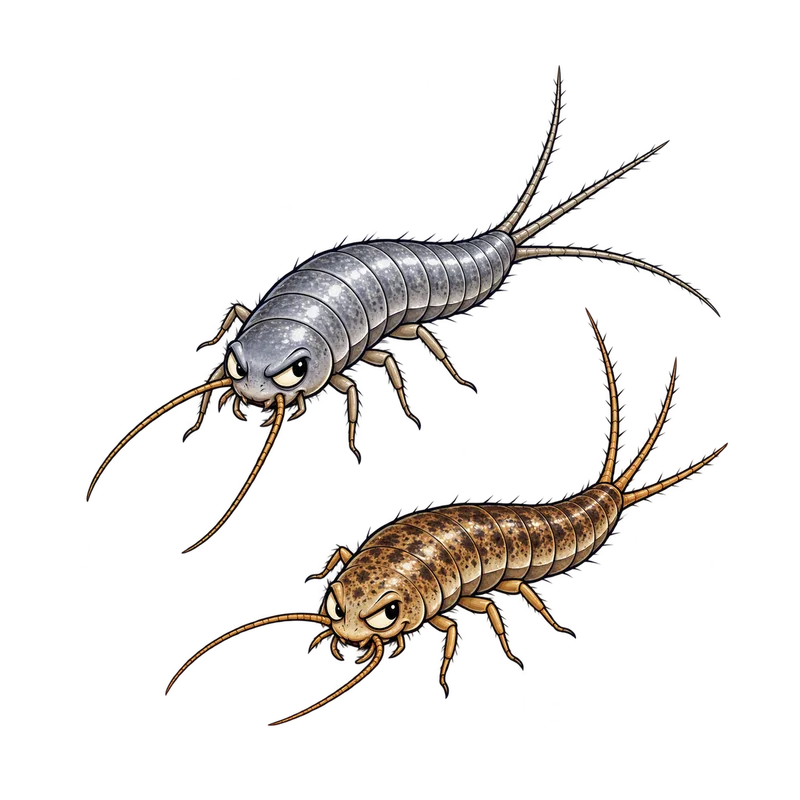
The classic silverfish is usually about 7 to 12 millimeters long, shaped like a teardrop, and covered in shimmering, metallic grey scales that leave a powdery residue on your fingers if you touch one. They have two long antennae on their head and three distinct tail-like appendages at the rear, which earned them the old nickname of bristletails. They do not have wings, and they run in that unmistakable, darting, fish-like motion across baseboards and floors.
You might also run into variations depending on your region and the specific microclimate of the room. The grey silverfish, which can grow slightly larger up to 20 millimeters, is darker and tends to tolerate drier conditions, meaning it can sometimes wander out into carpeted hallways and living rooms. If you find a pest near a boiler closet, an uninsulated hot water pipe, or a radiant floor heating channel, it is usually a firebrat, which prefers much hotter temperatures than the standard bathroom silverfish.
People often confuse silverfish with booklice or house centipedes, but the clues are distinct. Silverfish leave behind a very specific type of damage. They possess chewing mouthparts that produce shallow, etched surfaces and notched edges on paper, wallpaper paste, bookbindings, and starched fabrics. They cannot chew through solid wood, plastic, or structural building materials, so you do not need to worry about your wall studs or floorboards collapsing. Furthermore, they are harmless to humans, as they do not bite, carry diseases, or nest in furniture.
What usually comes next
Once you know what you are dealing with, you have to decide whether to focus your energy on mechanical fixes or targeted treatments, but the most reliable path is to fix the humidity first. If your bathroom stays steamy long after you finish your shower, no amount of dusting or baiting will keep new silverfish from moving in to take the place of the ones you remove.
The most practical decision you can make today is to run your bathroom exhaust fan for at least 20 to 30 minutes after every shower or bath, or install a timer switch that forces it to stay on. If your bathroom lacks a window or a strong fan, bringing in a small portable dehumidifier or tracking the room with a cheap digital hygrometer changes the equation entirely. When the air drops below 50% relative humidity, silverfish eggs fail to hatch, nymphs desiccate, and the adult population collapses on its own within a few weeks.
If you want to speed up the process while you get the moisture under control, you can apply inorganic desiccant dusts like diatomaceous earth or amorphous silica gel into dry cracks and crevices behind baseboards. Just remember that these dusts only work when they stay completely dry. If you puff diatomaceous earth into a wet shower corner or a damp floor joint, it absorbs the moisture, clumps up, and becomes completely useless against the insects.
When to get help
There are times when a bathroom silverfish problem goes beyond what a homeowner should handle with a dehumidifier and a tube of caulk. If you have sealed the gaps, dropped the humidity, and cleaned meticulously, but silverfish keep pouring out of wall voids, false ceilings, or multi-family pipe chases week after week, you need to call a licensed pest control professional. They have the equipment to inject dusts deep into inaccessible structural cavities and apply specialized gel baits in spots you cannot reach.
You should also look at the bigger picture if anyone in your household starts experiencing unexplained respiratory trouble. Silverfish shed skins, leave behind tiny droppings, and drop microscopic body fragments that contain proteins similar to those found in dust mites and cockroaches. In people who are sensitive to allergens, these particles can trigger allergic rhinitis or asthma flare-ups. If you or a family member develop persistent coughing, sneezing, or breathing difficulties that worsen in the house, consult a board-certified allergist for proper testing rather than assuming it is just a routine household nuisance.