
What damage can silverfish cause to books and paper?
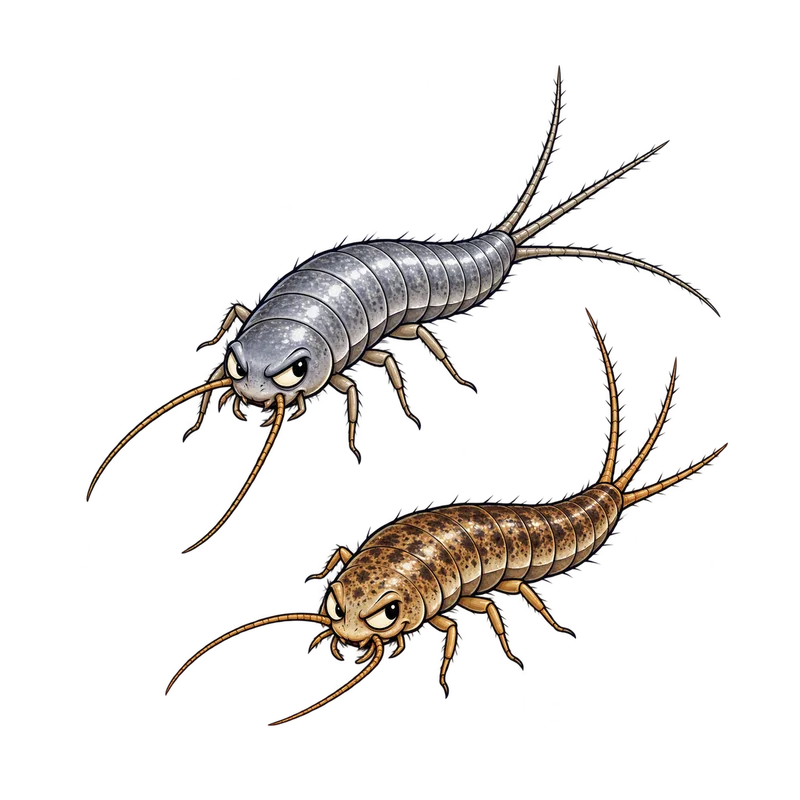
Silverfish cause slow cosmetic surface damage to books, paper documents, wallpaper paste, and starched fabrics by scraping away surface layers and eating starch-based glues. The severity of the damage depends on the age and composition of the paper, as these pests heavily prefer vintage books and starched cloth over modern printer paper.
What is actually going on
Imagine walking down into the basement on a damp Tuesday evening, pulling a cardboard box of old family photo albums off the floor, and noticing the paper looks like someone took a tiny rasp to the edges. You might wonder if mice got into the keepsakes, but there are no droppings, just a few fast, silvery-gray bugs darting away from the flashlight. If you are dealing with that kind of situation, the short answer is that silverfish cause slow, cosmetic surface damage to books, paper documents, wallpaper paste, and starched fabrics by scraping away surface layers and eating starch-based glues, but they never chew through structural wood or building framing.
People often hear about silverfish invading a library or a basement and picture them chewing massive round holes through solid books the way termites chew through a floor joist. That mental picture is entirely wrong. Silverfish do not bore or tunnel through materials because their mouthparts are built for scraping and grazing rather than biting through thick blocks. They wander across the surface like tiny livestock grazing on a lawn, using specialized enzymes called cellulase in their midgut to break down raw paper fiber while hunting for the sweet stuff, which means starches, dextrins, gelatin, and animal glues used in bookbindings and paper sizing.
This brings up a natural doubt that usually pops up at this point. If silverfish can digest cellulose directly, why do they seem to leave smooth, modern printer paper alone while tearing through vintage books and wallpaper? The difference comes down to what is on the paper. Silverfish heavily prefer starched coatings and old animal glues over pure, unrefined paper fibers. An old hardcover book bound with animal glue and starched cloth is a banquet, while a glossy modern magazine or plastic-coated digital print has almost nothing they want to eat.
How to tell for sure
Spotting the culprit usually comes down to looking closely at the damage and catching the pest in the act, since a few other household bugs leave similar head-scratchers. Silverfish usually leave behind irregular notched margins on paper, lacy surface etching, and thin transparent patches where they scraped away the top layer without eating all the way through. You will also usually see tiny yellowish-brown liquid stains, pepper-like fecal pellets, and discarded translucent exoskeletons that look like tiny ghost skins scattered near the ruined paper.
To be sure you are looking at silverfish damage rather than something else, take a close look at the physical pest itself. Common silverfish usually measure around seven to twelve millimetres long, possess a flat, carrot-shaped body covered in metallic silvery scales, and feature three long, bristle-like appendages at the rear. If you happen to live in a modern centrally heated home or archive, you might run into the larger long-tailed silverfish, which tolerates drier indoor conditions and has even longer tail filaments.
You also want to rule out common lookalikes. Booklice, which are tiny soft-bodied pests often called psocids, also hang out in damp paper collections, but they lack tail filaments entirely and feed mainly on microscopic mold rather than chewing paper surfaces. If the damage is happening near a hot water heater, bakery oven, or steam pipe, the pest is usually a firebrat, which looks mottled brown and gray rather than silver, but shares the same appetite for starches.
What usually comes next
Once you confirm that silverfish are grazing on your paper goods, the most practical decision you can make involves changing the environment rather than running out to buy a cabinet full of bug sprays. Silverfish require high relative humidity, usually between seventy-five and ninety-five percent, to reproduce and survive. When you lower the ambient humidity in a basement or storage room below fifty percent using a reliable dehumidifier, you effectively turn off their water supply, which stops egg hatching and causes the population to collapse within weeks.
Moving physical items makes just as much difference as drying out the room. Storing cardboard boxes directly on a damp concrete basement floor creates a humid microclimate that acts like a sponge, drawing moisture straight up into your books and family documents. Shifting paper collections, photo albums, and vintage linens out of cardboard boxes and into airtight plastic storage totes elevated off the ground cuts off their food and shelter in one simple step.
For items already showing active pests, you can seal delicate books or historical documents in heavy plastic bags and place them in a home or commercial freezer at zero degrees Fahrenheit for twenty-four to forty-eight hours to kill all life stages safely. If you decide to use supportive chemical measures like silica aerogel or diatomaceous earth dusts behind baseboards or in dark structural cracks, keep in mind that those treatments only work if they stay completely dry.
When to get help
While most household silverfish issues resolve with better ventilation, dry storage, and lower humidity, certain situations call for outside expertise. If you are managing a severe or recurring infestation in a commercial archive, school library, or multi-story residential building, you should contact a licensed pest management professional to set up a formal integrated pest management plan that uses targeted baits and professional equipment.
Regarding valuable items, pest control technicians can eliminate the living insects, but they cannot restore damaged paper. If rare books, historical documents, or fragile vintage photographs suffer significant defacement, you need to consult a certified paper or photo conservator to handle the restoration safely.
Keep health and safety in mind when dealing with heavy infestations, too. While silverfish do not bite, sting, or transmit infectious diseases, the accumulation of their shed skins, scale fragments, and waste in a heavily infested space can trigger indoor allergies and aggravate asthma in sensitive people. If you experience persistent respiratory distress or severe skin irritation around damp storage areas, consult a qualified clinician or allergist for guidance.