
Earwig vs silverfish: what visual differences are reliable?
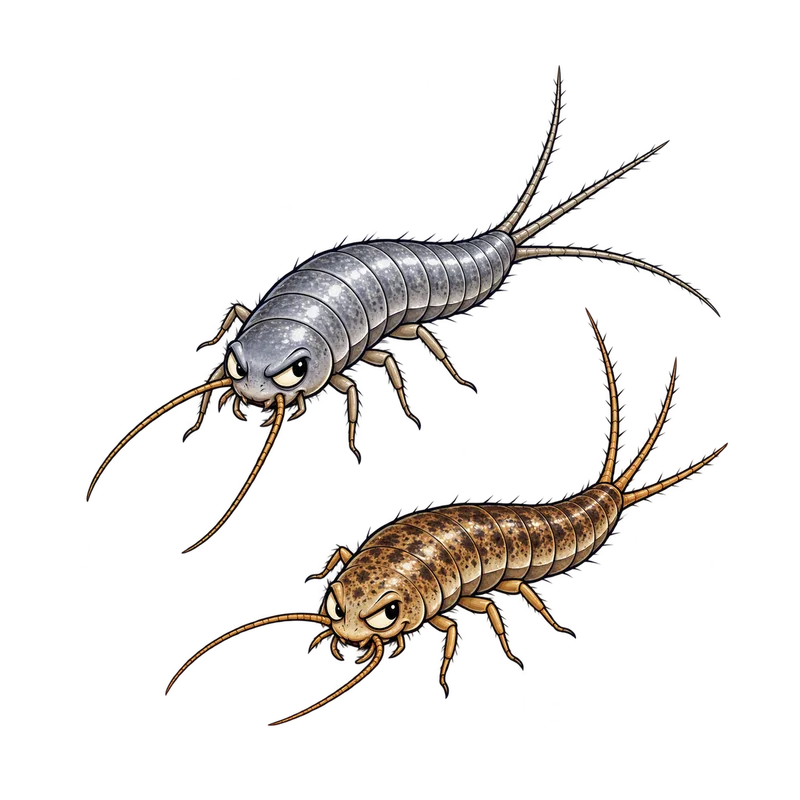
Reliable visual differences between an earwig and a silverfish include their rear appendages and body shapes. An earwig features two rigid, dark, claw-like pincers on its rear, while a silverfish has three long, hair-like tails radiating outward. Additionally, earwigs have a smooth, dark reddish-brown exterior, whereas silverfish display a teardrop shape covered in shimmering, metallic grey scales.
What is actually going on
You flip on the kitchen light at midnight, padding across the cool linoleum to grab a glass of water, and spot a quick, shimmering shadow darting toward the baseboard. Or perhaps you lift a damp terracotta flowerpot on the back patio during a dry spell in late summer and find a dark, scurrying bug with ominous-looking tail ends. Both of these little visitors tend to pop up where moisture lives, which usually leads people to lump them together under a generic household bug label. But an earwig and a silverfish are entirely different creatures with completely separate habits, and confusing the two will only send you down the wrong path for dealing with them.
The confusion is understandable since both prefer damp corners and both move fast when startled, but they belong to entirely different branches of the insect family tree. Silverfish are ancient, primitively wingless insects that love humid indoor spaces year-round, while earwigs are outdoor dwellers that usually only wander inside when the weather outside gets too hot, too dry, or too wet for their liking. One wants to graze on the starch in your wallpaper paste or old book bindings, while the other is mostly just hunting for decaying organic matter or smaller insects and couldn't care less about your paper goods. Looking closer at what is right in front of you clears up the mystery immediately without needing a microscope.
How to tell for sure
Telling them apart usually comes down to checking the rear end of the insect, where nature conveniently placed the most obvious diagnostic markers. If the bug has two rigid, dark, claw-like pincers resembling tiny ice tongs, you are looking at an earwig. If it features three long, flexible, hair-like tails radiating outward like fine threads from a needle, it is a silverfish.
Beyond the tail ends, their overall build and texture tell a distinct story. Earwigs usually wear a smooth, polished, dark reddish-brown exterior that looks like a miniature leather jacket, and they maintain a fairly uniform width from head to tail. Silverfish have a teardrop shape that is widest near the head and tapers down to a narrow point, covered in microscopic cuticular scales that create a shimmering, metallic grey or silvery sheen. If you accidentally brush against a silverfish, those delicate scales often rub off as a dusty residue on your fingers, much like fine craft glitter or graphite powder.
Movement offers another easy clue. Earwigs crawl in a steady, direct, terrestrial march on six visible legs. Silverfish move in rapid, darting, side-to-side wiggling bursts that mimic the swimming action of a small silver minnow trying to escape in shallow water. You will rarely catch an indoor earwig trying to fly, even though adults possess short, leathery wing covers on their backs, whereas silverfish never develop wings at any stage of their lives.
What usually comes next
Once you spot which bug you are dealing with, the real work starts with drying out the damp spots that invited them in. If you are fighting silverfish, dropping the humidity inside your house below fifty percent is usually the best long-term fix, because dry air stops the eggs from hatching and starves out the population without needing chemicals. When earwigs are the problem, the actual solution lives outdoors along your foundation, which means pulling back wet mulch, moving leaf piles away from the exterior walls, and putting in a clean strip of gravel.
There is no need to worry about your house falling down, because neither of these critters knows how to chew through studs or drywall. Silverfish can ruin the look of things by nibbling on the surface of wallpaper paste, old book pages, or cotton clothes over a long time, but they will never damage the building itself. Earwigs do not care about your paperwork at all and only want a dark, wet crack to sleep in until morning. Caulking cracks in the foundation and putting a proper sweep on the back door will usually keep both bugs from moving indoors when the weather turns.
When to get help
Neither earwigs nor silverfish will hurt you, and neither of them carries diseases or bites people for food. An earwig might give you a mild nip with its rear pincers if you trap it in your bare hand, but it does not carry venom or leave a wound that needs a doctor. If anyone in your house wakes up with mysterious bites, strange rashes, or trouble breathing, something else is causing the trouble, and you need to talk to a doctor or call poison control right away.
Bring in a pest control pro if you have tried drying the place out and the bugs still will not leave, or if you are trying to protect valuable books and papers in a museum, library, or historic home. Businesses like restaurants, food plants, and hotels also need to call a licensed expert immediately, since finding pests in those spaces can cause instant trouble with inspectors and customers.