
What materials can silverfish damage in storage?
Silverfish damage items containing starches, glues, and specific kinds of paper by shaving away surface layers with scraping mouthparts. They target wallpaper paste, bookbinding glues, starched cotton and linen, heavy papers, and vintage photographs. They leave structural framing wood, rigid plastics, and clean synthetic fabrics like polyester completely untouched.
What is actually going on
You are pulling a stack of old photo albums and holiday linens out of the basement storage closet, and as you lift the cardboard box, you notice something unsettling. The edges of the photo mounts look like someone took a miniature pair of pinking shears to them, and the wallpaper near the baseboard is peeling away with strange, irregular tracks etched into the paper underneath. It looks like something has been grazing through your stored belongings. If you are wondering what these flat, metallic-looking insects actually manage to destroy in storage, the short answer is that they do not eat everything in sight, but they do have a massive appetite for starches, glues, and specific kinds of paper.
Silverfish are chemical nibblers rather than destructive demolition crews. They possess specialized digestive enzymes in their midgut that break down pure cellulose, starches, and proteins without needing help from gut microbes. Because of this, they go straight after things containing those target compounds. Think of them less like termites that chew through structural beams and more like meticulous grazers. They use scraping mouthparts to shave away the surface layers of your stored items.
When they get into your storage boxes, they are usually hunting for specific menu items. They go after wallpaper paste, bookbinding glues, starched natural fabrics like cotton and linen, glazed or heavy papers, and historical silver-gelatin photographs. On a vintage photograph or an old book cover, that gelatin emulsion layer acts like a rich meal. Similarly, wallpaper damage happens because the silverfish scrape away the starch-based adhesive holding the paper to the wall, causing the wallpaper to bubble and lift as collateral damage.
At the same time, a lot of people worry that silverfish will chew through everything they own, but that is simply not true. Structural framing wood, rigid plastics, vinyl storage tubs, unstarched clean synthetic fabrics like polyester, and modern consumer digital photo prints are completely immune to silverfish digestion. If you store your extra clothes in airtight plastic bins instead of cardboard boxes, you are already keeping them entirely out of reach. Furthermore, silverfish damage is slow and cumulative. It usually takes months or even years of undisturbed, damp conditions for their grazing to become noticeable, so finding a single bug does not mean your entire storage collection has been instantly ruined.
How to tell for sure
Spotting the damage usually comes down to looking for very specific visual cues on your stored items. You will usually see marginal notching, which looks like tiny, irregular cuts along the edges of paper pages or document margins. You might also notice surface etching, where shallow, uneven patches have been scraped away from book covers or photo mounts, leaving thin, translucent fibers behind. Another classic sign is fine, dark droppings and yellowish stains left along shelf seams or storage box joints, accompanied by delicate shed scales and thin, cast-off skins.
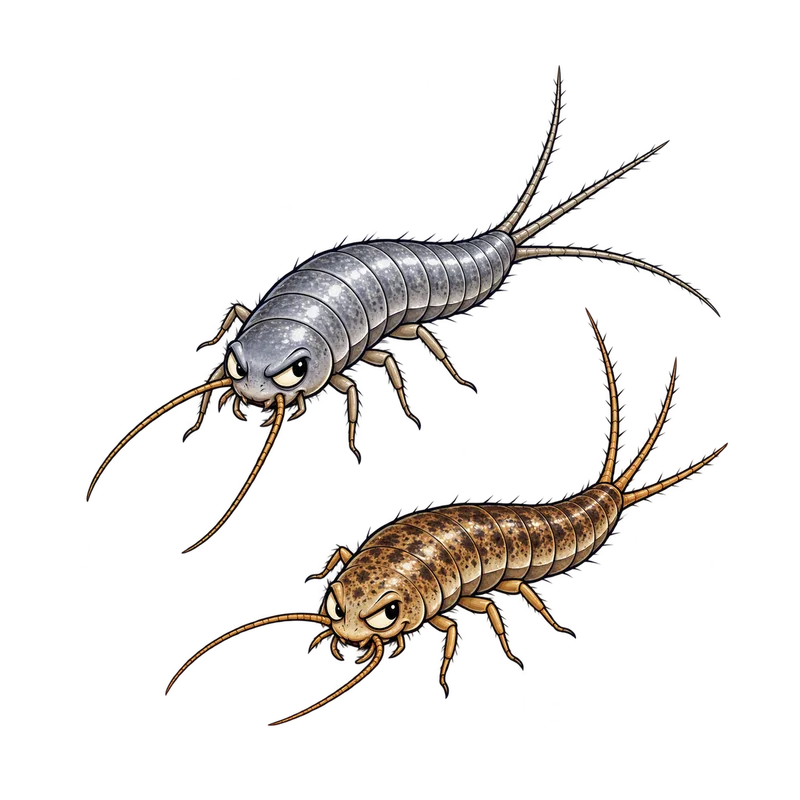
It helps to know who you are actually dealing with, because different species behave differently. The common silverfish usually requires high humidity, which is why you usually find them in damp basements, under sinks, or around laundry rooms. However, the gray silverfish is much more adaptable and tolerates drier indoor environments. If you are finding paper damage in a centrally heated living room, office, or upstairs library, you might be dealing with the gray silverfish rather than the damp-loving common variety. Do not confuse them with booklice either, which are tiny, translucent insects that look nothing like the fast-running, flat, scale-covered silverfish with their three distinct tail filaments.
What usually comes next
Once you spot the telltale signs of silverfish grazing in your storage areas, you have to decide how to handle your belongings and your indoor climate. The most effective move is not running out to buy a spray, but lowering the moisture in your storage space below fifty percent using a reliable dehumidifier. When you drop the humidity level, you naturally halt egg hatching and suppress the population.
For vulnerable items you already have in storage, the smartest protective step is re-housing. Pull your valuable documents, heirloom books, and vintage photographs out of cardboard boxes, which both attract pests and absorb basement moisture, and transfer them into rigid, airtight, sealed plastic storage bins. If you find small items that are already infested, you can seal them in plastic bags and place them in a zero-degree freezer for twenty-four hours to kill all life stages, including eggs and nymphs. If you choose to use drying powders like diatomaceous earth in tight cracks and crevices around your baseboards, keep in mind that those dusts only work when they stay completely dry.
When to get help
There are moments when handling this yourself stops being practical, and you need to bring in outside expertise. If your relative humidity is already below fifty percent and you have sealed your storage containers, yet silverfish populations continue to thrive inside wall voids or crawlspaces, you should contact a licensed pest control operator. A professional can safely execute targeted treatments that you cannot safely or effectively do on your own.
On the other hand, if the damage has already claimed irreplaceable historical documents, rare book bindings, or priceless family photo albums, a pest control technician cannot help you restore them. In that situation, you need to consult an accredited paper or photograph conservator. Pest controllers eliminate the insects, but paper conservators are the ones who possess the specialized trade skills required to repair damaged archival media.