
Silverfish & Firebrats
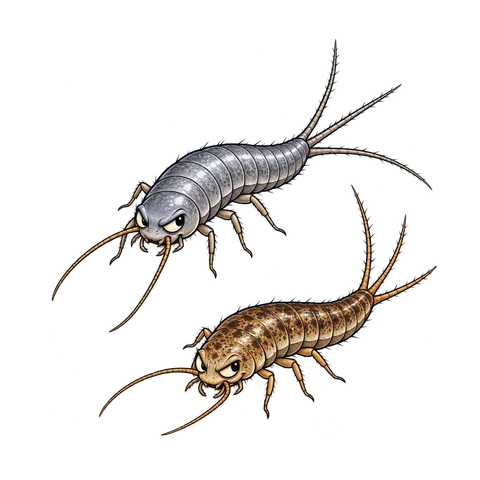
You grab a midnight glass of water, flip on the kitchen light, and watch a flat, carrot-shaped creature with a metallic sheen dart across the floorboards like a drop of liquid mercury. What binds these ancient, wingless insects together is a distinct anatomical suite featuring a teardrop body covered in loose scales, long antennae, and three thread-like bristles at the tail end, moving with a rapid, fish-like wiggling motion. Under the hood, however, this group splits into surprising environmental camps that defy a single label, as common silverfish demand the cold and damp of basement drains, firebrats huddle in the extreme heat of boiler rooms, and long-tailed silverfish happily conquer the dry, centrally heated air of your upstairs living room.
Telling them apart from other crawling kitchen or basement visitors comes down to a few simple structural giveaways that save you from misidentifying a harmless or entirely different pest. While someone might confuse them with jumping bristletails or camel crickets, those lookalikes possess arched, humpbacked frames and massive legs built for leaping several inches into the air, whereas our wingless trio stays strictly glued to the floor running at high speed. Booklice and springtails are microscopic by comparison without any trailing tail filaments, and house centipedes carry fifteen pairs of long, creepy legs instead of the modest three pairs found on a silverfish.
Explore silverfish & firebrats
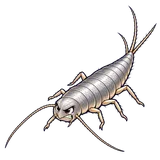 Common silverfishLepisma saccharinum
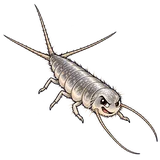 Long-tailed silverfishCtenolepisma longicaudatum
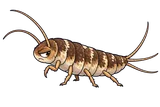 FirebratThermobia domestica