
Why do silverfish appear in a bathroom at night?
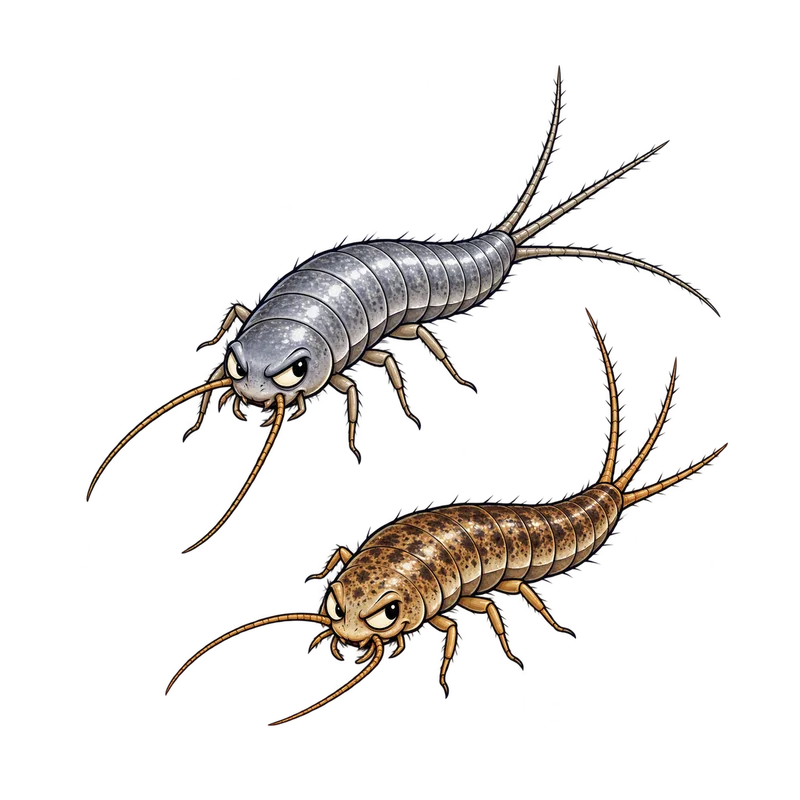
Silverfish appear in a bathroom at night because they are nocturnal and photophobic insects that actively avoid light after dark. These pests are drawn to bathrooms seeking high relative humidity levels between 75 and 95 percent and microscopic mold spores, hair, and skin scales to eat.
What is actually going on
Picture walking into the bathroom at two in the morning for a glass of water. You flip on the light, and a small, silvery, carrot-shaped creature darts across the tile floor with a frantic, wiggling motion that looks remarkably like a tiny fish swimming on dry land. It vanishes behind the baseboard just as quickly as it appeared.
Silverfish show up in bathrooms at night because they are nocturnal and photophobic insects, meaning they actively avoid light and do most of their moving, eating, and exploring after dark. More than that, bathrooms are indoor moisture islands. Silverfish have a thin, delicate outer layer that dries out quickly, so they need high relative humidity levels, usually between 75% and 95%, to stay alive and reproduce. A bathroom with steamy showers, damp bath mats, and condensation on cold pipework offers the exact microclimate they crave.
When ambient light drops at night, these insects leave their hiding places in wall voids, sub-floor gaps, and behind pipe escutcheons to forage for food. Their diet in a bathroom typically consists of microscopic mold spores, wallpaper paste, hair, and human skin scales left behind on the floor.
While they are out foraging, they often crawl into porcelain sinks or bathtubs looking for lingering water droplets. Once inside, they cannot climb back out. Their feet are adapted for gripping textured surfaces like wood or drywall, but they completely lack the specialized traction needed to scale smooth, vertical glass or glazed ceramic. The bathtub acts as an inescapable porcelain canyon, which is why you usually find them trapped and helpless there the next morning.
How to tell for sure
Silverfish are usually easy to spot once you know what features to look for, though a few similar creatures often share the same damp spaces. A common silverfish usually measures between 7 and 12 mm long, though some reach up to 15 mm. They have a flattened, carrot-shaped body that tapers toward the rear, covered in overlapping metallic scales that give them a silvery sheen. If you look closely at the tail end, you will usually see three distinct, hair-like filaments extending outward.
You might occasionally confuse them with booklice, which are much smaller, pale, and lack those distinct tail filaments. In slightly drier upper-floor rooms, you might run into the grey silverfish or paper fish, which are larger, have a matte grey color, and sport even longer antennae. If you find a pest in a very hot area near a boiler or furnace rather than a damp bathroom, it is usually a firebrat, which has a mottled grey and brown body without the bright metallic shine.
It helps to remember that silverfish do not chew through solid wood framing, drywall, or plastic. If you see deep structural damage or chewed-through studs, silverfish are not the culprits. Their feeding damage is strictly cosmetic, limited to shallow surface grazing and notched edges on paper, glue, and starched fabrics.
What usually comes next
When you keep finding silverfish in the bathroom, the most practical decision you can make is to address the moisture rather than reaching for a can of bug spray. Lowering your indoor relative humidity below 50% using a mechanical dehumidifier or a bathroom exhaust fan is the single most effective and permanent control measure. At that humidity level, silverfish eggs fail to hatch, nymphs cannot moult, and adults usually die from desiccation within a few weeks.
Sealing up their entry routes also makes a noticeable difference. Use caulk to fill gaps around baseboards, seal plumbing pipe penetrations with expanding foam, and re-grout loose bathroom tiles to eliminate the dark, damp crevices where they hide during the day. Vacuuming bathroom perimeters and vanity cabinets regularly removes the cast skins, eggs, and organic debris they rely on for food.
If you decide to use chemical products, remember that the pesticide product label is a legal document. Applicators and homeowners must strictly follow all label directions, and it is illegal to exceed recommended rates or mix custom chemical cocktails. Desiccant dusts like diatomaceous earth can be applied lightly into dry wall voids, but they lose effectiveness if they get wet. If you opt for residual sprays or gel baits, apply them strictly into hidden cracks and crevices rather than broadcasting them across open surfaces.
When to get help
Most silverfish problems respond well to basic ventilation, drying out the space, and sealing up gaps. However, certain situations call for professional backup or specialized intervention.
You should involve a licensed pest management professional or building contractor if silverfish populations persist or keep returning after three to four weeks of continuous mechanical dehumidification. Stubborn infestations often point to hidden, structural plumbing leaks or compromised sub-floor waterproofing that requires a tradesperson to fix properly. If you are dealing with valuable archival paper collections, historic bookbindings, or museum items that are actively being damaged, a professional can offer safe, targeted remediation.
On the health front, while silverfish do not bite, carry venom, or transmit infectious diseases, their shed skins and droppings contain proteins that can trigger allergic reactions and asthma attacks in sensitive people. If you or someone in your household experiences persistent skin irritation, respiratory distress, or severe allergic symptoms, consult a qualified clinician or allergist. And if anyone suffers an accidental pesticide exposure or ingestion, contact poison control immediately.