
Can silverfish fly?
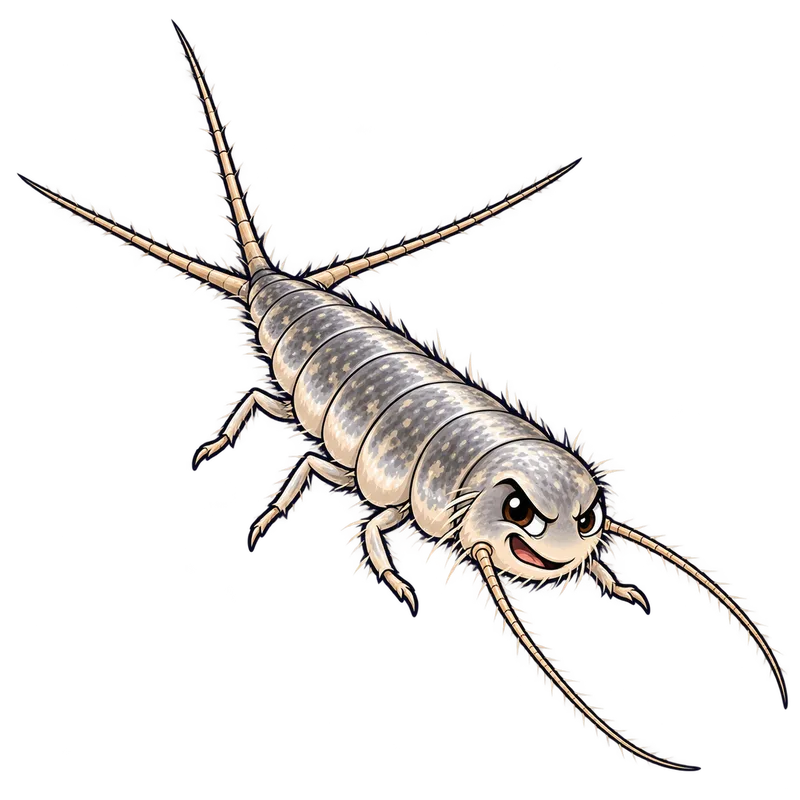
No, silverfish cannot fly, and they never could in all of their 400 million years of history. Silverfish are primitively wingless insects with no wings or wing buds, meaning they have always stayed on the ground. People often mistake falling silverfish or jumping insects like camel crickets for flying pests.
What is actually going on
You flip on the bathroom light at midnight and something small and silvery darts across the tile like it's late for a train. It vanishes under the baseboard before you can decide what it was. Then, a week later, you could swear one of them launched itself off the wall. So now you're standing in your kitchen asking the internet: can silverfish fly?
No. Silverfish cannot fly, and they never could. Not as adults, not as juveniles, not on an especially humid day. They have no wings, no wing buds, no hidden equipment folded under those shiny scales. Their branch of the insect family tree split off more than 400 million years ago, before any insect had figured out flight at all. Scientists call them primitively wingless, which means their ancestors never had wings to lose. That's a different story from fleas, which descend from flying insects and gave wings up along the way. A silverfish is closer to a living fossil scooting across your floor, looking much like its relatives did before the dinosaurs showed up. It survived all of that history without once needing to leave the ground.
So why do so many people insist they saw one fly? Because something else flew, jumped, or fell, and the silverfish took the blame. The usual suspects are winged barklice drifting in through a window, small invading bugs like elm seed bugs that swarm indoors in late summer, and camel crickets, those humpbacked, long-legged basement dwellers that can catapult themselves a startling distance when startled. When a bug launches itself through the air in a dark laundry room, your brain files it under "flew." Silverfish also climb textured walls well, and when one loses its grip near the ceiling and drops, that falling blur reads as flight. The fish-like wiggle that gave them their name doesn't help either. They look like they should swim, so people half expect them to fly too.
How to tell for sure
If you want to confirm you're dealing with an actual silverfish, trap the next one under a glass and take a proper look. You're checking for a teardrop-shaped body, usually around half an inch long, covered in overlapping scales with a silvery metallic sheen. Six legs, two long antennae up front, and the giveaway at the back: three long, bristle-like tail filaments fanning out like a tiny fork. It runs flat and fast with a side-to-side wiggle, and it never, under any circumstances, unfolds a pair of wings. If your bug has wings, pincers, or jumping legs built like a sprinter's, it's something else entirely.
One thing worth knowing, because it changes what you do next: not all silverfish are the same animal. The common silverfish is the classic damp-basement type that needs high humidity to thrive. But there's a larger, mottled gray cousin, often called the long-tailed silverfish or paperfish, that has been spreading through modern, well-insulated homes and does just fine in dry, heated bedrooms and offices. Telling them apart usually means looking closely at the tail filaments and scale pattern, often with a magnifying glass, so don't beat yourself up if you can't pin down the exact species at a glance.
And one firm rule worth keeping: nobody can identify an insect from a crushed smear, a shed skin, or a mark on your arm. If the only evidence is a bite or a rash, the honest answer is that you don't know what caused it. Silverfish are an unlikely suspect anyway, since they don't bite or sting.
What usually comes next
Here's the part that catches people off guard: spotting a silverfish is less an infestation alarm and more a free humidity reading. The common silverfish needs damp air to live and breed, so one turning up in the basement or under the bathroom sink is basically your house telling you that corner is holding more moisture than it should. The single most effective move, and notice it isn't a spray, is getting indoor humidity down below 50% and keeping it there. A properly sized dehumidifier in a damp basement, fixing that slow drip under the sink, actually running the bathroom fan after showers. Dry the air and you dry out the eggs and the young ones, and the population quietly fades on its own.
While you're at it, shut down the buffet. Silverfish scrape and rasp at starchy things: wallpaper paste, bookbinding glue, starched linens, the gelatin layer on old photographs. They work slowly, leaving faint surface grazing that builds up over months. And here's a relief worth saying out loud: they cannot touch your framing, your drywall, your plastic bins, or anything structural. The marketing that paints them as house-destroyers is overselling a bug that eats glue. Move papers and keepsakes out of damp cardboard boxes and into sealed plastic bins off the floor, vacuum along baseboards and cracks, and caulk the gaps around pipes and trim.
You might be thinking: fine, but what if I do all that and they keep showing up? Fair question. If they're turning up regularly in a dry upstairs room, the gray silverfish becomes a real possibility, and that one won't pack its bags just because you bought a dehumidifier. An established population of it usually takes targeted baiting and sealing, often with professional help, to clear out.
When to get help
Most silverfish situations sit a dehumidifier and a Saturday of caulking away from solved. But call a licensed pest professional if you've held humidity low for several weeks and they're still appearing, because that points to a hidden moisture source, like a slow pipe leak inside a wall, or to the dry-tolerant gray species that needs a different treatment plan. Same goes for activity reaching into wall voids, crawlspaces, or anywhere you can't reasonably inspect yourself. If pesticides enter the picture, the product label is the law of the situation, and anything involving broad treatment of structural voids belongs in a licensed applicator's hands, not yours.
On the health side, silverfish don't bite, don't sting, and don't spread disease, so there's no panic there. One honest caveat: in heavy, long-running infestations, the buildup of shed skins and debris can become airborne dust, and certain insect proteins in that dust are known allergens that can aggravate asthma or year-round allergy symptoms in sensitive people. If someone in the house is dealing with persistent respiratory symptoms, that's a conversation for a doctor or allergist, not a pest forum.
And if the real worry is a box of irreplaceable old photos or documents that's already been grazed, a paper or photograph conservator is the right call, because no treatment puts scraped-away emulsion back. For everything else, dry the air, seal the gaps, and let the little fossil keep its feet on the ground, where they've always been.