
What do silverfish droppings look like?
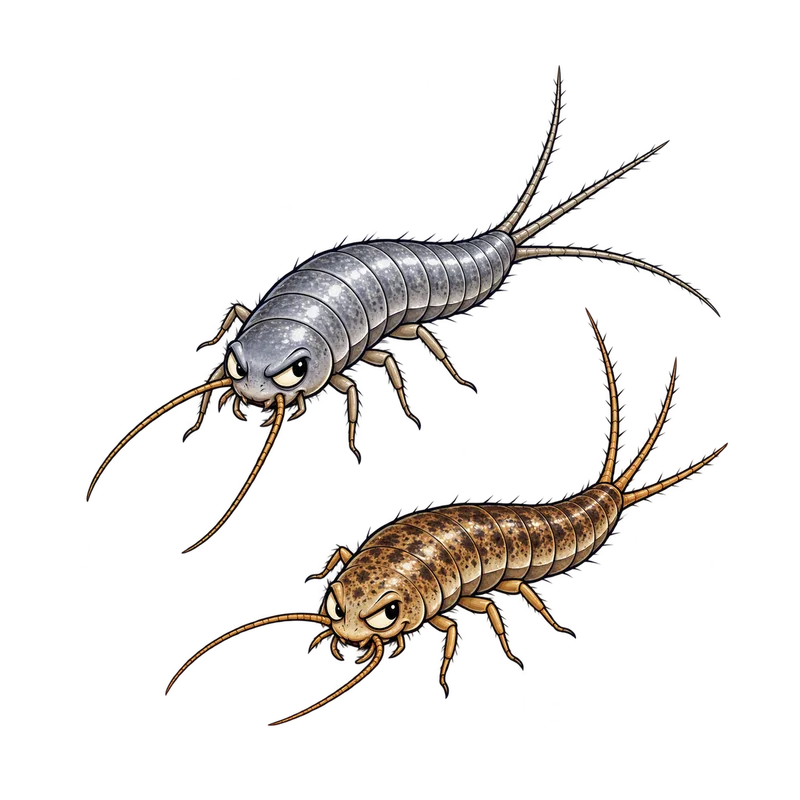
Silverfish droppings appear as extremely tiny, solid, dark specks that resemble a pinch of coarsely ground black pepper. These microscopic to pinhead-sized particles are usually scattered across dark and humid areas, and they are often mixed with paper dust and yellowish moisture stains.
What is actually going on
You are down in the basement rummaging through an old cardboard box of college notebooks, and you notice what looks like a pinch of coarsely ground black pepper sprinkled along the bottom folds. At first, you might think some grit sifted down from the rafters. But when you look closer, you realize those tiny, dark specks are sitting right beside some yellowish moisture stains and delicate, papery husks that look like ghostly insect outlines. You are not just looking at random dirt, and you certainly did not spill your seasonings in storage. You are looking at the messy footprint of a silverfish infestation, and those pepper-like particles are their droppings.
In pest management, what silverfish leave behind is often called frass, which is just a general term for insect waste, chewed-up debris, and shed body parts. Because silverfish do not chew neat, round holes through materials the way wood-boring beetles might, their deposits do not look like clean, cylindrical pellets. Instead, silverfish droppings appear as extremely tiny, solid, dark specks that are usually mixed right in with minute particles of scraped paper, starchy binders, and off-white liquid excretory stains.
You will almost never find these droppings gathered in neat, isolated piles. They tend to scatter across dark, humid harborages like the undersides of basement storage boxes, behind peeling wallpaper, along the spines of stored books, or right where the concrete floor meets the wall. Finding this mixture of fine fecal specks and paper dust is an indicator of something much bigger than a stray bug or two. It tells you that your indoor microclimate is holding onto too much moisture, usually running at a relative humidity well above sixty percent, which is the exact environment these crawling insects need to survive and multiply.
People often confuse silverfish waste with mouse droppings or cockroach frass, but the scale is entirely different. Mouse droppings are large, dark cylinders the size of a grain of rice, while silverfish droppings are microscopic to pinhead-sized specks that really do resemble loose grains of black pepper. If you squint at them without help, they just look like dirt. But when you examine the area with magnification, you can usually spot the distinguishing features that prove you are dealing with a silverfish problem rather than a different household pest.
Look closely at the surrounding materials. Silverfish have chewing mouthparts designed to graze across starchy surfaces, so you will usually find shallow surface etching, notched edges, and glazed paper scraping nearby. They feed on starches found in wallpaper paste, bookbindings, and starched fabrics. Furthermore, silverfish do not go through a dramatic pupal metamorphosis. Instead, they just keep molting throughout their entire lives, sometimes shedding their skins dozens of times. This means you will usually find fragile, hollow, translucent shed skins sitting right next to the fecal specks.
There is also the matter of companion pests and lookalikes. You might spot tiny, pale insects called booklice scurrying around the same damp cardboard boxes, but those creatures feed primarily on mold spores and leave behind microscopic debris rather than distinct pepper specks. Meanwhile, if you are dealing with the grey silverfish rather than the common silverfish, you might notice larger, more distinct dark fecal pellets and much more aggressive paper etching, even in drier, centrally heated apartments and offices where you would not normally expect them.
How to tell for sure
When you spot these pepper-like specks and shed skins in your storage areas, your smartest move is to stop treating the bugs as a surface cleaning issue and start treating them as a moisture problem. Spraying random contact insecticides into a dark corner might kill a few wandering adults today, but it will not stop the next generation from hatching if the surrounding air stays damp. The most reliable foundation for long-term control is to drop your indoor relative humidity below fifty percent, which effectively halts their reproduction and causes both nymphs and adults to dry out.
To make that happen, you need to pull those vulnerable cardboard boxes off the basement floor and transfer any valuable papers, vintage photographs, or starched garments into sealed, rigid plastic containers. Cardboard acts as both an all-you-can-eat buffet and a sponge for ambient moisture, making it the favorite breeding ground for these insects. Once your sentimental items are safe in plastic storage, run a dehumidifier in the space, fix any plumbing leaks nearby, and use a vacuum to physically clear out the accumulated frass, eggs, and cast skins from the baseboards and shelf cracks.
What usually comes next
Most silverfish issues can be managed with sensible housekeeping and environmental drying, but certain situations call for outside intervention. If you or someone in your household suffers from asthma or severe allergies, accumulated insect frass, shed exoskeletons, and fecal fragments can trigger allergic rhinitis or respiratory attacks due to shared proteins. When indoor allergy symptoms flare up around dusty storage zones, you should consult a qualified medical clinician to manage the health response while pest control efforts are underway.
When to get help
You should also look for professional help when the damage involves high-value historical documents, rare book collections, or museum-grade heirlooms. In those cases, amateur cleaning can permanently destroy fragile pages, and you will want to refer the items to a professional paper or book conservator for proper restoration. Finally, if you are dealing with a persistent, large-scale infestation in a multi-family apartment building, a commercial warehouse, or a historic archive, trying to solve it with consumer products is an uphill battle. A licensed pest management professional has access to targeted baits and structural assessment tools that can bring a widespread population under control safely.