
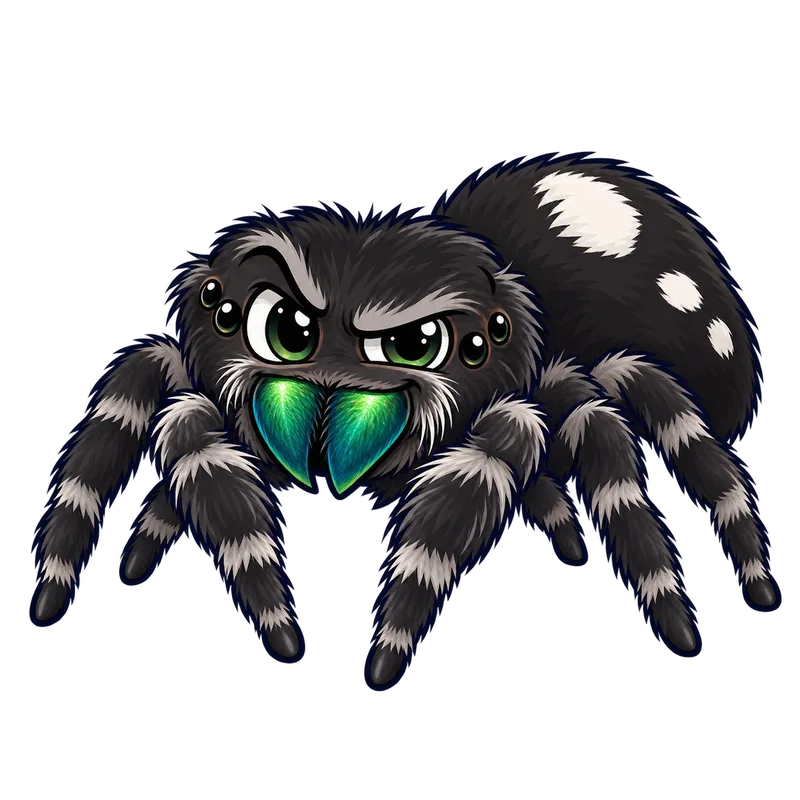
Jumping spiders
Family Salticidae
- Size
- Not established
- Color
- Not established
- Habitat
- Foliage, walls, fences, and leaf litter
- Diet
- Small insects and other spiders
- Life cycle
- Egg, spiderling, and adult
Jumping spiders belong to the diverse arachnid family Salticidae, featuring a compact, robust body, eight walking legs, and a distinct lack of wings. You can spot them by their stocky build and their signature way of getting around, which involves sharp, jerky leaps rather than a steady crawl.
Identity
What truly sets them apart is their face. They carry eight eyes arranged in three rows, with a pair of enormous front-facing eyes that give them an intensely alert expression. While a casual glance with the naked eye lets you see their deliberate movements, confirming a specific species often requires a ten times magnification hand lens to examine minute structural details.
Habitat & behaviour
You will usually find jumping spiders hunting out in the open during bright daylight. Unlike web-building spiders that sit in dark corners and wait for a meal to stumble into a trap, jumping spiders are active stalkers. They rely on their exceptional eyesight to track flies, mosquitoes, and even other spiders, creeping up on their prey before launching into a sudden, calculated pounce.
They do not spin capture webs, though they do construct small, dense silken sacs in concealed spots like curled leaves, behind window shutters, or in wall crevices to use as nighttime retreats or winter shelters. In nature, they prefer low vegetation, tree bark, and rock piles. Around homes, they frequently patrol exterior walls, sunny window sills, and garden fences.
Visual variations
Like all true spiders, jumping spiders progress through three distinct life stages. It starts with an egg, which the female deposits into a protective silken sac tucked away in a safe crevice. Out hatch tiny spiderlings, which look like miniature adults minus the reproductive maturity and full coloration.
These juveniles go through several successive molts, shedding their hard outer skin to grow larger over time. Once they complete their final molt, they emerge as fully mature adults. They are solitary creatures at every stage of their lives without complex social castes. Mature females in many species tend to be noticeably larger and heavier-bodied than males, and males often sport flashier metallic fringes or colored facial markings to impress potential mates.
Why it matters
Finding a jumping spider around your home is generally a welcome sight for natural pest control, as they happily consume nuisance insects. They pose virtually no medical risk to people or pets. They are timid, non-aggressive hunters, and a defensive bite only happens if someone accidentally pinches or traps one directly against their skin.
People frequently mistake harmless jumping spiders for dangerous species like the brown recluse. Brown recluses feature a violin-shaped mark on the head region and six eyes arranged in pairs, which jumping spiders do not share. If you ever want to keep jumping spiders out of your living space, focus on physical exclusion by sealing up loose window screens and patching gaps around doors.
Similar species
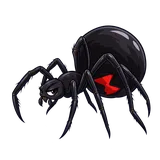 Southern black widowLatrodectus mactans
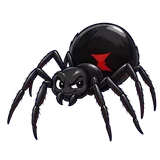 Western black widowLatrodectus hesperus
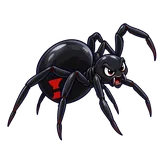 Northern black widowLatrodectus variolus
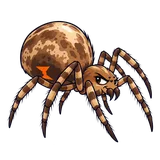 Brown widowLatrodectus geometricus
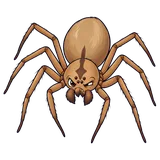 Brown recluseLoxosceles reclusa
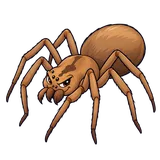 Mediterranean recluseLoxosceles rufescens