
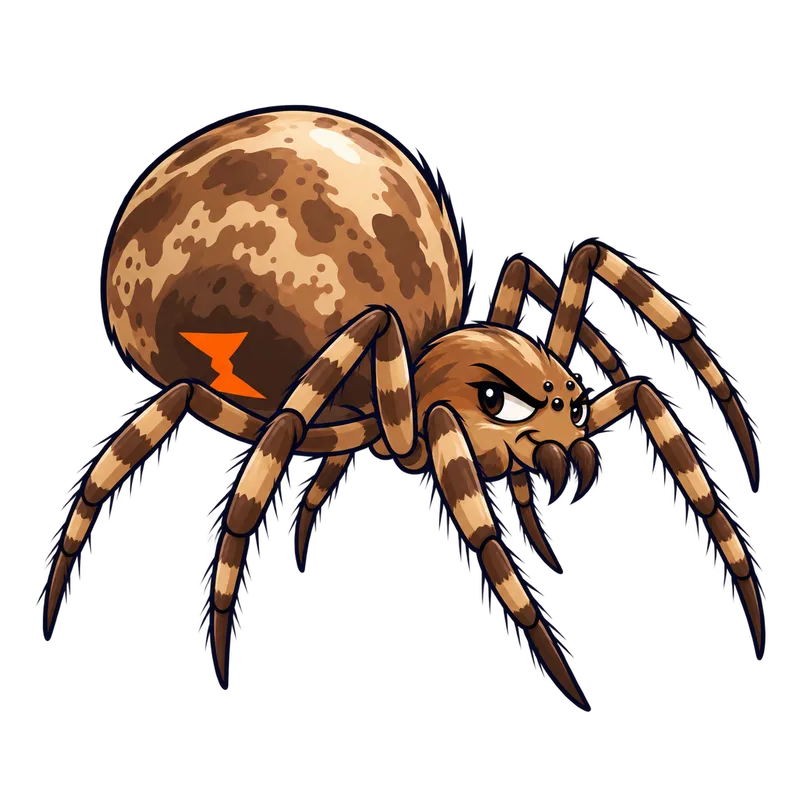
Brown widow
Latrodectus geometricus
- Size
- Adult female 8 to 10 mm, adult male 3 to 4 mm
- Color
- Deep globular abdomen with red, orange, or yellow markings
- Habitat
- Dry, dark, secluded, and undisturbed indoor and outdoor areas
- Diet
- Insects and small arthropods
- Life cycle
- 8 to 30 day egg incubation, 4 to 9 molts to adulthood
The brown widow belongs to the genus Latrodectus, a group of tangle-web spiders known across the globe for their potent neurotoxic venom. When you are peering into a dark corner of a garage or a stack of unused flowerpots, the first thing you notice is not necessarily the spider itself, but the chaotic, messy web it builds. Unlike the neat, symmetrical wheel of an orb weaver, a widow's web looks like a tangle of coarse, sticky silk thrown together in a rush.
Identity
To confirm what you are looking at without getting too close for comfort, you need to spot the physical hallmarks of the group. Mature females grow to a body length of 8 to 10 mm, which is roughly half an inch, while males are much smaller at 3 to 4 mm, or about one-eighth of an inch. Like all spiders, they are completely wingless and possess eight legs and eight eyes grouped closely together.
The most reliable field mark for a mature female is tucked away on the underside of her abdomen. If you can safely catch a glimpse of her ventrum, you will see a bright red, orange, or yellowish-orange mark. It often takes the shape of an hourglass, two triangles pointing at each other, or sometimes just a solid dot. Immature females and adult males swap that glossy black or deep brown finish for lighter gray or brown bodies decorated with streaks and spots of white, yellow, orange, or red.
People frequently confuse true widows with false widows of the genus Steatoda or even the notorious brown recluse. False black widows share a similar rounded, globular shape and the same family tree, but they completely lack that bright ventral hourglass mark. They are uniformly dark underneath.
Recluse spiders are an entirely different conversation. If you look closely, recluses have six eyes arranged in three pairs rather than eight, a flattened oval abdomen covered in fine hairs, and a dark violin-shaped mark on top of their head. Recluses also build small, flat sheets rather than tangled three-dimensional webs, and their venom causes skin necrosis rather than the nervous system symptoms you get from a widow.
Habitat & behaviour
Widows are creatures of shadow and quiet. They despise open spaces and bright sunlight, which explains why you will almost never find one out strolling across a living room rug in broad daylight. Instead, they seek out dry, secluded harborages where human disturbance is low and flying insects are plentiful.
Outside, you are likely to find them under stones, tucked deep inside hollow stumps, behind stacked firewood, beneath loose bark, or inside utility and water meter boxes. Indoors, they prefer the undisturbed zones that people tend to forget about, such as dark corners of basements, crawl spaces, cluttered garages, and storage closets.
They are strictly nocturnal and timid by nature. During the day, they sit motionless in or right next to their retreat. Once the sun goes down, or when temperatures climb above seventy degrees Fahrenheit, they become active and wait for a fly, beetle, or other small arthropod to blunder into their sticky silk.
The only reason you are ever likely to run into one is through sheer bad luck. A widow does not hunt people. Bites happen defensively when a spider is accidentally squeezed, pressed against human skin inside a pair of boots left out in the shed, or trapped in clothing that was picked up off a basement floor. A female guarding an egg sac in a woodpile might also strike if her sanctuary is suddenly disrupted by a pair of bare hands.
Visual variations
Spiders do not live the organized, clockwork lives of social insects like ants or wasps. There are no queens, workers, or soldiers here, just solitary hunters going through a series of physical transformations as they grow.
The life of a widow begins inside a silken egg sac deposited in a dark harbor in the spring. A single female can produce up to twenty-one of these sacs over her lifespan, with each one packing a few hundred tiny eggs. Inside, incubation takes anywhere from 8 to 30 days depending on how warm the weather is.
When the spiderlings emerge, they are tiny, light-colored creatures with prominent orange and white tones. They look nothing like the menacing adults they will eventually become. As they grow through a series of four to nine molts over the summer and autumn, their colors darken and shift.
Sexual dimorphism is striking in this genus. The mature female is the heavy-hitter of the species, boasting a deep, glossy, globular abdomen that can hold hundreds of developing eggs and a potent reserve of venom. The mature male is a fraction of her size, measuring only 3 to 4 mm, and retains a much slimmer, browner body with pale dorsal streaks. If you look at a mature male under slight magnification, you will notice swollen bulbous organs at the front of his head called pedipalps, which he uses to transfer sperm during mating.
You do not need to worry about the male's bite. His fangs and chelicerae are simply too small to penetrate human skin. It is the mature female who carries the physical equipment capable of delivering a meaningful defensive bite.
Why it matters
Finding a widow spider in your home or garden does not mean structural damage to your property. They do not chew wood, tunnel into drywall, or ruin textiles. Their presence means you have dark, quiet harborages and a steady supply of nuisance insects that make your space attractive to a reclusive web weaver.
The real reason these spiders command respect comes down to human health. Widow venom is a potent neurotoxin that affects the nervous system. A bite often starts with a sharp pinprick sensation, sometimes accompanied by localized pain and redness. Within thirty minutes to two hours, systemic symptoms known as latrodectism can begin to set in.
These symptoms include severe radiating pain, intense muscle cramps, and rigid contractions spreading through the abdomen and chest. Victims may also experience nausea, vomiting, sweating, tremors, anxiety, and labored breathing. Severe reactions are most concerning for young children, the elderly, and individuals with pre-existing cardiovascular conditions.
Not every mysterious mark on the skin is a spider bite. Unexplained skin lesions are frequently misdiagnosed as spider bites when they are actually bacterial infections like MRSA, viral conditions, or burns. If you suspect a bite or experience systemic symptoms, wash the area with soap and water, apply a cold compress to manage swelling, elevate the limb, and avoid any unproven home remedies or attempts to cut and suction the skin.
Check your tetanus vaccination status, since spider bites can introduce spores, and contact a clinician, urgent care facility, or Poison Control at 1-800-222-1222 right away. If you are dealing with a persistent infestation in structural voids or living areas, call a licensed pest control professional to handle the situation safely. Always let the product label guide any chemical management decisions, and never improvise application rates or mixtures.
Similar species
 Brown recluseLoxosceles reclusa
 Mediterranean recluseLoxosceles rufescens
 Noble false widowSteatoda nobilis
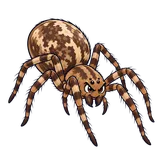 Common house spiderParasteatoda tepidariorum
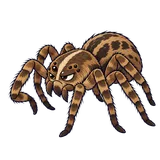 Wolf spidersFamily Lycosidae
 Jumping spidersFamily Salticidae