
Are jumping spiders poisonous?
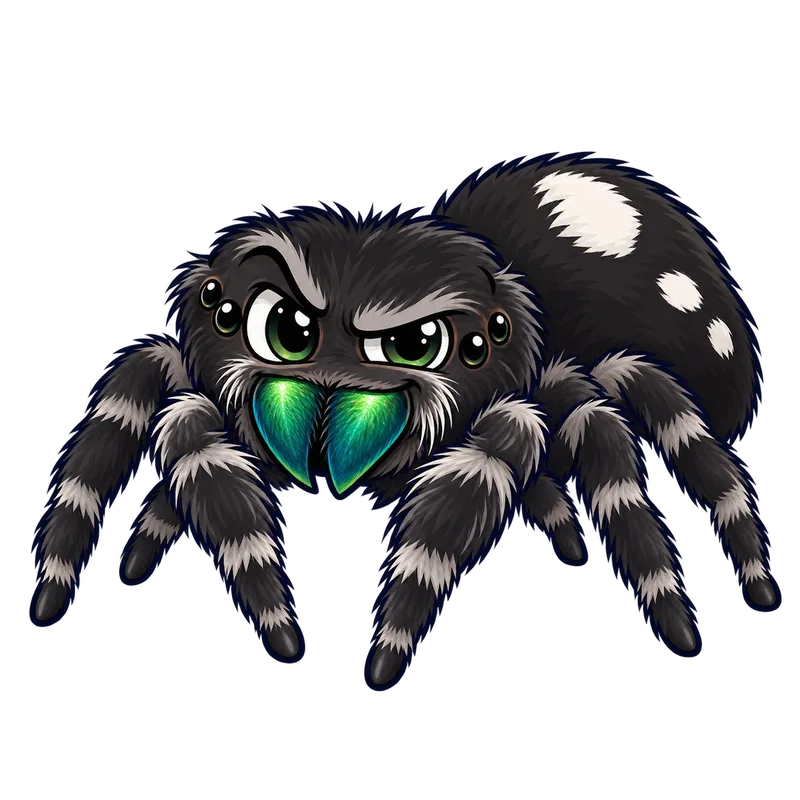
No, jumping spiders are not poisonous, though they are technically venomous. Their venom is tailored to paralyze small prey like flies and crickets, meaning it lacks the properties to harm humans. They are timid hunters that pose no medical threat.
What is actually going on
You are standing in the garage, reaching into a cardboard box of old holiday decorations, when you spot a tiny, hairy creature with oversized, glossy eyes staring right back at you. It cocks its head like a curious kitten, tracks your finger, and then vanishes with a sudden, elastic leap. Naturally, your hand snaps back, and your mind races to the obvious question. Are jumping spiders poisonous?
The short answer is no, but biologically speaking, they are actually venomous rather than poisonous. People tend to use those two words interchangeably, yet they mean entirely different things in nature. Poisonous creatures harbor toxins that make you sick if you touch, lick, or eat them, functioning entirely as a passive defense. Venomous creatures, on the other hand, manufacture their own toxins inside specialized glands and actively inject them through fangs or stingers. Spiders possess internal venom glands connected to hollow mouthparts called chelicerae, which puts jumping spiders squarely in the venomous camp.
Even though they carry venom, you do not need to panic. Out of tens of thousands of spider species crawling around the planet, only a tiny handful possess venom strong enough to cause real medical harm to a human. Jumping spiders belong to the family Salticidae, and public health authorities keep them off every single list of dangerous animals. Their venom is chemically tailored to paralyze small flies and crickets, meaning it lacks the right properties to disrupt human tissue or mammalian nervous systems. They are timid, non-aggressive hunters that would rather run or jump away than tangle with a giant.
How to tell for sure
If you want to know whether that little acrobat on your porch railing is a jumping spider, you usually just need to look at its face. They do not spin messy webs in the corners of the ceiling. Instead, they actively stalk their meals during the daylight hours, relying on exceptional eyesight. Look for a compact, stout body covered in fine hairs, paired with jerky, deliberate movements that end in sudden, impressive leaps. Most importantly, their face is dominated by two enormous, forward-facing central eyes that give them an almost cartoonish, inquisitive expression.
Telling them apart from other common household spiders usually comes down to that eye arrangement and hunting style, though confirming an exact species typically requires a specialist using magnification. Regarding danger in the United States, official guidance usually points to just two groups of concern, which are widow spiders and recluse spiders. Jumping spiders look nothing like them. Widows are glossy black with round abdomens, while recluses are slender and brown with a distinct violin-shaped marking on their backs. Jumping spiders are much stockier, hairier, and often display colorful markings or metallic sheens.
People often worry that a red mark or a sore on their skin came from a stealthy spider, but clinical consensus usually proves otherwise. Doctors frequently see skin lesions and boils that get blamed on mysterious spider bites, when the culprit is actually a bacterial infection like staph, another pathogen, or even a localized skin reaction. Spiders rarely bite unless they are accidentally trapped, squeezed, or pressed directly against human skin inside a tight shoe or a glove.
What usually comes next
When you spot a jumping spider inside the house, the smartest move is simply to let it be or carry it out to the yard. Since they feed on bothersome bugs like houseflies and gnats, lots of homeowners treat them as free pest control instead of creatures to wipe out. Should one wander onto your hand, try not to panic and swat it, because that sudden squeeze is what triggers a defensive nip. Just guide it onto a magazine and set it free outside.
If things go sideways and you do feel a pinch, standard first aid is all you need. Wash the tiny spot with warm water and basic soap to stop everyday bacteria from getting into the skin. Press a cold pack or an ice bag wrapped in a cloth against the spot for ten to fifteen minutes to manage swelling, and prop up the arm or leg if that is where it happened. Do not slice the skin open, try to suck the venom out with your mouth, or buy suction gadgets. Take a look at your tetanus shot history too, because medical standards typically call for a booster shot every ten years, or sooner if a wound gets dirty.
When to get help
Even though jumping spiders pose no medical threat, bites from genuinely dangerous spiders or worsening skin infections need a doctor's attention. You should reach out to a medical professional or call the national Poison Control hotline at 1-800-222-1222 if you think a medically important spider like a widow or a recluse got you. Keep an eye out for severe whole-body symptoms pointing to serious venom reactions, such as bad muscle spasms moving across your stomach or chest, heavy sweating, body tremors, or fast-spreading dark skin changes and open sores near the bite.
Head right to the emergency room or dial nine one one if anyone shows signs of a major allergic reaction. Those urgent signs involve swelling around the face, lips, tongue, or throat, sudden wheezing, chest pressure, lightheadedness, or trouble breathing. When you face a serious infestation of dangerous spiders around your house, leave the chemical controls to a licensed pest management professional instead of handling heavy pesticide spraying yourself.