
What is a noble false widow spider?
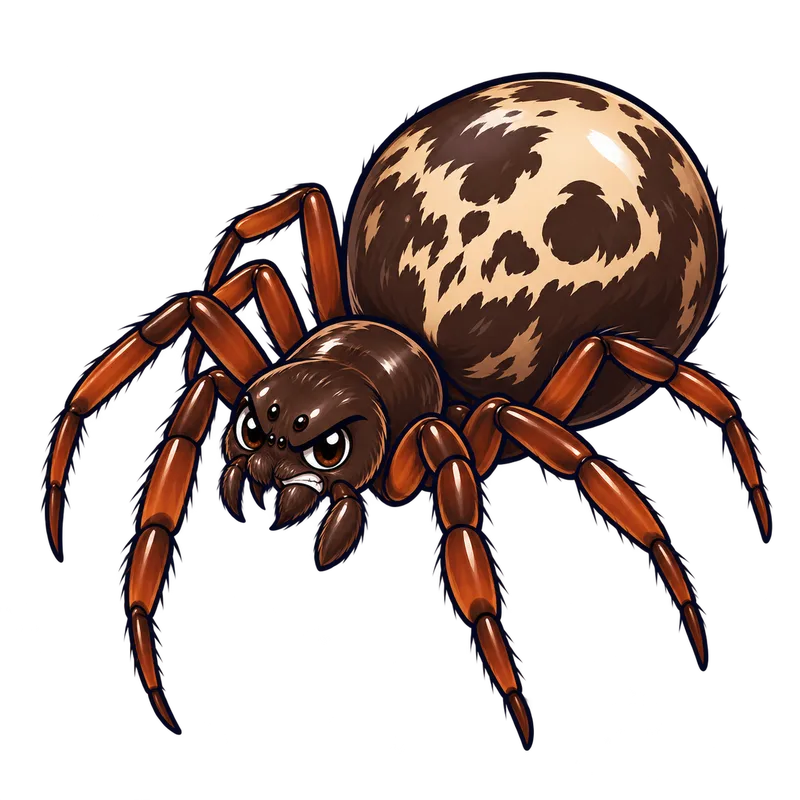
The noble false widow spider, known scientifically as Steatoda nobilis, is a reclusive tangle-web spider belonging to the same family as true widow spiders. Native to Europe and established in Great Britain and Ireland, it is not a true widow and its venom is significantly less severe. Bites are uncommon and typically happen only when the spider is accidentally trapped or compressed directly against human skin.
What is actually going on
Imagine reaching into the dark corner of your garage to grab a pair of gardening gloves that have been sitting in a bucket since last autumn. You pull them on without looking inside, and suddenly you feel a sharp pinch on your thumb, much like a wasp sting. You probably just ruined a spider's quiet afternoon.
The noble false widow spider, known scientifically as Steatoda nobilis, is a tangle-web spider belonging to the same family as true widow spiders. While people often panic when they hear the word widow, this creature is not a true widow and its venom is significantly less severe. Native to Europe and firmly established in places like Great Britain and Ireland, these spiders are reclusive, nocturnal, and completely uninterested in hunting humans. They do not drop from ceilings or attack people passing by.
When bites happen, and they are relatively uncommon, it is almost always because the spider got accidentally trapped, squished, or compressed directly against human skin. Think of it as a defensive reaction from an animal that suddenly found itself crushed inside a boot or trapped under a sleeve. The clinical reaction to their venom has its own name, steatodism, which usually means localized pain and redness. In about thirty percent of cases, though, the envenomation brings along more generalized symptoms such as mild muscle spasms, nausea, or fatigue.
How to tell for sure
If you are trying to figure out what you are looking at, you usually have to rely on body shape rather than color alone, as coloration can vary. False widows and true widows share the family trait of building messy, irregular, multi-directional webs in dark, sheltered spots like woodpiles, wall voids, and around window frames.
The most reliable anatomical clue for the Steatoda genus is the distinctive shape of the front section combining the head and thorax. Viewed from the side, the dorsal outline forms a straight-backed, blocky D shape that lines up neatly against the blunt, flattened front edge of the abdomen. If you are in North America, you are much more likely to encounter the false black widow or cupboard spider, which is uniformly dark and lacks the bright red hourglass marking found on true black widows.
One common trap to avoid is assuming any red mark, swelling, or necrotic skin lesion is automatically a spider bite. Medical experts repeatedly point out that unexplained skin wounds are overwhelmingly caused by bacterial infections, tiny mites, or everyday scrapes rather than an actual spider envenomation. Furthermore, you cannot reliably identify a spider species from a bite mark or a blurry photograph. Positive identification usually requires capturing the physical specimen intact and having an expert look at it.
What usually comes next
Once you spot a messy tangle of web in the corner of your shed or tucked behind a storage box in the basement, you have to decide whether to clear it out or just leave it alone. Because these spiders are shy and prefer staying hidden in dark, quiet spots, the best approach is usually simple physical removal alongside a bit of general tidying.
To cut down on run-ins around the house, clear out the clutter, woodpiles, and rock stacks sitting right against your foundation. Whenever you clean out dusty basements, crawl spaces, or garages, toss on long sleeves, closed-toe shoes, and sturdy leather gloves. It is also good habit to give your work boots, towels, and stored clothing a solid shake before putting them on, particularly if they have been hanging out in a shed for a while.
If you find a spider on you and want it gone, brush it off rather than slapping it against your skin, or just sweep it away with a broom. Vacuuming up webs and spiders works well too, as long as you immediately seal up the vacuum bag and throw it in the outdoor trash. If you decide to use chemical control, pick an aerosol or liquid insecticide specifically labeled for spiders to treat individual pests or their hiding spots, and strictly follow the instructions on the label. Should you run into a massive infestation tucked deep inside wall cavities or structural voids, leave that to a licensed pest control professional.
When to get help
Most minor spider bites sort themselves out with simple first aid: wash the spot thoroughly with soap and water, hold a cold compress against it for ten to fifteen minutes to keep the swelling down, and keep the affected arm or leg raised. Check your tetanus vaccination status while you are at it, because any puncture wound means making sure your booster is current. Never try to cut into the skin, apply a tourniquet, or suck out venom.
Still, you need to recognize when things go beyond home care. Get emergency medical help right away if someone starts showing severe whole-body symptoms after a suspected bite. These red flags include trouble breathing, tightness in the chest, swelling in the face, severe pain spreading outward from the bite, uncontrollable muscle tremors, a rigid abdomen, or heavy sweating.
You should also head to urgent care or see a doctor if the bite area shows signs of a secondary bacterial infection over the first day or two, like expanding redness, draining pus, red streaks, or skin that begins to darken. When symptoms affect the whole body or a wound starts looking infected, medical professionals and poison control centers are the only ones equipped to sort out what is going on and treat it properly.