
Brown recluse vs wolf spider: what can you identify safely?
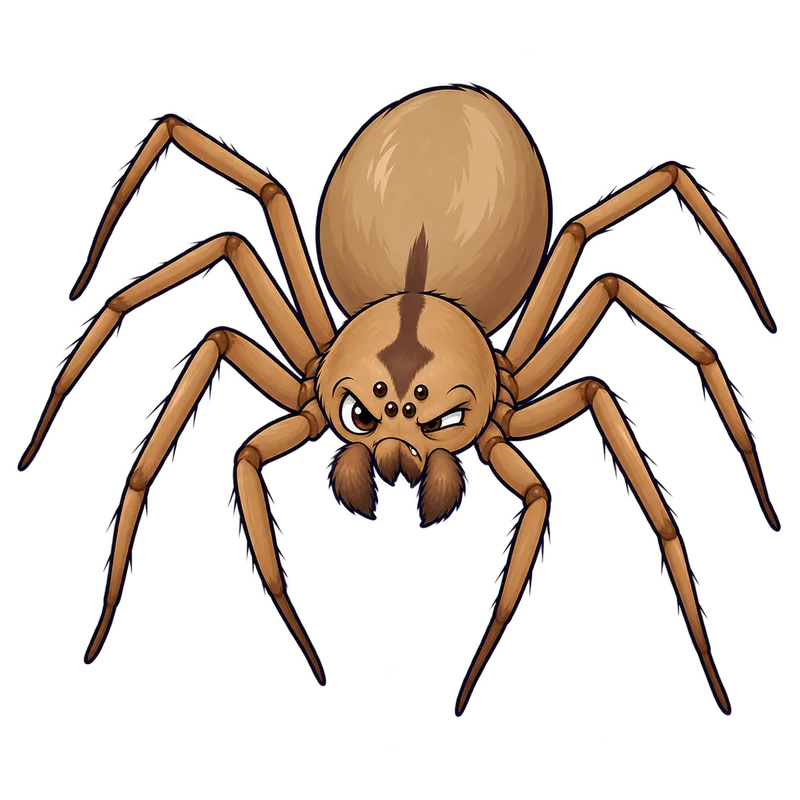
You can safely rule out a brown recluse at home if the spider has distinct stripes, hairy legs, or eight visible eyes. However, confirming a real brown recluse usually requires using a magnifying glass to check for its specific six eyes arranged in three pairs. Most brown spiders found indoors are harmless wolf spiders.
What is actually going on
Picture this. You are pulling a winter sweater out of a cardboard box in the back of the closet, and something small, brown, and fast scurries across the fabric. Your heart does a quick little jump. You grab a rolled-up magazine, but then you freeze. Is that a dangerous brown recluse, or just some harmless wolf spider minding its own business? Most of the time, people panic and assume the worst whenever any pale brown spider crosses their path.
To answer the main question right away: you can easily rule out a brown recluse at home if the spider has distinct stripes, hairy legs, or eight visible eyes, but confirming the real thing usually requires a close look at its facial features under magnification. Most brown spiders people spot indoors are completely harmless. Wolf spiders, house spiders, and grass spiders make up the vast majority of those frantic late-night sightings.
Why do we mix them up so often? Because from four feet away, almost any brown spider looks remarkably like any other brown spider. The brown recluse gets a terrifying reputation, yet it is actually a timid, secretive creature that prefers dark, undisturbed corners like woodpiles, basements, and rarely used storage boxes. Wolf spiders, on the other hand, are active hunters that run across open floors. They do not hide in your folded laundry waiting to cause trouble.
How to tell for sure
If you want to settle the score without calling an exterminator, you need to look past the general brown color and focus on specific body parts.
Start with the pattern on the back. A brown recluse has a very uniform, pale brown or grayish body with an unpatterned abdomen. Right behind its head, it usually displays a dark violin shape, with the neck of the fiddle pointing toward the rear. But here is the catch that trips people up: young recluse spiders do not have that violin mark yet. If you are looking at a juvenile, the mark is absent, so relying on the fiddle shape alone can easily lead to a false identification.
Wolf spiders look completely different once you get a clear look. They are robust, densely hairy, and usually sport mottled brown, gray, or black markings with prominent longitudinal stripes running down their head and back.
Legs offer another quick clue. Brown recluse legs are smooth, thin, and covered in fine hairs, but they completely lack thick spines. Wolf spider legs are studded with distinct, coarse spines that stand out visibly.
If you really need to be certain, you have to count the eyes. Most spiders, including wolf spiders, have eight eyes arranged in clear rows. Recluses break the mold by having only six eyes, arranged in three distinct pairs. Verifying that tiny detail usually demands a dead specimen, a macro photograph, or a 10x magnifying glass, which is why casual home identification usually stops at a certain point.
What usually comes next
Once you spot a spider and manage to get a rough idea of what it is, you have to decide what to do with your living room, basement, or garage.
If you suspect you have brown recluses in an area where they actually live, your best practical move is to stop handling clutter with bare hands and start cleaning up their favorite hiding spots. Wear thick leather gloves, long sleeves, and pants when sorting through stored boxes, firewood, or old clothing in the garage. Shake out shoes before putting them on, and pull your bed away from the walls so the bedding does not drape onto the floor.
If you live in a region where brown recluses do not naturally establish populations, you can safely assume that mysterious skin lesion or fast-moving brown spider is something else entirely. Unexplained sores are almost always bacterial infections, such as staph, rather than spider venom.
When you find a heavy indoor infestation of recluses, bringing in a licensed pest management professional makes the most sense. They can apply targeted treatments where these spiders hide, which saves you from guessing with store-bought sprays that rarely solve the root problem.
When to get help
Spider encounters occasionally cross the line from a minor household nuisance into a medical concern.
If someone gets bitten and develops a spreading purplish lesion, a central blister, or dark necrotic skin tissue within the first few days, contact a physician, an urgent care clinic, or your local poison control center right away. Systemic signs like fever, chills, nausea, or muscle pain mean you need immediate medical evaluation.
For anyone who sustains a confirmed spider bite or a puncture wound of unknown origin, checking tetanus vaccination status is essential. Medical guidelines generally require a booster shot if it has been more than 5 years for a dirty or puncture wound, or 10 years for a routine update.
If you manage to safely trap a dead specimen in a small jar of 70% isopropyl alcohol, you can submit it to a university agricultural extension office for definitive identification. Never handle a live spider to inspect it, and skip any old home remedies that involve cutting open the wound or trying to suck out the venom. Clean the bite with soap and water, apply a cold compress to manage the swelling, keep the limb elevated, and let medical professionals handle the rest.