
What does a noble false widow look like in a UK home?
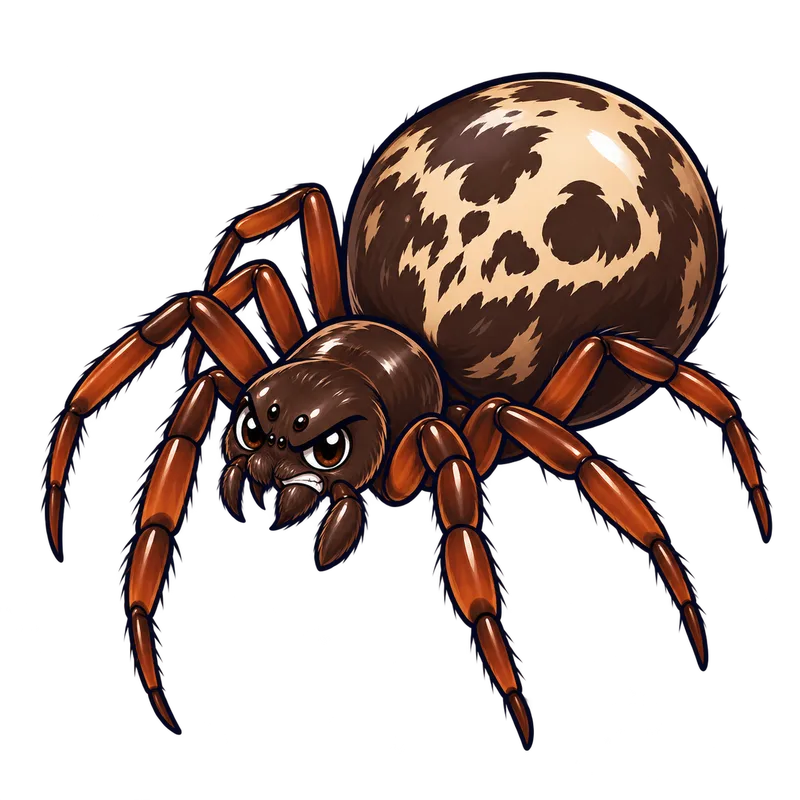
A noble false widow in a UK home is a medium-sized spider with a smooth, glossy, dark reddish-brown to blackish abdomen. It has a deep, rounded body perched on spindly legs, and it sits in a messy, tangled web. A key identifying feature is its plain underside, which lacks the bright red or orange hourglass mark found on a true black widow.
What is actually going on
Picture walking into the conservatory on a brisk autumn evening to grab the watering can, only to spot a dark, glossy shape huddled in the corner of the window frame. It looks remarkably bulky, sitting in a messy, tangled web that resembles an unmade bed rather than the neat wheel webs you see in the garden. If you live in the United Kingdom, encountering a noble false widow spider in your home is entirely possible, and finding one usually prompts an immediate question about just what you are looking at. These creatures often move indoors as the weather cools down, seeking out sheltered spaces like wall and ceiling junctions, dark closets, utility rooms, and the gaps behind furniture.
The noble false widow gets its common name because it shares a striking family resemblance with true widow spiders. Both belong to the comb-footed family and share a distinct body architecture, meaning you will see a deep, rounded, bulbous abdomen perched on rather spindly legs. Because true black widows are not native species in the UK, people naturally worry when they spot a dark, shiny spider indoors. Yet, while they belong to the same broader family tree, false widows have their own distinct physical markers that set them apart from their more famous toxic cousins.
Understanding what you are looking at comes down to a few key anatomical details rather than pure panic. These spiders are generally reclusive, nocturnal, and timid, preferring to retreat rapidly into their silk tubes or dark crevices when disturbed. They do not actively hunt humans or roam across open rooms looking for trouble, and most indoor sightings in late summer and autumn involve mature males wandering in search of mates.
How to tell for sure
When you spot a dark spider in your house, the easiest way to identify a noble false widow is to look for what is missing. Unlike a true black widow, which usually features a bright red or orange hourglass mark on the underside of its belly, a false widow has a plain underside entirely devoid of red or orange markings. The overall body is medium-sized with a smooth, glossy, dark reddish-brown to blackish abdomen, often compared in appearance to a shiny dark plum marble perched on tangled threads.
If you want to look closer, usually with a 10x magnification hand lens, you can check the shape of the head and thorax region sitting just in front of the abdomen. On a false widow, the rear border of this region forms a relatively straight transverse line, creating a distinct capital letter D outline when viewed from above, where the flat back edge sits flush against the blunt front edge of the belly.
You might wonder if you can tell the exact species apart from other similar relatives just by glancing at its coloring. The honest answer is usually no. Confident differentiation between the noble false widow and its close look-alike relatives, such as the cupboard spider, cannot be guaranteed by a layperson based purely on variable cream markings or shades of brown. Definitive species identification usually requires a specialist examining microscopic anatomical structures in a laboratory setting, but for everyday home purposes, recognizing the family traits and the absence of red underside markings is enough to know you are dealing with a false widow.
What usually comes next
When you confirm a false widow is living in your window frame or garage, you need to make one practical decision about how to handle its removal safely. Because bites from these spiders almost exclusively happen when the creature gets accidentally trapped, squeezed, or crushed against the skin, such as when putting on an old pair of gardening gloves or grabbing a stored towel, you should never try to squash one directly against a surface with your bare hands. Instead, use a simple glass and cardboard trapping method or sweep the spider and its messy web gently into a container using a broom.
Beyond removing the individual spider, managing your living space helps keep encounters rare. Clear away stored boxes, old papers, and clutter resting against walls in attics or sheds to remove undisturbed hiding spots. Vacuum regularly along floor edges, ceiling corners, and window sills, making sure to seal and discard the vacuum bag immediately afterward so the spiders cannot simply crawl back out. If you are shaking out stored clothing, footwear, or towels that have been sitting in a dark utility room for months, give them a vigorous shake before putting them on.
When to get help
Most healthy adults who experience a false widow bite suffer only temporary local discomfort, such as localized pain, swelling, and redness at the site, which doctors term steatodism. However, certain situations demand immediate professional intervention or medical care. If you develop systemic symptoms such as intense pain radiating away from the bite site, severe muscle cramping, nausea, vomiting, fever, or heavy sweating, contact a healthcare provider or NHS 111 right away.
You also need urgent medical evaluation if you spot signs of a severe allergic reaction like breathing difficulties, throat swelling, or dizziness, or if a persistent red lesion begins showing signs of a secondary bacterial infection such as spreading warmth, pus, or red streaks days after the event. Keep in mind that many unverified skin lesions blamed on spiders are actually bacterial infections like staph or MRSA, which a clinician must diagnose and treat properly.
When an indoor infestation involves widespread webbing across inaccessible wall voids, subfloors, or high attics where manual broom removal falls short, leave the work to a licensed pest control professional. They can perform structural exclusions, manage harborage cleanup, and apply registered treatments safely according to strict product label directions.