
Brown recluse spider vs wolf spider: how can you tell?
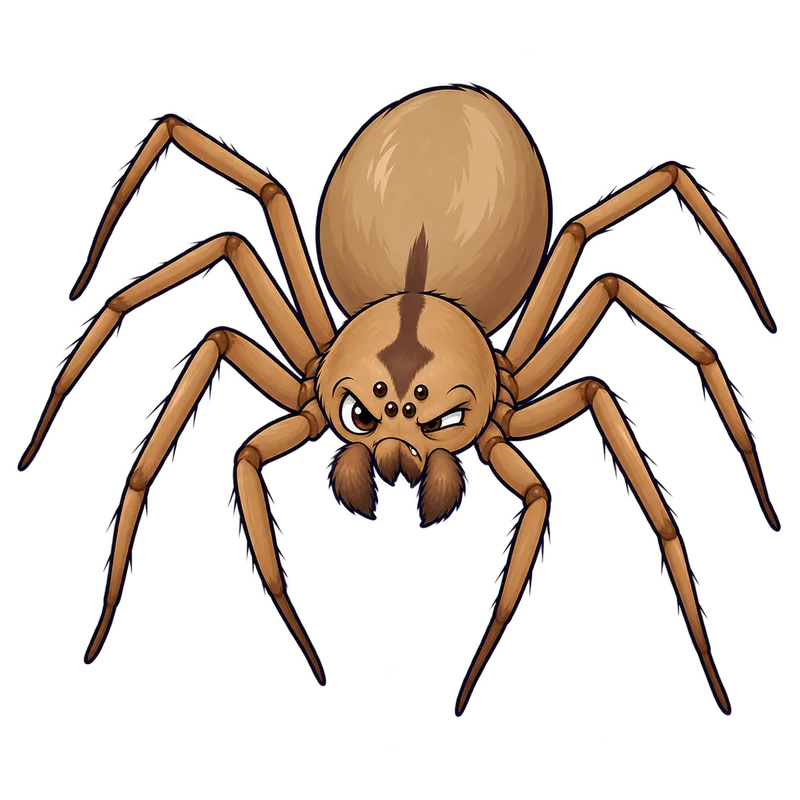
You can tell a brown recluse spider from a wolf spider by checking their eye arrangements and body markings, because brown recluses have six eyes in three pairs and a violin shaped mark, while wolf spiders have eight eyes and patterned bodies. The answer also depends on geography, since brown recluses are native to the southern and midwestern United States.
What is actually going on
You are standing in the basement on a Tuesday evening, moving a pile of old cardboard boxes that has sat undisturbed since last winter. A brown, long-legged creature darts across the concrete floor and vanishes behind the spare refrigerator. Your heart rate spikes just a bit because your mind immediately jumps to the worst possible option. Is that a dangerous brown recluse ready to ruin your week, or is it just a harmless wolf spider doing its regular job of hunting household bugs? People tend to lump every brownish spider into the same terrifying category, which creates a lot of unnecessary panic in homes across the country.
The truth is that you can easily tell the difference between these two spiders if you know what specific features to look for on their bodies. Most folks rely on size or general color when they spot an arachnid scuttling across the baseboard, but those traits vary widely and usually lead to the wrong conclusion. A brown recluse is a shy, retiring creature that stays hidden in dark, quiet spaces, while wolf spiders are robust, active ground hunters that roam out in the open.
Sorting out which one you are actually looking at comes down to examining a few distinct physical details. The differences are not hidden behind complicated laboratory jargon, and you do not need to be a trained entomologist to spot them once you know what to check. Let us look at how to separate the two so you can stop guessing every time you find a spider in your laundry room.
How to tell for sure
The single most reliable anatomical feature for identifying a brown recluse spider is its eye arrangement. While most spiders possess eight eyes, brown recluses have exactly six equal-sized eyes arranged in three distinct pairs, often called dyads, with one pair in the middle and two pairs on the sides. Wolf spiders possess eight eyes arranged in three horizontal rows, featuring a lower row of four small eyes, a middle row of two large prominent eyes, and an upper row of two medium-sized eyes. If you happen to have a magnifying glass or a clear macro photograph, counting those eyes usually settles the debate right away.
Beyond the eyes, you can check the front section of the body, which is called the cephalothorax. Brown recluse adults display a dark brown, violin-shaped marking right behind their eyes, with the neck of the violin pointing backward toward the abdomen. Wolf spiders usually exhibit mottled, dark brown or grayish body patterns, but they never have that specific fiddleback design.
You can also look closely at the legs and the abdomen. A brown recluse has a uniformly light brown or grayish-brown abdomen that is completely devoid of spots, stripes, or patterns, and its eight legs are uniformly colored without dark spines. In contrast, wolf spiders have patterned abdomens and thick, hairy legs with visible dark spines.
Keep in mind that juvenile brown recluses might not show that dark violin marking very clearly, as the pattern develops progressively as the spider matures through multiple molts. Also, brown recluse spiders are native to the southern and midwestern United States, so finding a brown, free-roaming spider inside a home in the Pacific Northwest almost certainly indicates a harmless native species rather than a recluse.
What usually comes next
Once you have figured out which spider you are dealing with, or if you just want to secure your living space against future surprises, your best practical move is to focus on environmental prevention instead of running out for harsh chemical treatments. Brown recluses live up to their name by staying out of sight in dark, undisturbed corners, so modifying those hiding spots makes a huge difference in how often you cross paths with them.
Start by shaking out and inspecting clothing, footwear, towels, and work boots before putting them on, particularly items stored in basements, closets, attics, garages, or outdoor sheds. Store your apparel, footwear, and outdoor equipment in tightly sealed plastic bags or containers so spiders cannot crawl inside them while you are not looking. If you need to handle stored boxes, firewood, lumber, or clear out dark, cluttered spaces, wear protective clothing like long-sleeved shirts, long pants, closed-toe shoes, and leather gloves.
Inside the living areas, move your beds away from the walls, remove hanging bed skirts, and clear out any items stored directly under the bed frame. Vacuum regularly along baseboards, behind furniture, and in room corners, making sure to immediately seal and dispose of the vacuum bag when you finish. Keeping a clean perimeter outside your home by moving firewood, debris, and rock piles away from the outer walls will also discourage these arachnids from setting up housekeeping right next to your foundation.
When to get help
If you experience an unknown bite or suspect you were bitten by a brown recluse, you need to know when to shift from home care to professional medical evaluation. Wash the bite area thoroughly with mild soap and water, apply a cold compress to reduce swelling and pain, and keep the affected limb elevated if feasible. Do not attempt to cut, suck, or mechanically extract venom from the wound, and make sure your tetanus booster is up to date, as routine boosters are recommended every 10 years or within five years following a puncture wound.
Seek professional medical evaluation promptly if you notice expanding redness, severe localized pain, purplish skin discoloration, blistering, open ulceration, or signs of secondary bacterial infection. Over ninety percent of suspected recluse bites and unexplained necrotic skin lesions turn out to be bacterial skin infections like staph or MRSA, insect bites, or other dermatological conditions, so a clinician needs to make the proper diagnosis.
Seek emergency medical attention immediately if you develop systemic symptoms such as fever, chills, nausea, vomiting, joint pain, or a widespread rash, or if you show signs of a severe allergic reaction like difficulty breathing or swallowing. You can also contact the Poison Center Helpline at 1-800-222-1222 for immediate case guidance. If you managed to collect the spider safely in a glass jar or vial with rubbing alcohol, bring it along so an expert can confirm the species. For persistent indoor infestations, engage a professional pest control service rather than guessing at pesticide applications, ensuring that any treatments follow registered product labels strictly.