
What do jumping spiders eat?
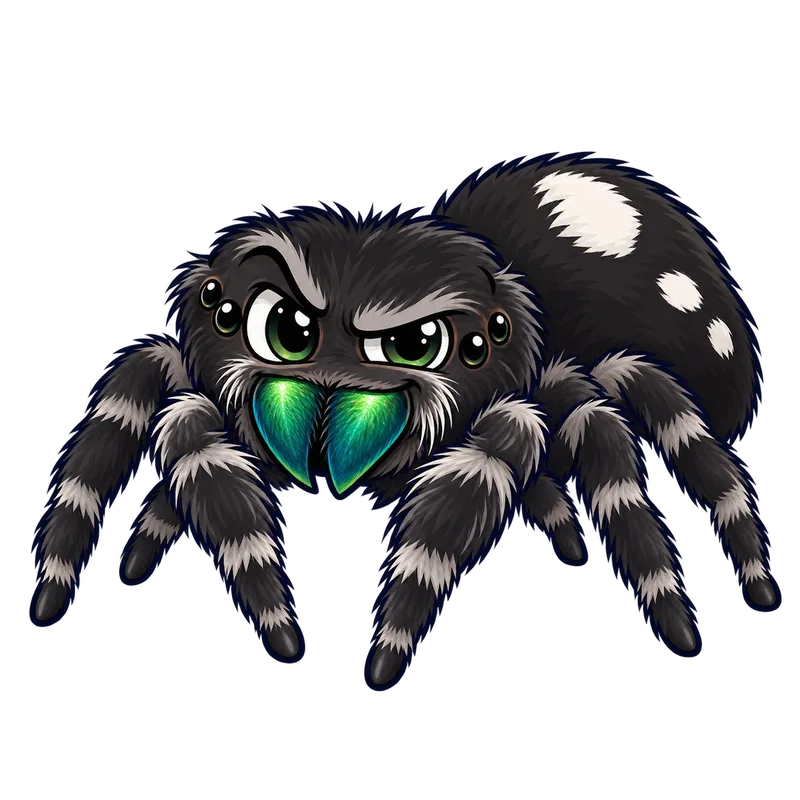
Jumping spiders eat small insects like flies, mosquitoes, and gnats, while certain specialized species also hunt and eat other spiders. They rely on their exceptionally sharp vision to spot prey and actively stalk their targets before executing a sudden leap.
What is actually going on
Picture yourself sitting at the kitchen table on a bright Tuesday morning, watching a tiny, fuzzy creature on the windowsill turn its oversized front eyes to track a house fly. That little acrobat is a jumping spider, and instead of waiting around in a messy web hoping something blunders into a trap, it hunts with the deliberate focus of a miniature cat. Spiders generally use venom delivered through fangs to subdue their meals, and jumping spiders are no exception. They rely on exceptionally sharp vision to spot insects like flies, mosquitoes, and gnats, stalking their targets across walls and plant leaves before executing a sudden, calculated leap.
You might wonder if these compact hunters restrict themselves to flies or if they branch out into stranger menus. While most jumping spiders stick to a steady diet of small insects, certain species take things a step further. Some specialized jumping spiders practice what biologists call araneophagy, which is a fancy way of saying they hunt and eat other spiders. They even creep onto the silken webs of web-building species, plucking the threads to trick the resident spider into coming out to investigate, turning the tables on an ambush predator.
It helps to clear up a common mix-up right away. People often confuse jumping spiders with harvestmen, those long-legged creatures commonly called daddy-long-legs. Harvestmen are not even spiders, and they lack venom glands, fangs, and the ability to hunt like a jumping spider. When a jumping spider catches a meal, it uses its functional fangs and venom to immobilize the prey quickly, digesting it safely out of sight.
How to tell for sure
If you are trying to figure out what is crawling across your porch or garden bench, jumping spiders are usually easy to spot by their compact, stout bodies and remarkably expressive, large front eyes. They typically move in sharp, jerky bursts rather than scurrying smoothly like a house centipede, and they can leap surprising distances when startled or chasing prey.
You can usually tell a jumping spider is hunting by the way it tilts its head, tracking movement with an intelligence that feels almost vertebrate. If you look closely at where it hangs out, you usually will not find an intricate sticky web. Instead, they usually spin small, silken retreats where they sleep or molt, but they do most of their actual food gathering out in the open.
When you compare them to non-spider arachnids like harvestmen, the differences are usually obvious if you get a good look at the body shape. Jumping spiders have two distinct body regions and short, sturdy legs, whereas harvestmen usually look like a tiny oval ball attached to excessively spindly limbs. If the creature in question is actively stalking a fly on your houseplant, you are almost certainly looking at a jumping spider doing what it does best.
What usually comes next
When you spot a jumping spider inside your house, the best practical decision is usually to leave it alone or gently relocate it rather than reaching for a pesticide spray. They act as beneficial native predators that clear out nuisance flies and gnats around your living spaces, earning their keep as quiet, harmless house guests.
If one wanders onto your desk or near your bed and you prefer it outside, you can usually capture it safely by placing a small clear container over it, sliding a piece of stiff paper underneath, and carrying it out to the garden. Avoid trying to swat it against a hard surface, as these curious little creatures are entirely harmless to humans and pets.
For the home exterior, managing occasional spiders usually comes down to basic physical exclusion rather than chemical treatments. Caulking gaps around window frames, repairing torn window screens, and clearing dense piles of wood or organic clutter away from your foundation will usually reduce the number of insects that wander inside, which in turn removes the food supply that attracts wandering hunters.
When to get help
You rarely need professional pest control for jumping spiders, as they do not damage structures, build messy webs, or pose a threat to your household. If you are seeing large numbers of spiders indoors, a professional can help investigate the underlying insect population that might be drawing them inside, relying on standard management principles rather than broad chemical sprays.
If someone suffers a bite or develops an unexplainable skin lesion, keep in mind that jumping spiders are non-aggressive and timid, rarely biting unless trapped tightly against the skin. Medically significant bites from dangerous spiders are restricted to entirely different groups, neither of which are jumping spiders. If you notice unusual skin lesions, spreading redness, or systemic symptoms, do not try to diagnose a spider bite yourself. Contact a clinician, visit an urgent care center, or call poison control, as bacterial infections and other medical issues are frequently mistaken for spider bites.