Onion thrips
Thrips tabaci
- Size
- About 1/25 inch long (approximately 1.0 mm)
- Color
- Bright yellow
- Habitat
- Agricultural fields, home gardens, greenhouses, and weed borders
- Diet
- Plant epidermal tissue and cell juices from Alliums and other crops
- Life cycle
- 3 to 4 weeks from egg to adult with multiple overlapping generations
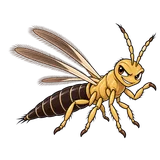
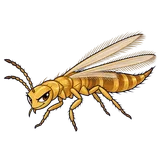
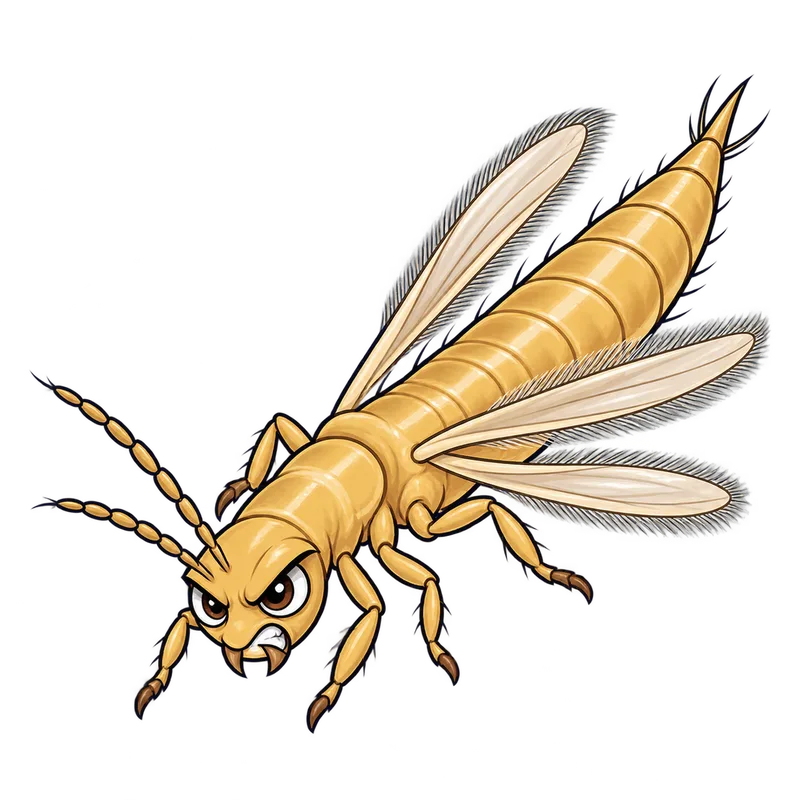
You are likely looking at a tiny, moving yellow speck on an onion leaf or a garden bud, and without help, it just looks like a grain of pollen with legs. To the naked eye, individual onion thrips are nearly invisible against green foliage. Pulling out a 10x hand lens transforms that blurry speck into an elongate, slender creature measuring about 1/25 inch long, with two pairs of delicate, narrow wings fringed with fine hairs that fold flat over its back.
Identity
Telling onion thrips apart from their relatives in the garden can turn into an exercise in frustration. Melon thrips look strikingly similar, but they wear a dead giveaway in the form of a dark longitudinal line down their back where the wings meet at rest. Poinsettia thrips dwarf onion thrips by comparison, measuring closer to 1.7 mm and showing off a dark brown or black body split by a pale transverse band. Western flower thrips also share the same neighborhood on garden plants, but separating them from onion thrips requires peering under a high-power microscope to count and measure microscopic bristles on their bodies.
Habitat & behaviour
Onion thrips spend their winters tucked away as adults or nymphs inside dry plant debris, crop residues, or uncultivated weeds sitting right along the edge of the garden. Once the weather warms up in early summer, these survivors take flight and head straight for vegetable beds and commercial crop fields. They love sheltered spaces, so you will rarely find them sunbathing on flat leaf surfaces. Instead, they crawl deep inside unopened leaf buds, tight leaf sheaths, and flower clusters where they can rasp away at the plant tissue undisturbed.
Gardeners often invite them in without realizing it by laying down heavy nitrogen fertilizer. Pumping up the nitrogen creates lush, tender green growth that acts like an open invitation to passing thrips. As those summer months turn warm and dry, populations multiply rapidly through continuous, overlapping generations taking 3 to 4 weeks from egg to adult. When weed borders dry out around the property in mid-summer, the local thrips population simply packs up and migrates into neighboring garden plots to keep feeding.
Visual variations
Life starts as a tiny egg tucked directly into delicate plant tissue by an adult female. Once hatched, the immature nymph looks like a smaller, wingless version of the adult, featuring a soft body colored bright yellow to pale cream with dark compound eyes. These active nymphs crawl around young foliage and leaf sheaths doing their share of feeding, completely lacking the wings of their older counterparts.
As they mature into adults, they develop two pairs of narrow wings bordered with fine hairs, shifting into their characteristic bright yellow, torpedo-shaped form measuring about 1/25 inch in length. There are no social castes in this species to complicate things, and the physical differences between males and females remain largely unrecorded in the field since populations reproduce through both sexual and asexual means.
Why it matters
When onion thrips rasp open plant cells and suck out the juices, they leave behind silvery or white blotches known as stippling that make healthy leaves look bleached and battered. Heavy feeding causes leaf tips to wither, turn brown, crinkle, and drop off prematurely, while bud damage leads to stunted and distorted vegetable growth. Beyond physical wear and tear, this species serves as the primary vector for Iris Yellow Spot Virus, a pathogen that wreaks havoc on Allium crops and can wipe out entire seed yields. Interestingly, the virus plays a strange biological trick on its carrier, extending the adult thrips lifespan by approximately 20% and giving it even more time to hop to neighboring plants and spread the infection.