
How do you get rid of thrips on plants?
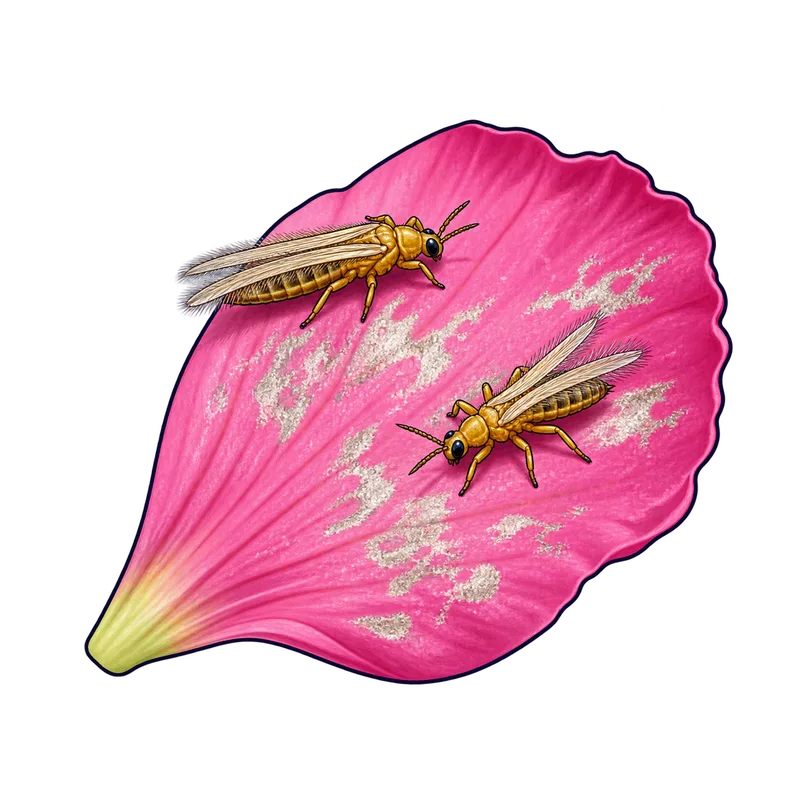
Getting rid of thrips on plants requires a balanced approach that starts with physical removal, such as washing the foliage thoroughly with tepid water and a mild insecticidal soap. Because the lifecycle takes three to four weeks and females hide eggs inside plant tissue, success depends on following up with targeted sprays or biological controls, using repeated checks, and rotating methods to prevent resistance.
What is actually going on
You walk over to your favorite indoor fiddle-leaf fig or check the tomatoes out on the back patio, and something looks off. The leaves have lost their healthy green sheen, replaced instead by a dull, silvery look that seems dusty, except it will not wipe away. When you turn a leaf over, you spot tiny, elongated specks that resemble stray grains of black pepper scattered across the undersides. Those are thrips, and they have moved in to feed.
Getting rid of these pests requires a steady plan because thrips are persistent, tiny, and remarkably good at hiding in tight spaces like leaf joints and opening flower buds. Instead of relying on a single magic spray, you need a balanced approach. This means starting with physical removal, following up with biological controls or targeted sprays, and rotating your methods to keep the insects from growing immune to your treatments.
Thrips possess rasping-sucking mouthparts that function much like a tiny paper straw poking into individual plant cells. They puncture the outer layer of the leaf and suck out the cell contents, leaving behind an empty pocket filled with air. That air pocket is what creates the characteristic silvery scarring. As they feed, they leave behind small, tar-like drops of dark liquid waste, which serves as one of the clearest signs of an active thrips invasion rather than general plant stress.
The entire lifecycle from egg to adult takes roughly three to four weeks under normal conditions, but warm indoor heating or greenhouse environments speed that timeline up significantly. Because females lay eggs directly inside plant tissue where sprays cannot reach them, new generations hatch out in waves. If you only kill the adults you see today, a fresh batch of nymphs will emerge a few days later, which is why patience and repeated checks are necessary.
Before you start spraying anything, you need to confirm what you are dealing with. Thrips are notoriously small, often measuring less than two millimeters in length, so looking at them with the naked eye usually just leaves you squinting at a moving speck. Grab a 10x to 20x hand lens or a jeweler loupe to inspect the undersides of the leaves and the tips of growing stems.
Adult thrips are slender, sometimes winged insects that can be yellow, brown, or black depending on the exact species. Nymphs are smaller, wingless, and usually pale yellow or cream colored, shuffling along clumsily when disturbed. You will usually find them clustered on the lower leaf surfaces or tucked tightly inside young, unspooled leaves and developing buds.
One common mistake is mixing up thrips damage with spider mite damage. Spider mites leave fine, silky webbing across the plant and cause a fine yellow stippling, but they do not leave behind those distinctive dark tar spots. If you see shiny black pepper specks alongside silvery, bleached patches on the foliage, you are usually looking at thrips.
It is also worth noting that certain regulated species look entirely yellow with a dark line down the back where their wings fold. If you suspect an exotic quarantine pest in a commercial or large agricultural setup, local agricultural authorities usually require formal reporting. For everyday houseplants and backyard gardens, however, standard identification is enough to kick off your control routine.
How to tell for sure
Once you have identified the pest, you have to decide your first move based on how heavy the infestation is and where your plants live. If you find just a few thrips on a single houseplant, your best practical decision is to isolate that plant immediately from your green collection, take it to the sink or shower, and wash the foliage thoroughly with a gentle stream of tepid water and a mild insecticidal soap.
Physical washing dislodges active adults and wingless nymphs right down the drain, cutting down the population instantly without hauling out heavy chemicals inside your living room. Follow that wash by pruning away severely damaged, dying leaves and tossing them into a sealed plastic bag. Hanging yellow or blue sticky cards right above the plant canopy will help catch any remaining adults that try to fly away during the cleanup.
If the infestation covers outdoor garden beds or a larger collection where washing every leaf is impractical, you will need to step up to a targeted spray or introduce biological predators. When choosing a spray, timing matters immensely. You must apply these treatments at dusk or early in the morning so the product has time to dry before bees and other pollinators wake up and start foraging.
Always check the pre-harvest interval on any edible crops you are treating, which tells you the required wait time between spraying and picking your vegetables or berries. If you use a microbial or organic spray, rotate to a different active class after two or three applications. Thrips are quick to develop resistance, and changing your tactics stops them in their tracks.
What usually comes next
There are moments when a do-it-yourself approach is no longer enough and you need to hand the problem over to someone else. If you grow crops commercially and suspect a regulated quarantine pest, you must contact your local plant health agency or agricultural extension office immediately, as statutory reporting rules apply to prevent widespread agricultural damage.
When to get help
You should also bring in a professional or consult a university extension entomologist if you notice rapid virus symptoms spreading through your crops, such as severe ring spots, twisted stunting, or chlorotic patterns. Thrips act as vectors for devastating plant viruses. Once a plant contracts a plant virus, the plant cannot be cured, and professional diagnostic confirmation combined with strict removal of infected hosts is the only way to stop it from jumping to neighboring plants.
Finally, if you have rotated through different treatments properly but the thrips population keeps bouncing back stronger than before, you are likely dealing with chemical resistance. Commercial growers and advanced hobbyists facing stubborn, resistant populations should consult a licensed pest control advisor to restructure their management program or deploy specialized predatory insect releases safely.