
How can you monitor thrips without assuming every black insect is a thrips?
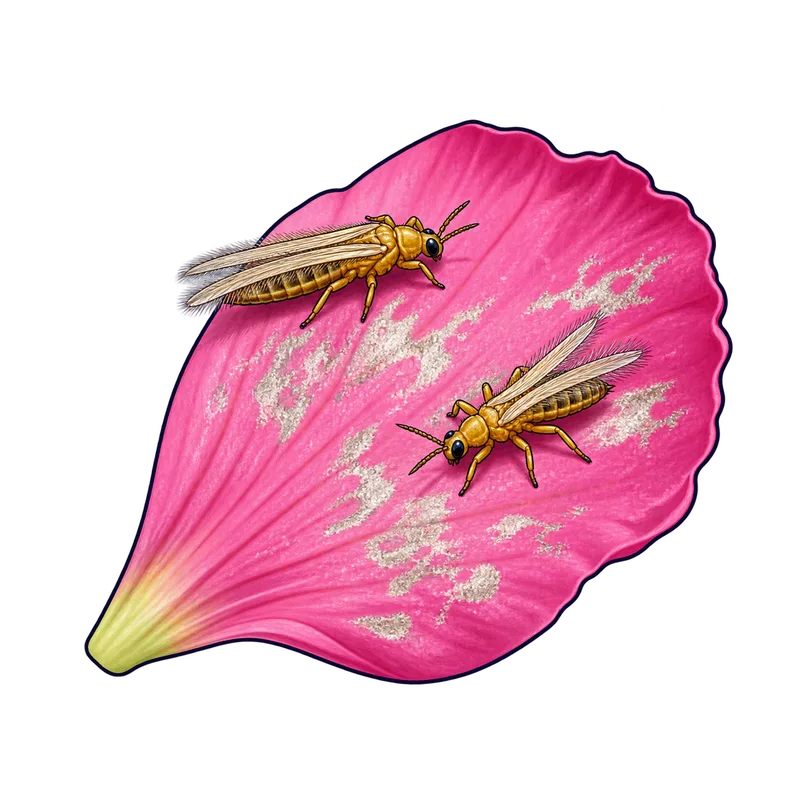
You can monitor thrips accurately by using a 10x to 20x hand lens to spot their slender bodies and feather-like wings, depending on using magnification rather than assuming every black insect is the pest. Adult thrips measure roughly 0.5 to 1.7 mm, and you can confirm them by checking foliage for a silvery metallic sheen paired with tiny black tar spots of frass.
What is actually going on
You spot a tiny black speck crawling across your favorite houseplant leaf, panic slightly, and immediately assume you are dealing with a thrips invasion. It is a common reflex. Every time a mysterious dark insect appears on foliage or a sticky trap, the internet seems eager to blame thrips. But assuming every black bug wears the same badge of trouble leads to frantic treatments that miss the actual target.
Accurate monitoring means stepping back from the naked-eye guesswork. Adult thrips are microscopic, measuring roughly 0.5 to 1.7 mm, which looks like a tiny sliver of dark thread or a stray grain of cracked black pepper moving across the green. Yet color alone is a terrible detective. While certain species feature dark brown or black adult bodies, others emerge bright yellow or cream. Even worse, immature thrips nymphs are usually pale, translucent, or ivory.
When you rely solely on color, you are bound to misidentify other harmless or entirely different pests. That small black speck hopping frantically when you get close is likely a flea beetle chewing clean, round holes right through the leaf tissue. Those delicate dark flies hovering near the base of your potting soil are fungus gnats, whose larvae live down in the damp dirt rather than rasping plant leaves. Thrips live a different lifestyle entirely, and spotting them requires looking past the color to examine body shape and feeding habits.
How to tell for sure
Pinning down thrips usually demands a bit of optical aid, because your bare eyes will generally fail you at this scale. Grab a 10x to 20x hand lens or a 30x to 60x jeweler's loupe before you make any final calls. Under magnification, adult thrips reveal a slender, torpedo-shaped body and narrow, feather-like wings bordered with fine hair fringes that fold neatly flat along the abdomen.
If you suspect a cluster of thrips hiding deep within flower buds or tight leaf axils, try the paper knocking test. Take a clean sheet of white printer paper, hold it right beneath a blossom, and give the stem a gentle tap. Any dislodged thrips will tumble onto the paper as minute, thread-like specks crawling across the white background.
Next, look closely at the damage on the foliage itself. Thrips feed by puncturing individual plant cells with asymmetrical mouthparts, sucking out the fluid and leaving behind air-filled cavities that create a silvery, metallic sheen. Crucially, they leave behind tiny, dry, black tar spots of frass, which look like microscopic specks of printer toner. This contrasts sharply with aphids, which excrete sticky liquid honeydew that fosters black sooty mold, or flea beetles, which leave behind clean holes rather than silver scars.
Monitoring traps also benefit from a strategic upgrade. While standard yellow sticky cards catch everything from fungus gnats to whiteflies, blue sticky cards offer higher visual contrast and selectivity for thrips, acting more like a dedicated lane that captures your target while ignoring casual fliers.
What usually comes next
Once you prove you are actually dealing with thrips instead of an innocent spectator, you can pick a reasonable fix without burning leaves or burning cash on useless chemicals. Catching them early makes low-tech removal surprisingly effective. Giving the foliage a gentle shower with room-temperature water in your sink or wiping the leaves with a damp cloth physically knocks off adults and immature nymphs alike.
If the trouble is isolated to a single plant, a cotton swab soaked in 70% isopropyl alcohol lets you pick off individual bugs by hand. Snapping off ruined foliage keeps the infestation from marching down the row, as long as you seal those clipped leaves in a bag and throw them directly into the trash outside.
When numbers grow beyond manual picking, organic contact sprays offer a sensible next step for home growers. Insecticidal soap knocks down soft young nymphs quickly, though you need total coverage under every leaf, and it allows harvest the very same day on edible crops with a zero-day wait. Spinosad offers another targeted organic option against thrips, but you have to consult the product label for strictly enforced pre-harvest intervals, like waiting one day for strawberries or three days for standard garden vegetables.
The bottle label remains your legal standard for application rates and safety. Spraying plants during open bloom is strictly forbidden to protect foraging bees and beneficial pollinators. Schedule any applications for early morning or late evening, and test the liquid on a single leaf first to ensure it will not cause chemical burn.
When to get help
Most mild indoor cases submit nicely to sticky traps, water rinses, and selective sprays, but larger setups demand higher authority. If you manage a commercial greenhouse or plant nursery and face widespread leaf speckling, twisted growth, or signs of plant viruses such as Tomato Spotted Wilt Virus, call in a diagnostic specialist or reach out to your local university extension service.
Thrips-vectored plant diseases produce permanent ring spots and crippled growth that no home spray can undo. You must also notify official plant health agencies if you suspect a regulated quarantine pest like the melon thrips has moved into your growing facility.
Relying on endless pesticide sprays backfires when bugs develop resistance or when sprays eliminate beneficial predatory mites, leaving you with runaway spider mite outbreaks that wreck foliage faster than the original problem. If counts keep rising despite careful identification and clean habits, a licensed pest control operator or crop advisor can map out a proper treatment plan before the greenery suffers lasting harm.