
Do thrips live in soil?
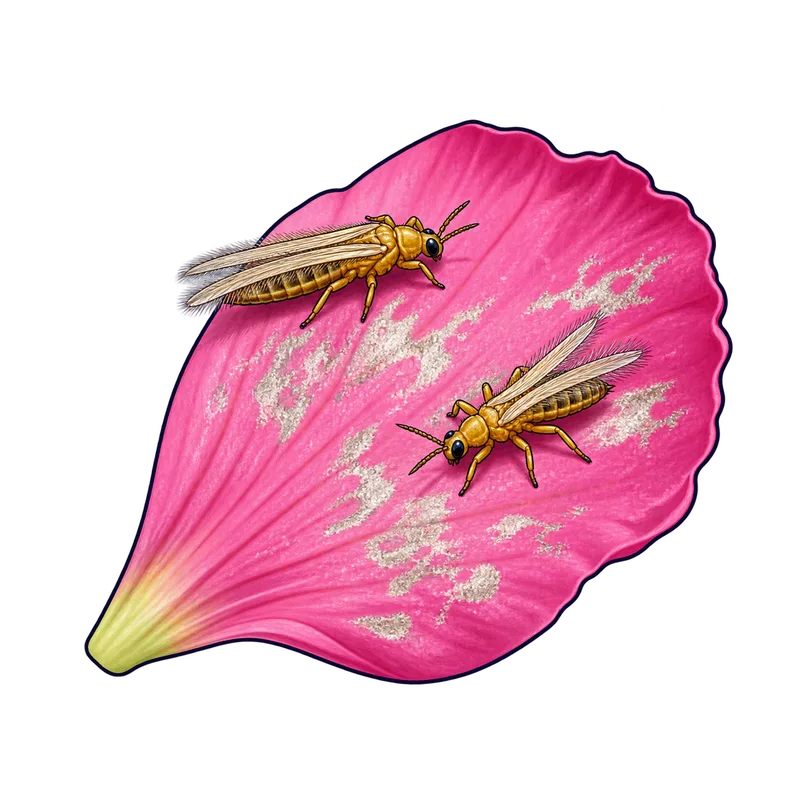
Yes, thrips live part of their lives in the top inch or two of soil, potting mix, or leaf litter. Adult thrips and young larvae feed on the plant above, but the young drop into the soil to pass through resting stages before emerging as winged adults.
What is actually going on
Say you are repotting a houseplant on the kitchen counter, or turning over a garden bed in spring, and you start wondering whether those tiny sliver-shaped insects you saw on the leaves last month could be living down in the dirt. Fair question. The honest answer is: sort of, yes, but not the way most people picture it.
Thrips do not live in soil the way earthworms or grubs do. They do not tunnel, they do not chew roots, and they do not raise families underground. The adults and the young larvae spend their feeding lives up on the plant, rasping at leaves, buds and flowers and sucking out the contents of the surface cells. That is where the damage shows: the silvery streaks, the curled leaves, the stunted buds. But here is the part that surprises people. When a young thrips finishes feeding, it usually drops or crawls down off the plant and buries itself in the top inch or two of soil, potting mix or leaf litter. Down there it passes through two resting stages, called the prepupa and pupa, where it does not feed at all. It just sits in the dark, sheltered and quiet, while its body rebuilds itself into the winged adult form. Then the adult climbs back up and the whole show starts again.
So the soil is less a home and more a nursery, or an underground bunker if you prefer. While you are up top spraying the leaves, a whole cohort of future adults is sitting downstairs in the potting mix, completely out of reach. This is also why thrips seem to come back from the dead a few weeks after a thorough treatment. You killed the ones on the plant. The ones in the soil simply waited you out, then emerged and marched back upstairs. In warm conditions the full cycle from egg to adult takes roughly 3 to 4 weeks, so the waves can feel relentless.
There is one more soil connection worth knowing. Outdoors, many thrips species spend the winter in the ground, tucked into crop debris, weed roots, fallen leaves and the surface layer of soil, then re-emerge when things warm up. And in greenhouses or indoor grow spaces, reused or unsterilized potting soil can act as a reservoir, quietly carrying pupae from one planting to the next. So no, the soil is not where thrips live, exactly. But it is absolutely part of their life, and ignoring it is the single most common reason infestations drag on.
How to tell for sure
First, a reality check on size. An adult thrips is about 1 mm long, roughly a moving grain of pepper or a fleck of dark dust on a leaf. You will not reliably confirm them with the naked eye, so do not feel bad about squinting at a leaf and coming away unsure. A hand lens at 10x to 20x magnification is the standard tool, and honestly it changes the whole experience from "I think something is wrong" to "oh, there they are."
What you are looking for on the plant is a combination of clues rather than one smoking gun. Slender, fast-moving insects that scurry or flick away when disturbed. Leaves with silvery or stippled patches, curling or puckering, brown withered tips. And a very useful one: tiny hard black dots on the undersides of leaves. That is thrips droppings, dried into specks, and it often shows up before you ever spot an insect. A classic trick is to hold a white sheet of paper under a flower or leaf and tap the plant sharply. Thrips fall onto the paper and show up as tiny moving dashes against the white.
Can you confirm the soil stage yourself? Sort of. If you gently scrape aside the top layer of potting mix or leaf litter under an infested plant, you may find small, pale, sluggish larvae that barely move, since the prepupae and pupae are non-feeding and nearly motionless. They are easy to miss and easy to confuse with other tiny soil creatures, so treat that as supporting evidence rather than proof. One useful caveat: not every thrips goes to ground. Some species, like the poinsettia thrips, can pupate right on the leaves and stems, and others shelter in bark crevices or fruit instead of soil. Whether soil is part of the picture usually depends on the species and the setting.
And a firm line worth drawing: working out exactly which species you have is lab work, not kitchen-counter work. Some thrips look nearly identical even under magnification, and a few are regulated quarantine pests. If what you are seeing does not match the common garden picture, that is a job for your local extension service, not guesswork.
What usually comes next
So here is the decision you are actually making, whether you realize it or not: are you fighting thrips on the plant, or on the plant and the soil together? Most people pick the first option without thinking about it, and it is the option that fails. Spraying only the leaves is like vacuuming the upstairs of a house while the basement stays dusty and occupied. The pests just come back up the stairs.
The smarter approach works in two layers. For the soil layer, the gentlest and most underrated move is managing moisture. Thrips pupae need ambient moisture to survive, so letting the top inch or two of potting mix dry out between waterings makes the nursery genuinely inhospitable. Here is the ironic part: many people do the exact opposite, watering more because the plant looks stressed, which rolls out a damp welcome mat for the next generation. For houseplants, start with fresh, sterilized potting mix instead of scooping in garden soil or old compost, and clean your pots and tools before replanting. 70% isopropyl alcohol or a 1:10 bleach solution does the job fine. Outdoors, clearing fallen leaves, weeds and crop debris around beds removes the overwintering sites, and in hot summer climates, covering moist tilled soil with clear plastic for several weeks can cook pupae and other soil pests outright.
If you want something actively working for you down there, this is one case where biology genuinely delivers. Predatory soil mites and beneficial nematodes are sold specifically to hunt thrips pupae in the root zone, and they reach exactly the life stage that sprays cannot touch. Up on the plant, softer options like insecticidal soap or neem-based products work on contact with the feeding stages, and spinosad is a common choice with real effectiveness, though it is highly toxic to bees while wet. That means it goes on in early morning or evening when pollinators are not around, and the label always governs timing, crops and harvest intervals. And resist the urge to nuke everything with a broad-spectrum pyrethroid. Those tend to wipe out the predatory mites that were quietly helping you, and spider mite outbreaks love to move into the vacancy.
When to get help
Most thrips problems are a gardening nuisance, not an emergency, and the moves above handle a typical houseplant or garden-bed situation. But a few situations call for backup, and it is worth knowing them in advance rather than learning the hard way.
If your plants show severe damage that keeps escalating despite reasonable treatment, things like heavy bronzing, widespread leaf distortion, bud drop or deformed fruit, a professional horticulturist, licensed applicator or your local cooperative extension office can pin down what you actually have and what your soil and climate mean for control. That matters more than it sounds, because the right move genuinely depends on the species and the setting.
If you suspect something unusual, especially on citrus, strawberries or ornamentals that came from outside the country, do not just treat and forget. Certain thrips are regulated quarantine pests, and in the United States the right move is to contact your state university extension service or USDA APHIS before doing anything drastic. Reporting a suspicious pest is helpful, not dramatic.
Two more boundaries, quickly. Thrips occasionally land on people and can cause a brief prickling sensation, but they do not parasitize humans or spread human disease. If you have a persistent rash or skin irritation, do not let anyone, including me, blame it on a bug sighting. See a clinician. And if anyone in the household has a reaction to a pesticide product, that is a call to poison control or urgent care, not a wait-and-see. The soil nursery is beatable. It just takes fighting on both floors at once.