
What do thrips damage and black specks on leaves suggest?
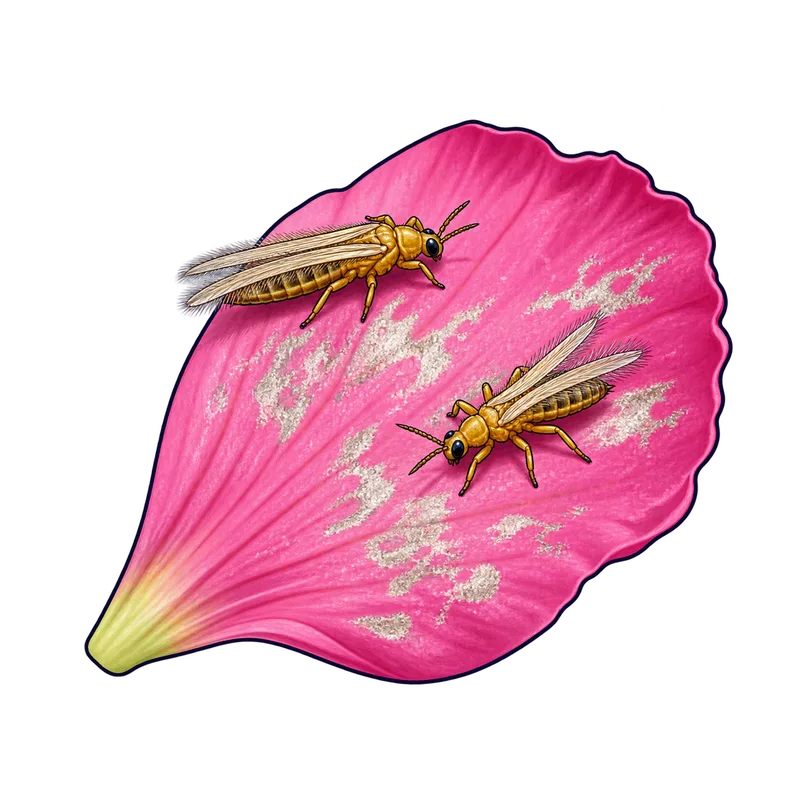
Thrips damage and black specks on leaves suggest an active thrips infestation. The damage creates a bleached silvery sheen and distorted growth as the pests feed on plant juices, while the black specks are hard, tar-like liquid fecal droppings known as frass.
What is actually going on
You are standing by the kitchen window, holding up a leaf of your favorite houseplant or garden shrub, and something looks deeply wrong with it. The upper surface has lost its rich green color, trading it for a strange, bleached, silvery sheen that almost looks like someone brushed it with fine aluminum dust. When you flip the leaf over, you notice tiny, raised black specks scattered across the tissue alongside a few slow-moving, slender specks of dust that are actually tiny insects. You might wonder if the plant just has plain dirt splashed on it from watering, or perhaps some sort of mold is taking over.
What you are looking at is a textbook sign of an active thrips infestation, and those little black specks are not spores, dirt, or mold. They are liquid fecal droppings, known as frass, left behind by the insects as they feed. Thrips are microscopic, slender pests equipped with specialized mouthparts that rasp open the outer layer of plant cells and suck out the juices, including the chlorophyll. As the liquid drains from those cells, air takes its place, which creates that bleached, papery silvering on the leaf surface.
While they feed, these insects continuously excrete liquid waste onto the plant. Once that liquid hits the air, it dries into hard, discrete, tar-black spots that look remarkably like grains of freshly cracked black pepper. If you also notice the new growth emerging twisted, cupped, or stunted, you are watching the classic progression of thrips damage. These pests reproduce quickly in warm environments, meaning a small group can turn a healthy plant into a distressed, discolored skeleton in just a few short weeks.
How to tell for sure
Telling thrips apart from other common plant pests usually comes down to looking closely at the specific patterns of damage and waste. A casual glance will not cut it here, so you will usually need a hand lens of 10x to 20x magnification, or a jeweler's loupe, to examine the leaf undersides properly. Thrips leave behind those distinct, raised black frass dots alongside silvery, papery scarring and distorted leaves.
People often confuse this with spider mite damage, but spider mites weave delicate silk webbing, cause fine yellow stippling instead of silvery blotches, and never leave behind tar-like black fecal drops. Another common mix-up involves lace bugs. Like thrips, lace bugs leave dark, liquid frass spots that harden into black dots, but they operate differently. Lace bugs usually stick strictly to the undersides of leaves and produce a patchy, yellow-to-bronze stippling on the upper surface, whereas thrips attack both sides and bleach the foliage entirely silver.
You might also wonder about sticky honeydew secretions from aphids, whiteflies, or scale insects. Those pests excrete a clear, sugary liquid that feeds a secondary, wipeable black fungal growth called sooty mold. Thrips do not produce honeydew, and their black specks are solid, raised dots that do not smear away like a mold film. If you find tiny yellow or dark brown elongated insects moving when nudged, combined with those pepper-like black specks and silvery patches, you are almost certainly dealing with thrips.
What usually comes next
Once you confirm you have thrips, you have to make a practical choice about how to manage them based on the severity of the infestation and where the plant lives. If the plant is an indoor houseplant or a small potted patio specimen, starting with a mechanical cleanup is usually the most sensible first step. Take the plant to the sink or shower and wash the foliage thoroughly with a gentle stream of tepid water to dislodge active bugs and wash away the frass.
For tougher leaves, you can wipe both the top and bottom surfaces using a soft cloth dampened with water or 70% isopropyl alcohol. Pruning away heavily damaged, dying stems or leaves also helps lower the overall population immediately. When physical washing is not enough, you have to look at biorational sprays or insecticidal soaps, but you must read the product label carefully before applying anything. Insecticidal soaps and horticultural oils work by contact to disrupt the outer layer of soft-bodied nymphs.
Never spray treatments during the heat of midday, because applying oils or soaps under intense sun causes severe leaf burn. Furthermore, if your plants are currently blooming, hold off on spraying entirely. Products like Spinosad and pyrethrins are toxic to bees and beneficial pollinators when wet, so any spraying needs to happen strictly in the early morning or late evening when those insects are not active.
When to get help
Most minor thrips flare-ups on houseplants or garden beds can be managed with patience and careful treatments, but there are times when you need to step back and call in outside help. If your plants show severe, systemic distress alongside thrips activity, such as extreme stunting, yellow ring spots, or unusual leaf curling, the insects may have transmitted a plant virus. Certain viruses spread by thrips can devastate entire garden beds or greenhouse crops quickly, and local agricultural extension agents can help confirm if a pathogen is at play.
You also need to pay attention if you suspect a regulated quarantine pest. Certain species, such as the melon thrips, are heavily monitored biosecurity threats in many regions. If local agricultural authorities or extension services flag a severe outbreak of a regulated species in your area, professional intervention or mandatory reporting may be required by law.
On the human side of things, thrips occasionally land on bare skin and deliver a minor, pinching bite if they are searching for moisture. They do not feed on human blood, nor do they transmit human diseases, but any persistent skin irritation, allergic reaction, or unusual bite lesion should be evaluated by a medical clinician rather than brushed off as a simple garden nuisance.