Thrips parvispinus
Thrips parvispinus
- Size
- Not established
- Color
- Variable by species
- Habitat
- Plant tissue, crops, and greenhouse foliage
- Diet
- Plant cell contents, buds, and fruit surfaces
- Life cycle
- 3 to 4 weeks from egg to adult
Thrips parvispinus is a tiny, plant-feeding insect that you are most likely to encounter when inspecting damaged greenhouse foliage, nursery stock, or struggling ornamental plants. Because specific physical measurements for this exact species are not established in our primary reference sources, it helps to understand the broader family traits you will actually see in the field. Common thrips are slender creatures that practically demand a hand lens or a 10x magnifier just to make out their basic shape.
Identity
When you pull out your magnifier to inspect a suspect leaf, you are looking at an insect measuring roughly 1.0 mm to 1.7 mm in length. For instance, Thrips tabaci adults measure about 1/25-inch long, which is roughly 1.0 mm, while Echinothrips americanus reaches about 1.7 mm. Coloration varies wildly across the group, ranging from bright yellow in Thrips tabaci and Thrips palmi to dark brown or black with a pale transverse band in Echinothrips americanus. You might wonder if you can tell them apart in your garden without special tools. The honest answer is that you cannot. Distinguishing among similar species usually requires an entomologist to examine microscopic physical structures in a laboratory, so do not beat yourself up if your hand lens leaves you guessing.
Habitat & behaviour
These insects are generalists that divide their time between outdoor crops, garden ornamentals, and protected greenhouses. Activity picks up as temperatures rise in the warmer months, drawing adults to host plants where they deposit eggs on expanding buds and tender foliage. They can cycle through multiple overlapping generations before autumn arrives. When winter rolls around, they manage to survive by sheltering as adults and immature nymphs in plant debris or tucked away in protected crevices like citrus navels, where Caliothrips fasciatus occasionally aggregates in groups of up to 40 individuals. Greenhouse environments also allow temperature-sensitive species to persist year-round when outdoor winters are too harsh.
Visual variations
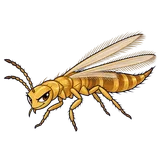
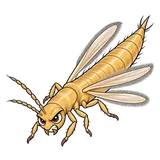
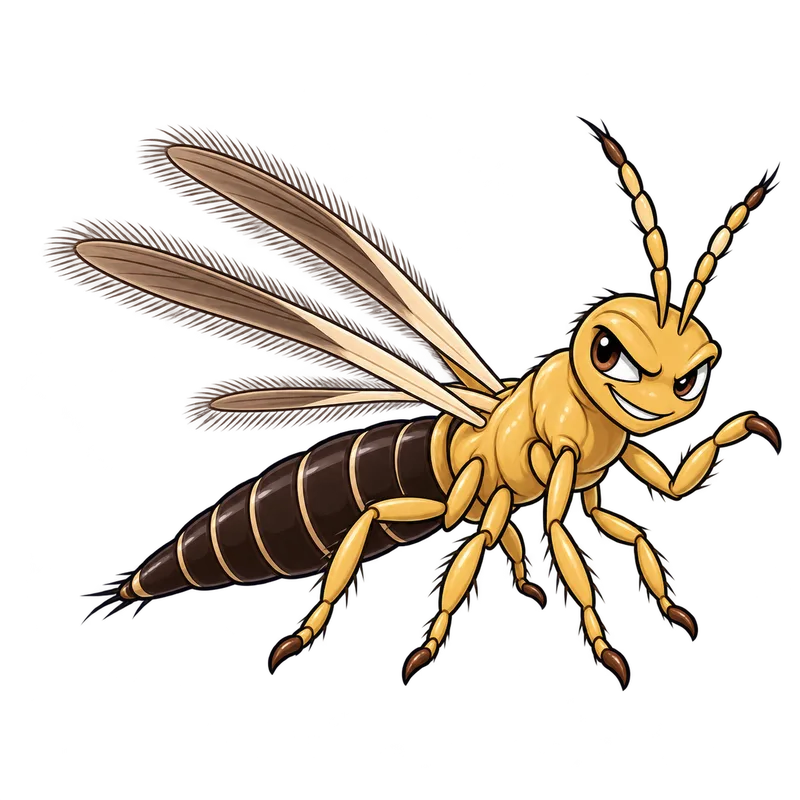
The life cycle moves through distinct stages, beginning with tiny eggs that females either drop loosely onto plant surfaces or push straight into plant tissues. Once those eggs hatch, the immature nymphs emerge as smaller, wingless versions of the adults, usually pale or light yellow. They get around by walking or by hitchhiking on your clothes and garden tools. Adults grow narrow, fringe-like wings edged with delicate hairs, which means they are capable of weak, drifting flight rather than purposeful steering. Reproductive strategies also vary, with some species relying on parthenogenesis, a process where unmated females set up new populations entirely without males.
Why it matters
These insects do not bite, sting, or carry human diseases, but their feeding habits can still devastate a garden by leaving behind distorted leaves, silvery surface scarring, and dark fecal spots that dry into hard black specks. It is easy to mistake this damage for spider mite feeding at first glance. However, mites leave fine silk webbing behind, while thrips leave only those dark fecal specks and never spin webs. Beyond direct feeding injury, certain species act as carriers for destructive plant pathogens, such as Thrips tabaci picking up Iris Yellow Spot Virus while still a nymph, a condition that actually extends the adult lifespan by roughly 20%, or Scirtothrips dorsalis keeping Tospoviridae viruses for life. When you suspect a regulated quarantine pest is present, standard field identification is simply not enough, and formal notification to regional plant health authorities is required.