Western flower thrips
Frankliniella occidentalis
- Size
- 1/25-inch long (1 mm)
- Color
- Bright yellow
- Habitat
- Plant buds, flower blossoms, leaf clusters, and greenhouses
- Diet
- Cell sap from buds, leaves, flowers, and developing fruits
- Life cycle
- 3 to 4 weeks from egg to adult
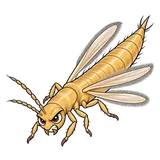
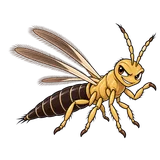
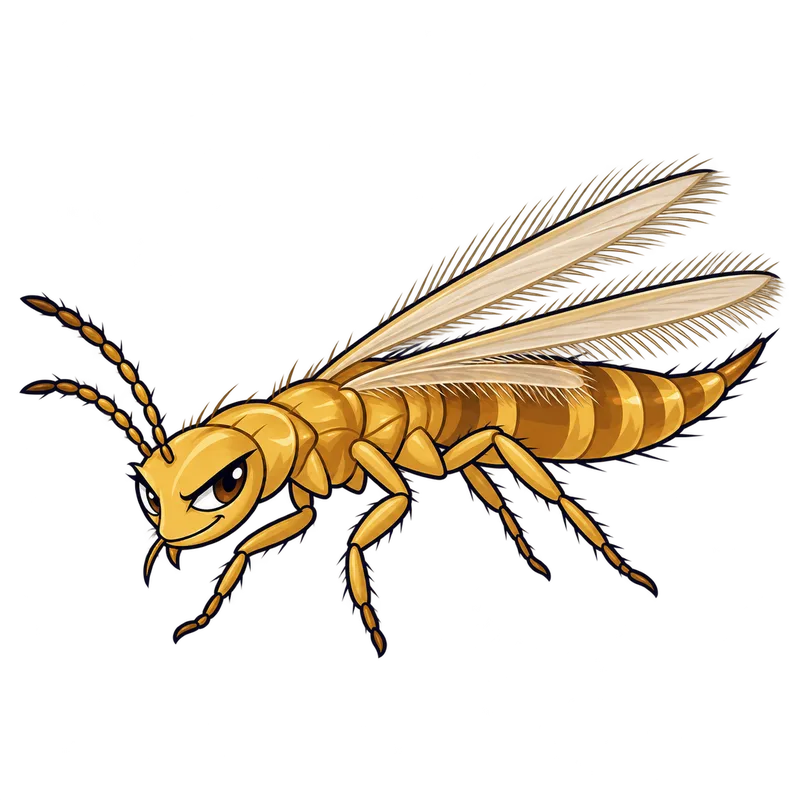
You are looking at Frankliniella occidentalis, better known to gardeners and growers as the western flower thrips. Catching one with the naked eye is a bit like spotting a moving speck of dust on a sunny petal, because an adult measures roughly 1/25-inch long. To make any sense of its anatomy, you need a 10x hand loupe. Under that magnification, you will see a slender, elongate insect tinted in a bright, clean yellow. Taxonomists have discovered that this single named species actually consists of two separate, identical twin populations, known as cryptic species, that refuse to interbreed despite sharing the same native range in California. You cannot tell them apart by looking at them through a lens. Only a laboratory DNA test can sort them out. When you peer closer at the adult using a 30x to 60x magnifier, you will notice four remarkably narrow, strap-like wings. Instead of being solid membranes like housefly wings, they are heavily fringed with fine, hair-like bristles along their margins, giving them a delicate, feather-like appearance. Several other insects invite confusion in the garden. Onion thrips look remarkably similar, but they tend to be the primary vectors of Iris Yellow Spot Virus in bulb crops. Melon thrips are also nearly yellow, but they carry a dead giveaway: a distinct dark longitudinal line running down their back when their wings fold at rest. Poinsettia thrips are larger, hitting nearly 1.7 mm, and sport a dark brown or black body split by a pale transverse band. Chilli thrips are minute pale pests that crowd onto young foliage, while orchid thrips are tiny yellow generalists that hide beneath flower calyxes. Do not confuse these insects with two-spotted spider mites, which are 1/50-inch 8-legged arachnids that spin fine webbing on leaf undersides, whereas thrips have 6 legs and leave no silk behind. Leafhoppers are larger and jump sideways like crabs, and aphids are pear-shaped soft-bodied bugs that secrete sticky honeydew, a mess thrips never make.
Identity
Western flower thrips spend the colder months tucked away as adults and nymphs inside dry plant debris resting right on the soil surface of fields and gardens. As soon as the weather warms up in early summer, the surviving adults take flight to seek out new growth. You will find them crowding into tight, sheltered spaces where tender plant tissue thrives. They favor expanding leaf tips, unopened flower buds, growing crowns, and the underside of foliage where they can feed out of the wind. They are restless tenants. When you brush against an infested rose bush or pepper plant, the adults will readily jump or take short, erratic flights. Over long distances, they rely entirely on the wind to carry them, or else they hitch a ride on nursery stock being shipped across the country. Enclosed greenhouse spaces offer them an endless summer. Because indoor temperatures remain stable and food is abundant year-round, these populations keep breeding in continuous, overlapping generations without ever stopping for winter.
Habitat & behaviour
The life cycle moves through 5 distinct phases, starting from a microscopic egg placed right inside soft plant tissue by a female. Out of that egg comes the first larva, a tiny, wingless creature that looks like a pale, cream-colored miniature of the adult. After shedding its skin once, it turns into a second larva, which stays wingless and eats constantly. Once that second larva finishes eating, it drops off the plant down into the soil or plant litter to pupate. It grows non-feeding wing pads during this quiet resting stage before crawling back out as a fully winged adult. Adults have the familiar slender, elongated shape, bright yellow color, and fringed wings folded flat over the back. Unlike ants, western flower thrips do not live in colonies with distinct social castes. While some related thrips can reproduce without mating, males and females here take part in a standard life cycle, even though they look completely identical through a normal field lens.
Visual variations
An infestation changes the look of your plants in short order. Both adults and nymphs have piercing-sucking mouthparts that puncture plant cells to drain the liquid inside. When they feed inside closed flower buds and growing crowns, the leaves emerge puckered, distorted, and stunted, and any developing fruit grows scarred and deformed. When they attack fully expanded leaves, their feeding empties the individual cells of sap, leaving behind white blotches, silvery surface scarring, and fine stippling that can make foliage look lightly sandblasted. Heavy feeding causes leaf tips to dry out, turn brown, and wither away. Gardeners frequently mistake this damage for powdery mildew or nutrient deficiencies. Beyond physical scarring, these insects act as primary vectors for destructive plant viruses, particularly within the tospovirus group. In terms of direct personal risk, thrips do not bite, sting, or parasitize humans or household pets. The real hazards associated with them are chemical, as certain treatments used to manage heavy outbreaks require careful handling to protect aquatic life and foraging bees.
Why it matters
Managing this pest requires careful timing and product selection because populations can develop resistance to frequently used options like spinosad, which belongs to IRAC Group 5. When treating crops, growers must rotate modes of action and pay strict attention to pre-harvest intervals, which range from a 0-day wait for insecticidal soap and pyrethrins, to 1 to 3 days for spinosad depending on the crop label, 7 days for acetamiprid, and up to 21 days for imidacloprid. Because foliar sprays of spinosad and pyrethrins are highly toxic to bees when wet, applications must never happen during active daytime foraging and are best scheduled for early morning or evening hours.