
Are opossums good to have around?
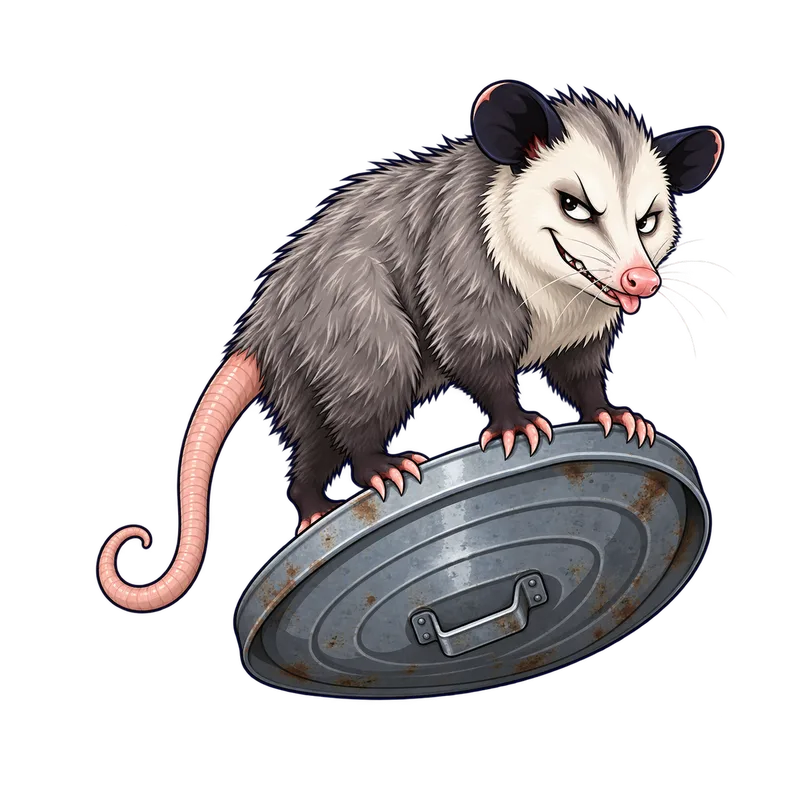
Yes, Virginia opossums are generally beneficial to have around because they act as a natural cleanup crew that hunts beetles, cockroaches, and small rodents. Having them near your yard depends entirely on whether you leave pet food or unsecured garbage outside, which can turn these helpful native scavengers into uninvited household guests.
What is actually going on
Picture walking out to take the trash to the back lane on a damp Tuesday night, catching the dull beam of your flashlight on a cat-sized creature rummaging near the recycling bins. It freezes, opens its mouth just wide enough to display fifty teeth, and lets out a raspy hiss. That is usually when the neighbor leans over the fence and asks whether you ought to call someone to get rid of it.
The short answer is no, because Virginia opossums are generally beneficial native omnivores that act as an unpaid night-shift cleanup crew in your yard. As North America's only native marsupial, they spend their nights hunting beetles, cockroaches, snails, slugs, small rodents, and fallen fruit. They do not dig extensive burrows or gnaw structural wood like rodents, and their lower body temperature makes them far less likely to carry rabies than raccoons or foxes.
The trouble starts only when human habits cross paths with their appetite. Leaving a bowl of cat food on the back porch overnight or failing to latch the garbage cans turns a modest scavenger into an uninvited houseguest. When they crawl under an unskirted deck or slip into an open crawlspace for shelter, the relationship shifts from neighborly sanitation to a nuisance conflict.
You might wonder why you should tolerate them at all if they look like giant overgrown rats with a bad attitude. The reality is that complete elimination of local wildlife is rarely achievable, and removing one animal just opens up prime real estate for the next one looking for an easy meal. Managing the situation comes down to making your yard less appealing rather than waging a futile war against the local fauna.
How to tell for sure
Spotting a visitor in the dark does not give you much to go on beyond a greyish silhouette and a long tail. To confirm you are dealing with an opossum, look for specific physical markers around the property. They usually measure about the size of a domestic cat, with coarse grey fur, a white pointed face, dark ears, and a hairless, prehensile tail they use for balance.
Tracks tell a clearer story when you check the soft soil near a garden bed or under a bird feeder. Opossums leave five-toed tracks on both their front and hind feet, and the hind track features a distinctive, opposable thumb-like inner toe that lacks a claw and points sideways or backward. That odd footprint separates them instantly from raccoons or neighborhood cats. Droppings are typically tubular and vary in color depending on whether they ate last night's fallen apples or a collection of hard-shelled beetles, often containing visible insect wings or fruit seeds.
You usually encounter them between dusk and dawn, since they are strictly nocturnal. If you find one playing dead, remember that it is an involuntary, catatonic comatose state brought on by extreme stress, and it can last for hours while the animal waits for the perceived threat to pass.
What usually comes next
Deciding your next step means checking your own habits before you blame the wildlife. Long-term success comes down to basic cleanliness and physical barriers instead of traps or chemical fixes. Putting sturdy wire mesh beneath your deck or a proper cap on your chimney is just common sense, much like turning the deadbolt before you go to sleep. Keeping them out for good takes far less effort than trying to evict a guest who has already unpacked.
Bring pet dishes inside the minute your dog or cat finishes eating, and make sure your household trash sits in heavy cans with snap-tight lids. Pick up fallen apples or pears from your lawn every day and rake up the seed piles underneath your bird feeders.
If a guest has already set up housekeeping beneath a shed, porch, or deck, you can block off the perimeter with heavy wire mesh. Bury the bottom edge a few inches into the dirt or flare it outward so the animal cannot dig a new way in. Seal up any foundation holes bigger than a quarter of an inch to cut off access to crawlspaces and vents. Never use poison, rodenticides, or antifreeze mixed with food, since those methods are illegal, brutally cruel, and usually end up poisoning neighborhood cats and dogs instead of the intended target. Trying to trap and drive the animal to a new spot yourself rarely works well, since it causes immense stress to the creature, frequently breaks local wildlife laws, and simply leaves an empty home ready for the next passing scavenger.
When to get help
Some scenarios move past a simple backyard annoyance and call for professional or public health workers. If an opossum manages to wander right into your house, handle it as a quiet puzzle instead of a panic. Open the doors leading outside, shut the doors to other rooms, and give the creature a dark, quiet path so it can find its own way back out. If it refuses to budge or ends up stuck deep inside a wall void or a closed chimney, call a licensed wildlife control expert who has the equipment to handle structural removals safely.
If a person or a pet receives a direct bite, a scratch, or contact with saliva from an opossum or any wild mammal, scrub the wound well with soap and warm water immediately and call a doctor, clinic, or public health department. Animal bites always carry infection risks and need professional review to see if medical treatment is required. For hurt wildlife or questions about local rules on wildlife handling, call your city animal control office or state wildlife agency before you try to solve the problem yourself.