
Are opossums nocturnal?
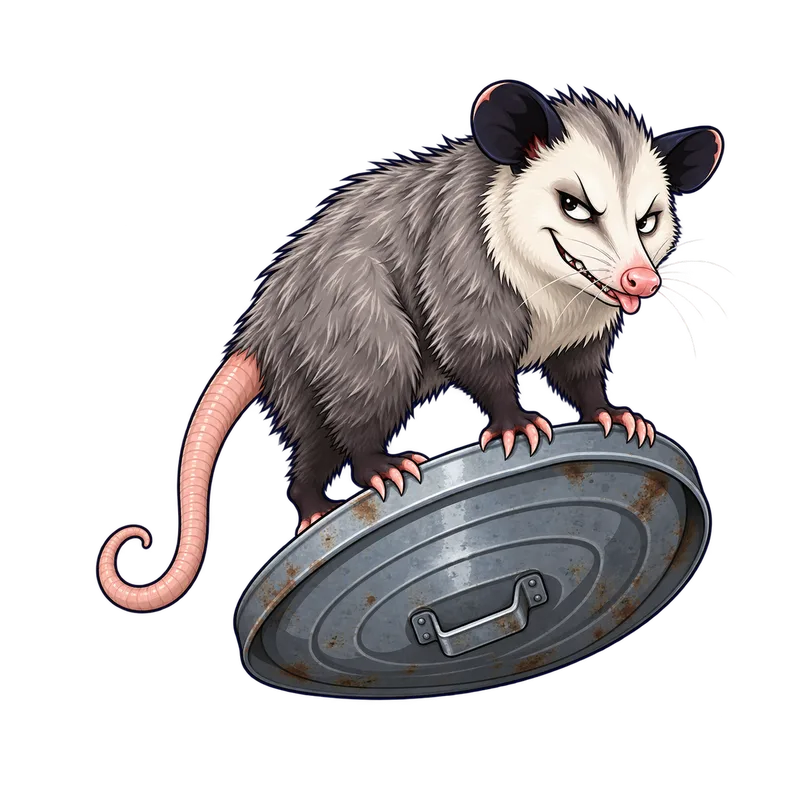
Yes, Virginia opossums are primarily nocturnal mammals that forage and travel under the cover of darkness. Daytime activity happens periodically when severe weather, extreme hunger, winter food scarcity, urban habituation, or human disturbance forces them to search for food while the sun is up.
What is actually going on
You are walking out to take the trash bins to the curb on a crisp Tuesday morning, and there sits a medium-sized, grayish-white animal with a pointed snout and a hairless tail, rummaging casually through your flower beds in broad daylight. Naturally, your mind jumps to the worst-case scenario. Is the animal rabid, or did it lose its mind?
Yes, Virginia opossums are primarily nocturnal mammals that forage and travel under the cover of darkness. They prefer to stay hidden away in hollow logs, brush piles, or abandoned dens while the sun is up, waiting for nightfall to do their scavenging. Their whole biological strategy revolves around avoiding daytime predators and keeping cool, so seeing one out at night feels like the natural order of things.
Yet, daytime activity happens periodically due to severe weather, extreme hunger, winter food scarcity, urban habituation, or human disturbance. Think of it like a night-shift worker grabbing an early breakfast or running errands at odd hours because life forced their hand. If a sub-zero winter freeze makes nighttime foraging impossible, an opossum might venture out during a warmer afternoon to keep from freezing or starving. Similarly, a mother nursing a pouch full of hungry young requires a massive daily caloric intake, which forces her to hunt around gardens and yards whenever she can find a meal.
How to tell for sure
When you spot an unfamiliar animal near your house, identifying it requires looking at physical evidence rather than relying entirely on the time of day. A daylight sighting is usually driven by hunger or weather, not an automatic sign of disease. To confirm you are dealing with an opossum, look for its distinctive physical traits and tracks left behind in the dirt or snow.
Opossums are cat-sized creatures with coarse, grayish-white fur, a long and pointed white snout, hairless ears, and a scaly, prehensile tail used for balance. If you happen to inspect their tracks around a garden bed, you will usually find a very distinct print. Their front and hind feet both feature five toes, but the hind foot has an opposable, clawless thumb that points inward at a wide angle. It looks remarkably like a tiny human handprint pressed into the mud next to a star-like front print.
Scat and property damage offer further clues, though you usually want to observe with caution. Opossum droppings are tubular and sausage-like, often containing undigested insect wings, seeds, or berry skins. Unlike rats or squirrels, opossums do not possess structural gnawing incisors and rarely tear open sound roofs or chew through wood. They are opportunistic scavengers rather than aggressive destroyers, meaning they usually occupy pre-existing cavities, crawlspaces, or holes dug by other animals.
What usually comes next
Once you confirm an opossum is visiting your property, the goal is making your yard less appealing so it moves on to somewhere else. Long-term management relies on a multi-tactic approach emphasizing prevention and sanitation rather than panic, poison, or illegal relocation.
Start by removing the food sources drawing them in. Bring domestic pet food dishes inside before dusk, and secure your household garbage in heavy-duty containers fitted with tight, locking lids. Clean up fallen fruit beneath backyard trees and clear away dense brush piles or low-hanging vegetation near your foundation that offer cozy daytime hiding spots.
If an opossum has moved in underneath your deck or porch, physical exclusion is the most reliable remedy. Seal foundation gaps and crawlspace openings using heavy-duty hardware cloth buried a few inches underground so animals cannot dig underneath. While live trapping might cross your mind, remember that relocating wildlife to distant public lands is heavily regulated or restricted in many areas due to disease transmission risks and territorial conflicts. Never place poisons or automotive antifreeze outside, as these illegal methods cause agonizing deaths in non-target neighborhood pets and wildlife.
When to get help
While most backyard encounters end peacefully when the animal wanders away, certain situations require stepping back and calling a professional or public health authority.
If an opossum or any wild mammal bites a human, or if its saliva makes direct contact with broken skin or mucous membranes, treat it as an urgent medical concern. Wash the wound immediately with soap and water, and contact local public health authorities or urgent care right away for a post-exposure evaluation. Do not attempt to diagnose whether an animal has rabies on your own.
You should also bring in a licensed wildlife control operator or local animal control agency when an animal is trapped directly inside a living space or chimney, or if you need complete structural exclusion work done on large decks and foundations. Watch for animals displaying extreme neurological symptoms, such as severe disorientation, unprovoked aggression, or paralysis. If you ever need to clean up an old animal latrine or heavy droppings in a confined crawlspace, wear an approved particulate respirator and gloves, and use heat rather than standard bleach when dealing with potential parasite eggs.