
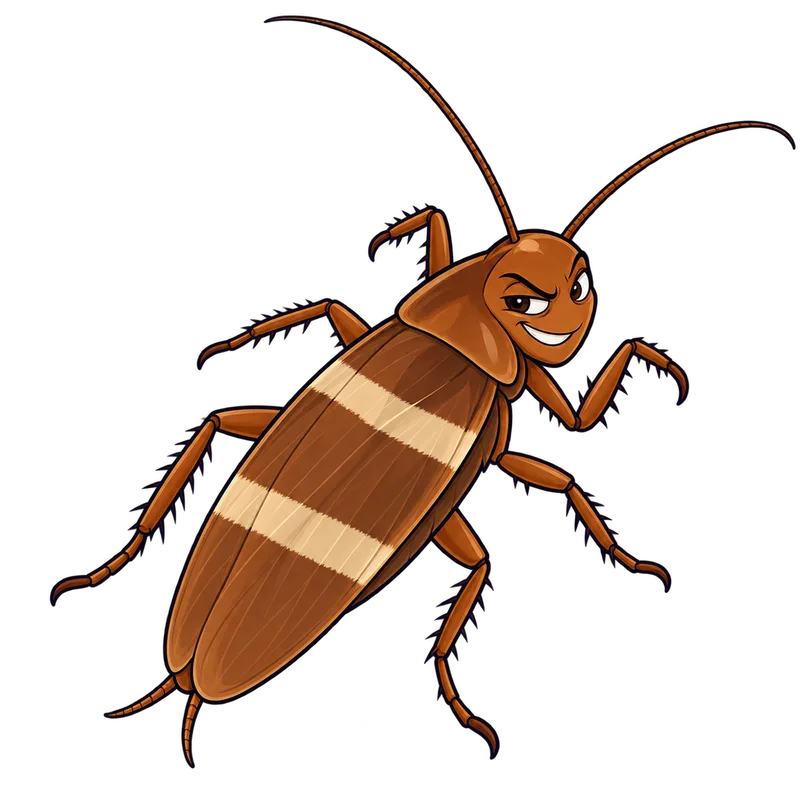
Brown-banded cockroach
Supella longipalpa
- Size
- 1/2 to 5/8 inch (11 to 16 mm)
- Color
- Light brown, tan, or light gold to chestnut brown
- Habitat
- Warm, dry indoor areas, high on walls and inside electrical appliances
- Diet
- Starchy materials, book bindings, wallpaper paste, and food crumbs
- Life cycle
- Incomplete metamorphosis, with eggs hatching in 50 to 75 days
The brown-banded cockroach stands apart from other household roaches through a pair of pale yellow or light brown horizontal transverse bands stretching across its wings and abdomen. Behind the head sits a solid, dark, bell-shaped mark on the shield above the chest, completely lacking the vertical parallel stripes found on its common kitchen cousin. You do not need a microscope to spot these markings, though a 10x magnification lens helps when inspecting tiny, detached egg cases. Adult females measure between 1/2 and 5/8 inch long, possessing a broader teardrop shape, while males of the same length appear slender and light golden brown.
Habitat & behaviour
Forget everything you know about roaches crowding damp kitchen sinks or dark basement drains because this species thrives in dry, warm environments exceeding 80 degrees F. You are far more likely to spot one scurrying high up on a bedroom wall, behind a framed photograph, inside a living room clock, or nestled near the warm motor housing of a refrigerator. They are strictly nocturnal, preferring to spend daylight hours tucked away in elevated, out-of-the-way crevices. When disturbed at night by a sudden flash of light, adult males will readily flutter into the air, making short, direct flights toward safety. Because they do not need free-standing water, their populations scatter widely across upper rooms, closets, and offices rather than clustering around plumbing.
Visual variations
Adult males and females look so different you might think you are dealing with two separate insects entirely. Males grow long, fully developed wings that stretch past the tip of their narrow abdomen, giving them the ability to flutter away when startled by a sudden movement. Females stay much broader and wear a darker chestnut brown, carrying shortened wings that leave the back end of their body completely exposed. That design makes them entirely flightless, so you will never see a female take to the air. Nymphs skip wings altogether, showing up as tiny, dark brown to tan figures marked by two bright pale yellow bands running horizontally across their bodies. Those youngsters shed their protective outer shells 7 to 9 times before they finally reach adulthood. When a female gets ready to lay her eggs, she forms a tiny, pea-sized capsule measuring 1/4 inch long, tinted light to reddish brown, and edged with distinct ridges.
Why it matters
Spotted guests like these mean you need to search the whole house because their colonies rarely stay put in one room. They do not bite or sting people, but having them around still brings real health troubles. As they forage in the dark, they pick up and carry bacteria like Salmonella and Staphylococcus on their feet, tracking germs across your counters and pantry shelves. On top of that, their shed skins, tiny droppings, and dried saliva release potent indoor allergens that can trigger chronic asthma and allergic rhinitis, especially in kids. They also have an appetite for anything starchy, which puts your belongings at risk. They will happily chew through wallpaper paste, stamp glue, old book bindings, and fabric dyes, leaving paper goods scarred and ruined in homes, libraries, and museums alike.
Similar species
 Smokybrown cockroachPeriplaneta fuliginosa
 Australian cockroachPeriplaneta australasiae
 Asian cockroachBlattella asahinai
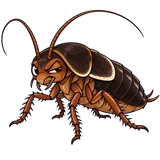 Turkestan cockroachShelfordella lateralis / Blatta lateralis / Periplaneta lateralis
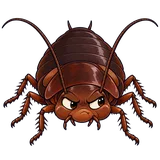 Florida woods cockroachEurycotis floridana
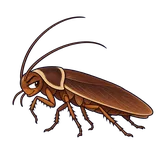 Pennsylvania wood cockroachParcoblatta pennsylvanica