
How do you prevent cockroaches in an apartment?
Preventing cockroaches in an apartment requires a systemic approach that cuts off water, food, and shelter while blocking shared structural pathways. Seal gaps along baseboards and plumbing lines with caulk, eliminate moisture, store pantry goods in airtight containers, and apply professional-grade gel baits into deep cracks where insects hide.
What is actually going on
Picture walking into your apartment kitchen at two in the morning for a glass of water. You flip on the light switch, and a small, light-brown insect darts out from beneath the microwave base and disappears into a narrow gap near the counter. That single sighting usually brings a sinking feeling, and for good reason. In an apartment building, pests rarely stay confined to just one kitchen. Because units share common walls, utility chases, and plumbing pipes, the entire building acts like an interconnected highway network. When you spot a German or brown-banded cockroach, you are usually looking at an insect that has traveled through a wall void or hitched a ride in a grocery box from a neighboring suite.
Many people assume that keeping a spotless kitchen will completely immunize a home against these insects, but that belief misses how urban multi-family housing operates. Cockroaches do not need gourmet meals to survive. They can feed on microscopic grease films behind the stove, glue on corrugated cardboard boxes, soap residue, or even the cast-off skins of other insects. Relying solely on household surface cleaning or spraying a random can of bug spray will not solve the problem. In fact, total-release aerosol foggers, often called bug bombs, tend to make matters worse. The repellent chemicals and forceful propellants simply scatter the population, driving insects deeper into wall voids and forcing them to migrate into adjacent apartments.
Successful prevention requires a systemic approach known as Integrated Pest Management, or IPM for short. Instead of relying on brute-force chemicals, this method focuses on cutting off the basics that pests need to thrive, namely water, food, and shelter. You have to block their entry points, monitor dark corners using passive sticky traps, and eliminate the tiny microhabitats where they aggregate during the day. Since apartment buildings present unique structural challenges, understanding how these pests move and reproduce helps you make smarter choices about keeping them out for good.
How to tell for sure
Accurate identification always comes before any control effort. If you mistake an outdoor wanderer for a structural indoor pest, you might end up treating the wrong areas with the wrong methods. The most common indoor resident in apartments is the German cockroach. Adults usually measure about half an inch to five-eighths of an inch long, and they feature two dark, parallel longitudinal stripes running down the head shield, known as the pronotum. They do not fly indoors, and females carry a light-tan egg capsule protruding from their abdomen until just a day or two before the eggs hatch.
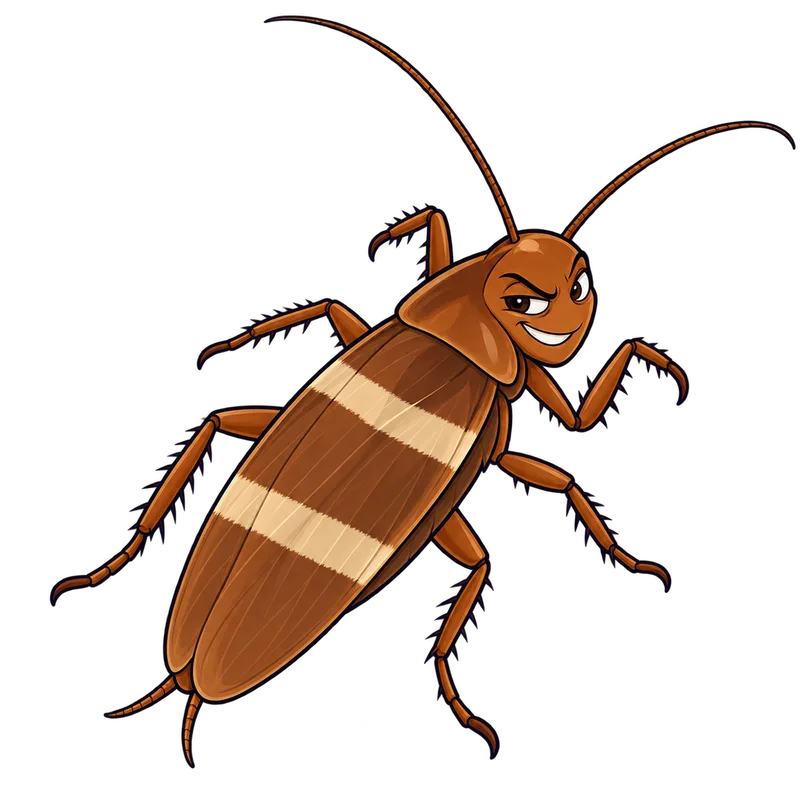
You might also encounter the brown-banded cockroach, which prefers much warmer and drier locations than its German relative. Brown-banded roaches usually lack those dark pronotal stripes, displaying instead two pale, transverse yellow bands across the base of their wings and abdomen. They tend to harbor high up on walls, behind picture frames, inside hollow curtain rods, or near the warm transformers of household electronics.
Peridomestic invaders like the American or Oriental cockroach occasionally wander into ground-floor units or basements from the outside. American cockroaches are quite large, reaching up to two inches in length with a reddish-brown body and a yellowish halo on the pronotal shield. Oriental cockroaches look glossy, dark brown to shiny black, with a robust, beetle-like appearance. Telling them apart usually requires nothing more than a close look with the naked eye, paying attention to body shape, wing markings, and where you find them. If you spot insects flying around your living room lights or find specimens near outdoor entryways, you are usually dealing with accidental outdoor visitors rather than an established indoor structural infestation.
What usually comes next
Once you lock down the identification and confirm you are dealing with a permanent indoor setup, you have to decide how to handle the situation practically. In a standalone house, sealing a few random gaps might completely solve the issue. In an apartment building, however, stopping pests at your own doorways is just as crucial as killing the ones currently crawling around. You need to block the hidden structural pathways that allow bugs to cross over from your neighbors. Grab a tube of silicone or acrylic caulk and seal every gap along baseboards, backsplash seams, and pantry shelving. Pay special attention to the areas where plumbing pipes and electrical lines pass through your walls. Stuffing those utility penetrations with copper mesh before caulking creates a physical barrier that mandibles cannot chew through.
Next, you must address the water and food sources that keep these populations alive and reproducing. Fix leaking faucet washers, wipe down kitchen sinks and bathroom counters completely dry before bed, and store all dry pantry goods in rigid plastic or glass containers with airtight seals. As for lethal control, avoid broad pesticide sprays on open countertops and floors. Instead, use professional-grade gel baits containing slow-acting toxicants. Apply tiny, pea-sized dots of bait strictly into deep, inaccessible cracks, crevices, and cabinet hinges where roaches like to hide during the day.
Because these baits work slowly, foraging adults consume the poison and return to their hidden harborages, where other insects ingest the toxicant through natural feeding behaviors like eating waste spots or dead colony members. Place sticky glue traps flush against wall baseboards and beneath sinks to monitor activity, but remember that multi-family buildings require coordination. If an infestation is heavy or persistent, treating a single apartment in isolation usually fails because the population simply regenerates from adjacent units.
When to get help
There are times when do-it-yourself methods reach their absolute limit and you need to bring in outside expertise. If you live in an apartment complex and notice cockroaches migrating through shared wall chases or appearing in multiple rooms despite your best sanitation efforts, individual unit treatments will not cut it. That situation requires property management to step in and mandate a building-wide inspection alongside simultaneous treatments for all vertically and horizontally adjacent apartments.
You should also involve a licensed pest control professional if you see cockroaches roaming out in the open during daylight hours. Daytime sightings indicate severe overcrowding in hidden harborages, meaning the population has grown too large for consumer bait stations to handle quickly. Professionals possess specialized equipment like high-efficiency particulate air vacuum units to extract live insects and egg cases, along with commercial-grade formulations designed for void injections.
If anyone in your household suffers from severe asthma or persistent allergic rhinitis, caution is even more critical. Cockroach cast skins, saliva, and fecal dust release potent indoor allergens that can trigger acute respiratory attacks. Never attempt to diagnose skin marks, bites, or respiratory symptoms on your own. If an occupant displays severe asthmatic distress, breathing difficulties, or signs of a systemic allergic reaction, get them to a qualified clinician, an urgent care facility, or a regional poison control center right away.