
What do cockroach droppings look like?
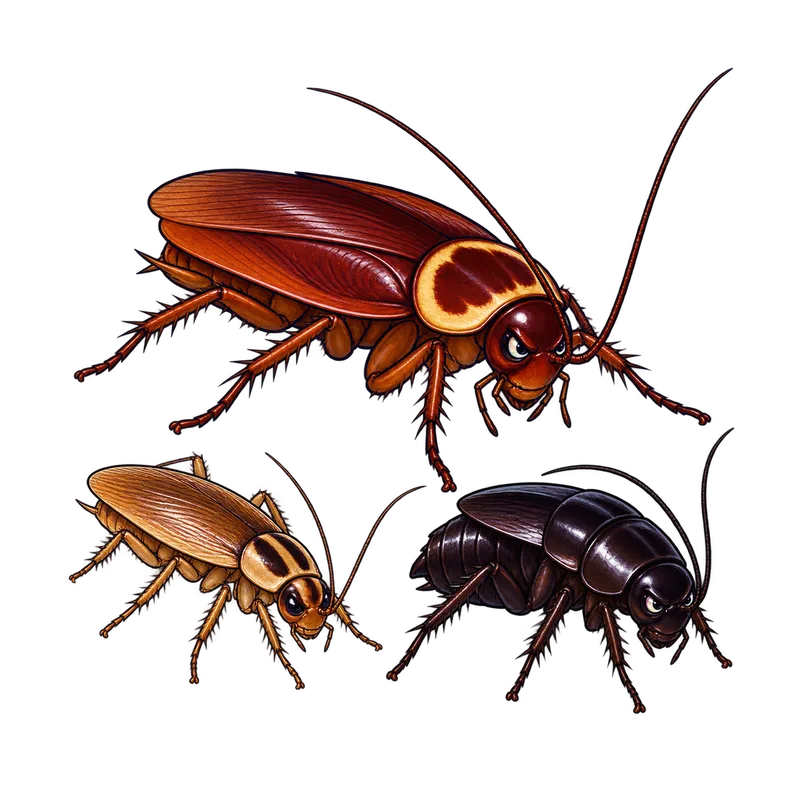
Cockroach droppings look different depending on the size of the insect. Small species leave dark brown to black specks that resemble ground pepper or tiny ink smears. Larger species leave solid cylindrical pellets measuring one to two millimeters in length, featuring blunt ends and distinct grooves running along their sides.
What is actually going on
Imagine you open the dark cabinet under your kitchen sink to grab a fresh sponge, flick on your flashlight, and notice what looks like a light dusting of coarse black pepper scattered along the back corner and the sliding rail of the drawer. You reach out to wipe it away with your finger, but it stays put, almost like it is glued to the wood. That gritty little mess is not stray kitchen spice. It is cockroach waste, and finding it is usually the first real clue that you have uninvited roommates sharing your kitchen.
Cockroach droppings are not all created equal, which tends to confuse people who are trying to figure out what kind of bug they are dealing with. What you find depends entirely on the size of the cockroach leaving it behind. Small domestic species, such as the German cockroach or the brown-banded cockroach, leave behind tiny dark brown to black specks that genuinely look like spilled ground pepper. If they happen to walk across a vertical surface when moisture levels are high, those same droppings can bleed into the material and look like tiny ink smears from a fountain pen.
Larger species, such as the American or the Oriental cockroach, operate on a different scale entirely. Instead of pepper-like dust, they void solid, discrete cylindrical pellets. These larger pellets measure around one to two millimeters in length, feature blunt or squared-off ends, and have distinct grooves running along their sides. Because cockroaches are social and nocturnal creatures, they tend to crowd together in the exact same hidden daytime resting spots. That means their waste piles up heavily in specific zones, often mixed with shed nymphal skins and empty egg cases along wall-floor junctions, hinges, and appliance motor housings.
How to tell for sure
Figuring out what you are looking at usually requires a closer look, especially when trying to separate insect sign from other household pests. A high-lumen flashlight and a ten-power magnifying glass are your best friends here. If you are squinting at tiny dark specks on a kitchen shelf, check how they behave. If they smear or stick tightly to the surface rather than rolling around like loose spice, you are likely looking at small cockroach frass, which is the catch-all term for insect debris and excrement.
One of the most common mix-ups happens when homeowners try to tell the difference between large cockroach pellets and mouse droppings. House mouse droppings have smooth sides and at least one sharply pointed tip. Large cockroach pellets have blunt, squared-off ends and those characteristic longitudinal ridges running down their sides. If you look at them under a magnifying glass, the ribbed texture of the roach pellet looks somewhat like a tiny caraway seed, completely eliminating the rodent theory.
People also frequently mistake cockroach egg cases, known as oothecae, for giant pieces of roach poop. These are rigid, bean-shaped or purse-shaped protein capsules that female cockroaches produce to protect their developing eggs. German roach egg cases are light tan and measure about a quarter of an inch long, while American and Oriental cases are dark reddish brown. They represent reproduction rather than waste, but finding them means a population is actively expanding.
What usually comes next
Stumbling upon these deposits forces a decision about how to manage the cleanup and whether you need to tackle a growing infestation. The main rule to remember before touching anything is that you should never use a dry broom, a feather duster, or compressed air on cockroach waste. Dried waste breaks down into tiny particles carrying strong allergen proteins that trigger severe pediatric asthma and allergic rhinitis. Swiping at them with a dry broom simply sends those proteins floating into the air for you to inhale.
Instead, you need to protect yourself with disposable rubber gloves and an N95 respirator mask before starting any cleanup. If you are vacuuming up loose frass, shed skins, or egg cases, use a vacuum cleaner fitted with a certified high-efficiency particulate air filter, also known as a HEPA filter, because ordinary vacuums will just blow that fine allergen dust right back out into the room. For hard surfaces like laminate counters, ceramic tile, or glass, wash the space thoroughly with warm water and a heavy-duty detergent or soapy cleaner to break down the greasy binders in the waste and eliminate any lingering tracking odors.
As for treating the insects themselves, pesticide products must always be used strictly according to their container label directions, which are legally binding rules under federal and state law. If you choose to use cockroach gel baits or containerized bait stations, place them in small, precise dots directly inside the cracks, crevices, and cabinet corners where you noticed the highest concentrations of droppings, keeping everything completely out of reach of children and pets.
When to get help
There are times when a do-it-yourself cleanup and a few bait stations are simply not enough to fix the problem. If you live in a multi-family building, an apartment complex, or manage a commercial space, an infestation is rarely confined to a single unit, meaning complex setups require professional pest management technicians with specialized monitoring tools and commercial-grade baits. Public infrastructure issues, such as roaches swarming municipal sewer lines or boiler rooms, are strictly the domain of licensed operators and local agencies.
You should also watch for critical warning signs that signal a massive, long-standing population. Seeing live cockroaches crawling around in broad daylight means their hiding spots are heavily overcrowded, forcing them out into the open. If you notice fecal spots spreading far beyond hidden cracks and hinges onto open kitchen counters, vertical walls, or non-food rooms, or if you catch a heavy, musty pheromone odor hanging in the air, the infestation has moved past the casual stage. Finally, anyone experiencing severe asthma flare-ups, allergic skin reactions, or accidental pesticide exposure must step away from the cleanup and contact a qualified clinician or poison control center right away.