
Do palmetto bugs bite?
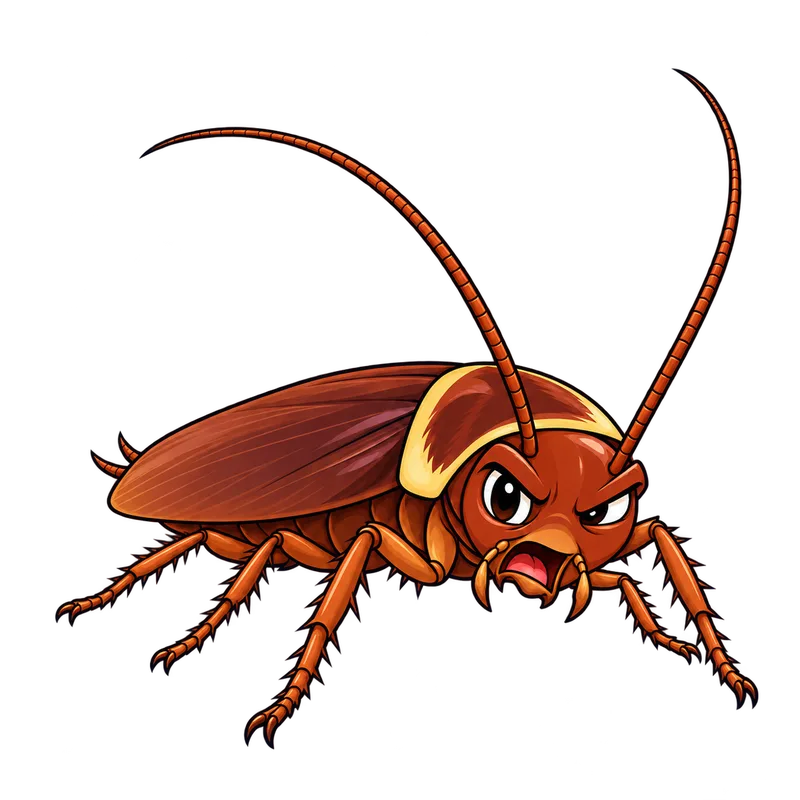
No, palmetto bugs do not bite humans for blood or as an attack. These generalist scavengers have chewing mouthparts designed for organic matter rather than piercing mouthparts for blood. An opportunistic nip can happen only during a severe infestation when food is gone, or if the insect gets trapped against the skin.
What is actually going on
You pad into the kitchen in your bare feet at two in the morning, flip on the overhead light, and freeze. A glossy, reddish-brown insect the size of a matchbox is sprinting across the linoleum before diving headfirst into the gap beneath the dishwasher. You slam your hand down to pull your foot back, instantly wondering if that large, armored intruder is about to hunt you down and bite you. Take a breath and let out the tension, because palmetto bugs do not bite humans for blood or as an attack.
In everyday conversation around the Southeastern United States, people use the name palmetto bug to describe the American cockroach, and sometimes other large peridomestic roaches. Biologically speaking, these insects are generalist scavengers. They are equipped with chewing mouthparts designed to grind up solid organic matter like decaying leaves, cardboard, and kitchen crumbs. They do not possess piercing mouthparts or blood-sucking beaks, which puts them in a completely different category from mosquitoes, bedbugs, or kissing bugs.
If you are wondering why anyone ever reports a bite from one of these creatures, the answer usually involves an extreme situation rather than a normal encounter. A palmetto bug might physically nibble on a person only during a severe, uncontrolled infestation where alternative food sources are entirely gone, or if the insect gets accidentally trapped and crushed against the skin. Even then, you are looking at an opportunistic nip or a shallow abrasion from a stray mandible, not a venomous strike or a predatory attack.
Most of the time, what people mistake for a roach bite is actually an allergic skin reaction. Cockroaches shed potent proteins in their cast skins, body fluids, and droppings. When these microscopic particles drift into household dust, sensitive skin can flare up with red, itchy bumps that look an awful lot like insect bites. It is an immune response to the presence of the insect rather than an act of aggression by the pest.
How to tell for sure
Before you start treating your house for a biting menace, you need to know what you are actually dealing with. A palmetto bug usually measures between 34 to 54 mm in length, sports a dark reddish-brown shell, and features fully developed wings in adults. They prefer dark, humid spaces and scatter in blind panic the second a light turns on. They are built like tiny lawn mowers for dead vegetation, not like hypodermic needles.
If you wake up with a cluster of red welts on your skin, do not try to diagnose the culprit from a photograph or a mirror. Visual examination of a skin mark cannot identify a pest species with any reliability. A mysterious welt can stem from anything from a stray flea or a bedbug to an allergic reaction, or even a bite from a house centipede or an Asian lady beetle that wandered indoors.
When you find a dead or trapped insect, look at its features closely before jumping to conclusions. If it has long antennae and chewing jaws, it is likely a harmless scavenger or a moisture-loving roach. If it is a true blood-sucking bug, such as a kissing bug found in parts of the American Southwest, it requires entirely different caution due to the potential diseases those specific insects carry. When skin lesions are painful, spreading, or accompanied by systemic symptoms, a clinical evaluation by a healthcare provider is always the safest path.
What usually comes next
Since palmetto bugs are fundamentally scavengers drawn to moisture and organic debris, the most effective practical decision you can make is to lower the humidity in your home and seal off their entry points. Finding these large roaches indoors usually serves as your house's internal check-engine light for excess moisture. Running dehumidifiers in damp basements, fixing sweating plumbing, and keeping relative humidity below 50% will make your living space profoundly inhospitable to them without needing to spray heavy chemicals everywhere.
If you decide to use chemical treatments, remember that federal law requires you to read and strictly follow the directions on the product label. Never exceed listed concentrations or use products in ways the manufacturer did not intend. For stubborn or heavy infestations that nest deep within structural wall voids or sewer connections, the smartest choice is to hand the problem over to a licensed pest professional who has the specialized equipment to handle it safely.
When to get help
There are moments when a do-it-yourself approach no longer cuts it and you need to bring in outside reinforcements. Call a licensed pest control professional if your palmetto bug population persists despite your best sanitation efforts, or if the insects appear to be nesting inside inaccessible wall voids, subfloors, or utility lines. Multi-family buildings and commercial spaces also require structured pest management programs that go far beyond standard household sprays.
On the medical side, you should consult a clinician, urgent care center, or poison control hotline whenever you experience painful, swollen, infected, or spreading skin lesions after a suspected insect encounter. In regions where kissing bugs are active, any insect suspected of biting near the face at night should be saved in a sealed container and shown to a healthcare provider, given the public health risks associated with those specific blood-feeders.