
Why are wood roaches in the house?
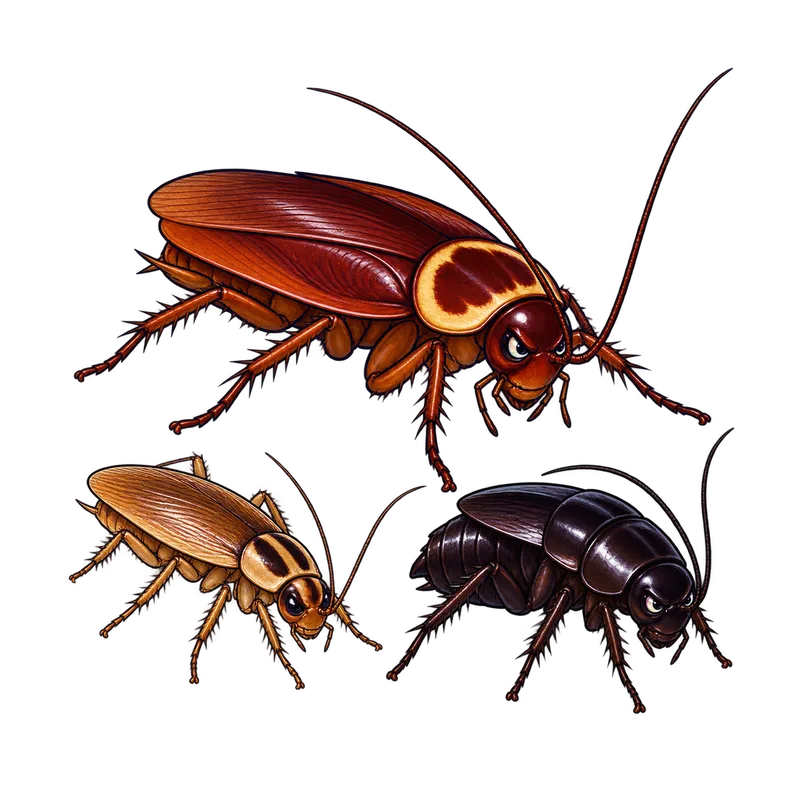
Wood roaches get inside houses because adult males with fully functional wings are strongly attracted to artificial lights at night and slip through gaps in screens. You might also accidentally carry them indoors during the cooler months when you bring an armful of firewood from an outdoor stack up to the hearth.
What is actually going on
You are sitting on the couch watching television on a warm summer evening, and suddenly a large, dark brown insect lands with a heavy buzz right on the living room rug. Naturally, your mind races to the worst-case scenario. You picture a massive infestation breeding behind your kitchen cabinets, and you wonder how your house got this way.
Take a deep breath and put down the heavy-duty insecticide. You are looking at a wood roach, and its presence in your living room has nothing to do with your housekeeping skills, dirty dishes, or rotting food crumbs. These insects are outdoor creatures by nature, living out their lives under loose tree bark, inside rotting logs, and among damp piles of leaves in the woods.
So why are they inside your house? They usually make it indoors through one of two common routes. Adult males grow fully functional wings and possess an overwhelming attraction to artificial light, meaning they actively fly toward your lit porch lamps or windows at night and accidentally slip through a gap in the screen. Alternatively, you might have carried them inside yourself during the cooler months when you brought an armful of firewood from an outdoor stack right up to the hearth.
The most important thing to know is that wood roaches cannot breed, nest, or establish a permanent population inside human structures. Your climate-controlled, centrally heated or air-conditioned home is simply too dry for them. They are creatures of high moisture, and indoor air dries them out so quickly that they typically perish within a short time on their own. They are essentially outdoor wanderers out of their element, not invaders looking to set up housekeeping.
How to tell for sure
Telling a harmless wood roach apart from a genuine household pest is usually straightforward once you know what to look for. When you spot a medium to large brown roach crawling across the hallway, check its appearance and behavior before you panic.
Wood roaches usually feature a dark brown center on their head shield, bordered by a pale, translucent, or yellowish band along the edges. If you happen to see one take flight toward an overhead ceiling light, you are almost certainly looking at an adult male wood roach, because common indoor-breeding pests almost never fly. Male wood roaches also boast full wings that extend past the tip of their abdomen, while females have shorter, rudimentary wings.
By contrast, the notorious German cockroach is a true indoor pest that stays out of the woods, measures a bit smaller, and usually displays two distinct dark parallel stripes right behind its head rather than a pale translucent border. If you find a roach crawling out of a damp basement floor drain, it is usually an Oriental cockroach, which lacks the pale pronotal margins entirely.
One common doubt people raise is whether tiny nymphs found indoors could be baby wood roaches hatching from an indoor nest. The reality is that wood roach egg cases are deposited outdoors under damp bark during the summer and are never glued to indoor walls or furniture. If you are ever unsure because you are looking at an immature nymph rather than a distinct adult, you can collect a specimen in a small glass jar with a little rubbing alcohol and take it to your local university extension office or a pest control professional for a proper identification.
What usually comes next
When you find a wood roach indoors, your smartest move is usually just to pick it up with a paper towel and toss it outside, rather than running out to buy indoor bug sprays. Store-bought cockroach baits and bug bombs will not do a thing here because these outdoor wanderers do not eat indoor bait formulas or hide out in your interior walls.
Instead of spraying your living room baseboards, focus your attention on the outside of the house and the places where these visitors slip inside. You can swap out the bright white bulbs by your back door for yellow bug lights that do not draw flying insects in quite the same droves. If you burn wood in the winter, keep your firewood stack well away from the house foundation, and only bring in what you intend to burn right that evening.
Keeping them out takes a little basic house maintenance. Put sturdy sweeps beneath your doors, patch any small tears in the window screens, and seal up large gaps where pipes enter the house. If you live surrounded by deep woods where wood roaches seem to blanket the siding every summer night, a licensed professional can apply a targeted exterior barrier treatment around your foundation to cut down on the numbers trying to cross the threshold.
When to get help
Wood roaches are harmless nuisance visitors that do not bite, spread disease, or chew up your home, but there are definitely times when you need to call in backup.
You should reach out to a pest management company if you cannot figure out what kind of roach you are looking at, or if you keep finding live insects active in your kitchen or pantry. Finding small roaches hiding out in kitchen cabinets during the day usually means you have a real indoor infestation on your hands, which calls for a serious treatment plan instead of just sealing up windows.
Keep in mind that true indoor-breeding roaches leave behind shed skins and droppings that can trigger allergies and asthma attacks. If anyone in your house starts having trouble breathing, wheezing, or showing signs of an allergic reaction, get help from a doctor right away. And if you manage a multi-family building, a school, or a public space, remember that local laws usually require certified professionals to handle any pesticide applications.