
Why are American cockroaches appearing near floor drains?
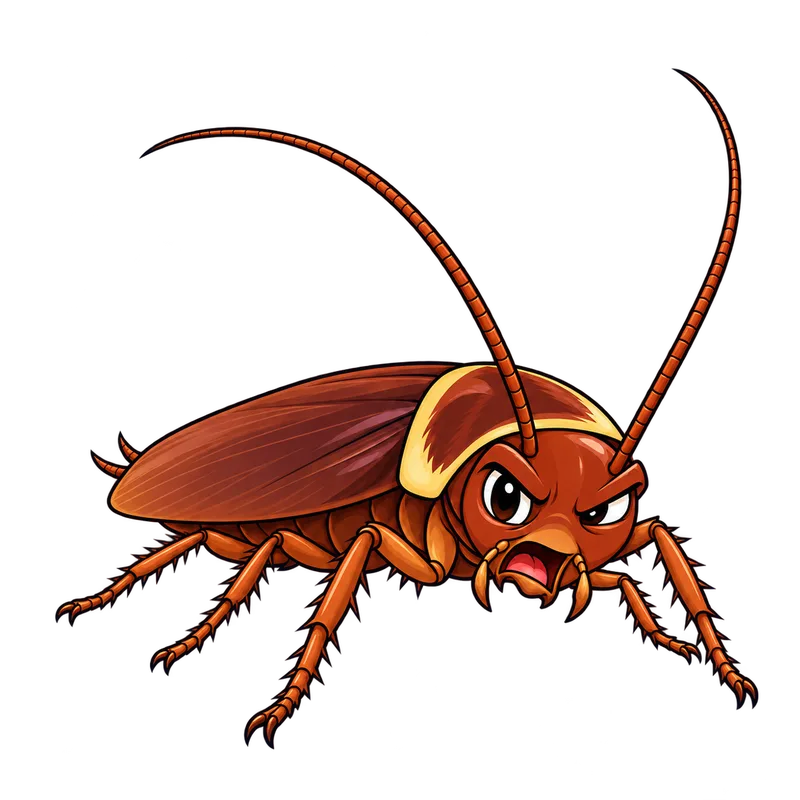
American cockroaches are coming up from sewers and storm drains through dry P traps, gaps around pipes, or damaged lines. Because these large reddish brown insects need temperatures generally above 82 degrees Fahrenheit and high humidity, they seek out indoor floor drains to find moisture, shelter, and organic debris to eat.
What is actually going on
Picture a very ordinary night. You go down to the basement to grab something, flip the light, and a big reddish-brown roach, closer to 2 inches than to a paperclip, makes a shiny sprint across the concrete and vanishes through the floor drain grate. The natural reaction is to ask how dirty the place is. Usually that is the wrong question. American cockroaches are mostly outdoor and below-ground insects. They live and breed in sewers, storm drains, steam tunnels, damp crawl spaces, pipe chases and other warm, wet voids where organic muck is always on the menu. A floor drain is simply the spot where that hidden world shakes hands with your basement, laundry room, custodial closet or commercial kitchen.
The short answer is that they are coming up, not spawning from your mop bucket. American cockroaches like heat and moisture, generally above about 82 degrees Fahrenheit, and they cannot stay comfortable for long in dry air. Sewers give them humidity, darkness, shelter and food in the form of decaying debris. Now, about that drain. Under it sits a curved piece of pipe called a P-trap, which is supposed to hold a plug of water that blocks sewer air and crawling insects. If the drain is rarely used, that water evaporates, and the locked door becomes an open hallway from the sewer line straight into the room.
There are other doors too. Pipes often pass through concrete slabs or foundation walls with small gaps around them. A loose trim plate, a cracked slab, a damaged drain cover or a broken pipe under the floor can give roaches a side entrance. Heavy rain can flood storm sewers and push insects upward. Long heat and drought can dry out their outdoor hiding places and send them hunting for water. Municipal construction can shake them out of main lines into the smaller pipes that connect to private buildings. Notice what is missing from that list: a dirty building. What this actually requires is a route, moisture and a reason.
Once they emerge, they tend to linger near the drain because the area offers the three things they want: water, humid air and food. That gelatinous scum inside a drain line is not just gross to us. To a roach it is a buffet. So the insect you saw was probably not lost. It was commuting.
How to tell for sure
Start with size and color, because those are usually enough for a first call. An adult American cockroach is big, commonly 1 1/2 to 2 inches long, reddish-brown to chestnut, with a pale yellow or straw-colored edge around the shield behind the head. Adults have long wings that cover the body and can glide from a high spot, though they would rather run than perform airshows. People in parts of the United States call them water bugs or palmetto bugs, but they are still cockroaches, not true water bugs.
Do not hand the title to every large dark insect near a drain. Oriental cockroaches also like cool, damp basements and drains, but they are usually smaller, about 1 to 1 1/4 inches, glossy dark brown to black, and the females have only short wing pads. Turkestan cockroaches are a western complication: males can look tan and stripey enough to be mistaken for something else, while females are dark and can be confused with Orientals. German cockroaches are the indoor kitchen specialists, much smaller, light tan with two dark stripes behind the head, and a female usually carries her egg case until just before hatching. And if the insect is tiny and fuzzy with wings held like a little roof, you may be looking at a drain fly, which is a different problem with a different fix.
Young roaches are trickier. Nymphs are wingless and can look like several relatives, and separating some of the close cousins can take a 10x hand lens and someone who enjoys that kind of puzzle. So use a simple rule: identify confidently only what is clear, and collect evidence when it is not. A bright flashlight and a few sticky traps placed flat against walls and beside the drain will tell you more than one dramatic midnight sighting. Check for pepper-like droppings, dark smear marks, shed skins and dark brown egg capsules about 3/8 inch long tucked into sheltered crevices near moisture.
One doubt worth answering: if the building is clean, why bother identifying it at all? Because the control changes. A German cockroach problem points to indoor breeding in kitchens and bathrooms. An American cockroach at a floor drain points toward sewers, traps, slabs and plumbing voids. Treating the wrong one is how people end up spraying the room while the real entrance stays open.
What usually comes next
The first practical step is not browsing for a heavy spray, but checking whether the water seal is doing its job. For a floor drain that rarely sees action, pour in about 1 to 2 gallons of water weekly so the trap stays filled. If that drain sits in a quiet basement corner, mechanical room, guest bath or seasonal space, add it to your calendar routine. This feels mundane, which is precisely why it works. A roach cannot swim past a water plug just because it wants inside.
Next, take away the feast. Scrub accessible drain openings using a stiff brush and an enzyme or microbial drain cleaner according to the package directions to break down that sticky organic film. Avoid dumping random insecticides, bleach mixtures or boiling water down the pipe and hoping for the best. That approach at best offers a brief knockdown near the grate, and at worst it harms plumbing, breaks the product law or pushes chemicals where they belong. The label is not a casual suggestion. In the United States it is the legal rule, and treating drains is only permitted when the product label explicitly allows it.
Then button up the structure. Fit a snug drain cover or fine mesh strainer wherever possible, and seal gaps around pipes and slab penetrations using suitable materials like silicone caulk or copper mesh. Clean up live insects, skins and debris with a high-efficiency particulate air filter vacuum if you have one, because those fine particles are the last thing you want floating into the air. Leave sticky traps in place afterward so you can tell whether activity is fading or just moving to a quieter spot.
If you choose to use products, keep them targeted and tucked away: containerized baits, gel baits or dusts placed strictly in cracks, crevices and voids as the label permits, well away from children and pets. Skip total-release foggers and broadcast floor sprays. Foggers mostly coat open surfaces, miss the actual hiding spots and can scatter roaches deeper into wall voids and neighboring rooms. In an apartment building, restaurant, school or any location with shared plumbing, fixing one isolated drain will not solve a building-wide highway. That scenario calls for coordination, not more enthusiasm.
When to get help
Call a licensed pest management professional when the signs point to a bigger issue than a stray visitor: daytime sightings, repeated sticky trap catches, piles of droppings or egg capsules near drains and pipe chases, a lingering musty smell, or activity in commercial kitchens, schools, healthcare facilities and multi-unit housing. Shared sewer lines and utility chases mean your drain connects to a larger network. A pro can inspect, confirm the species, place baits where labels and rules allow, and let you know if the true fix involves exclusion, cleaning, plumbing or the whole mix.
Bring in a licensed plumber when the evidence points beneath the slab: drains drying out unusually fast, recurring sewer smells, backups, cracked concrete, suspected broken lines, or roaches appearing after every heavy storm despite proper maintenance. If municipal sewer backups or street construction are to blame, the local utility or agency may need to get involved. If you find bats or other protected wildlife sharing those dark voids, do not seal them up or attempt DIY control. That calls for a licensed wildlife specialist.
Health deserves plain talk. Roaches wandering through sewage can pick up bacteria like Salmonella, Shigella, Staphylococcus, Streptococcus and E. coli on their outer shells and drop them on surfaces, which is why food spaces demand attention. Their saliva, droppings, shed skins and decaying body parts also carry proteins that can trigger asthma and allergy symptoms, particularly in children and sensitive adults. If someone suffers from wheezing, a severe allergic reaction, possible food poisoning or pesticide exposure, reach out to a doctor, urgent care, poison control or emergency services rather than guessing at home.
The useful takeaway is simple: keep the trap wet, clean the film, seal the gaps, monitor quietly, and escalate when the building or the symptoms show the issue goes deeper than the grate.