
Are Oriental cockroaches associated with damp basements?
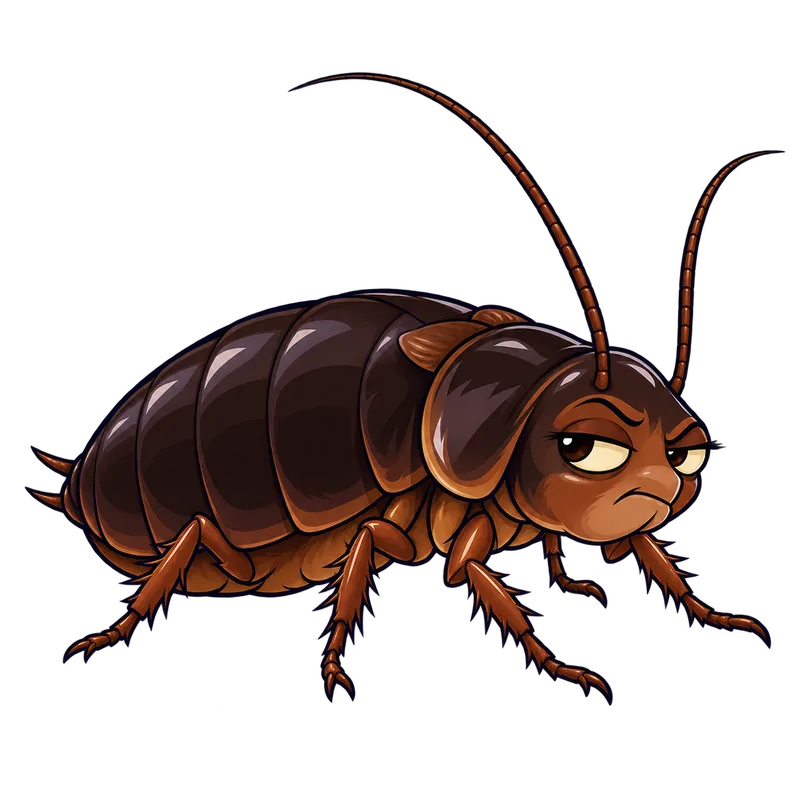
Yes, Oriental cockroaches are strongly associated with damp basements, crawl spaces, and cellars because they need high moisture to survive and prefer cool, dark conditions where temperatures stay below 84 degrees Fahrenheit. These shiny black bugs measure 1 to 1-1/4 inches long and usually stay stuck at ground level since they are slow-moving and cannot climb smooth vertical walls.
What is actually going on
You walk down to the basement on a Tuesday evening to grab an extra roll of paper towels, flip on the overhead light, and spot a heavy, shiny black bug scrambling across the concrete floor near the laundry sink. It looks too big to be a stray beetle and moves with an unmistakable roach shuffle.
Yes, Oriental cockroaches are strongly associated with damp basements, crawl spaces, and cellars. They need high moisture to keep from drying out and prefer cool, dark conditions where temperatures stay below 84 degrees Fahrenheit. Unlike German cockroaches that crowd warm kitchen cabinets, Oriental roaches stay low and subterranean. They hang out in municipal sewers, storm drains, and damp mulch beds right outside your foundation.
Why do they show up inside your home in the first place? They usually migrate when outdoor conditions turn too dry or when heavy rains flood their underground haunts. A dry floor drain or a gap around a utility pipe gives them a direct highway straight onto your basement floor. Because they are slow-moving and cannot climb smooth vertical walls, they tend to stay stuck at ground level, which is why you find them scuttling around basements instead of scaling the kitchen walls. They survive on a diet of decaying organic matter and organic filth, which also makes them mechanical carriers of bacteria like Salmonella and Shigella when they wander across household surfaces.
How to tell for sure
You want to make sure you are actually looking at an Oriental cockroach before you start turning your basement upside down. Adults are usually 1 to 1-1/4 inches long with a glossy, dark brown or solid black body that almost looks polished. Females have very short, stubby wing pads that do not cover their abdomens, while males have wings that cover about three-quarters of their bodies. Neither sex can fly, so you can rule them out immediately if you see a bug taking to the air. Their life cycle is remarkably slow compared to other household roaches, often taking between 300 and 800 days to develop fully from an egg through several nymphal molts into a mature adult.
People often confuse them with other lookalikes, depending on where you live. Pennsylvania wood roaches have pale yellow borders along their edges, and American cockroaches are much larger with a reddish-brown color. If you find an egg case, the Oriental roach variety is about 3/8 inch long, dark reddish-brown, and purse-shaped, usually containing 16 eggs. Females drop or glue these cases in damp, hidden spots within a day of producing them, rather than carrying them around. Finding these small, dark capsules tucked near a damp foundation wall is often a telltale sign of an established harborage.
What usually comes next
Once you spot one, your best move is fixing the moisture issues that invited it inside in the first place. Check your basement for leaking pipes, sweating air conditioning lines, or damp spots around the foundation walls. If you have a floor drain that you rarely use, pour water down it to refill the trap, because a dry drain acts as an open invitation to sewer pests.
After drying things out, focus on sealing the gaps. Use weatherstripping on basement doors and caulk any cracks around foundation penetrations where pipes enter the house. If you want to use pest control products, apply EPA-registered gel baits or boric acid dust directly into hidden cracks and crevices where roaches hide. Avoid total-release foggers, since those aerosol bombs just scatter the roaches deeper into wall voids without solving the moisture problem. When you clean up droppings, egg cases, or shed skins, use a vacuum equipped with a HEPA filter rated down to 0.3 microns so you do not blast fine asthmagenic dust into the air. Dry sweeping is never safe here, because fracturing those old skins and fecal pellets aerosolizes proteins that can trigger severe allergic reactions and asthma attacks in sensitive individuals.
When to get help
Sometimes a basement roach issue goes beyond what a homeowner can handle alone. If you notice roaches continuously pouring out of floor drains or slab cracks despite your best efforts to seal and dry the area, you are dealing with a larger subterranean source like a municipal sewer line. Multi-family buildings and commercial properties also complicate matters because roaches travel freely through shared utility chases, meaning treating a single room will not fix the underlying problem.
If occupants experience acute respiratory distress, severe wheezing, or allergic reactions from indoor dust, consult a clinician or healthcare provider right away. For complex infestations, widespread sewer access points, or commercial facilities bound by strict pesticide regulations, bring in a licensed pest management professional to handle the situation safely. If any accidental chemical overexposure or ingestion occurs, contact poison control immediately.