
German cockroach eggs vs American cockroach eggs: what differs?
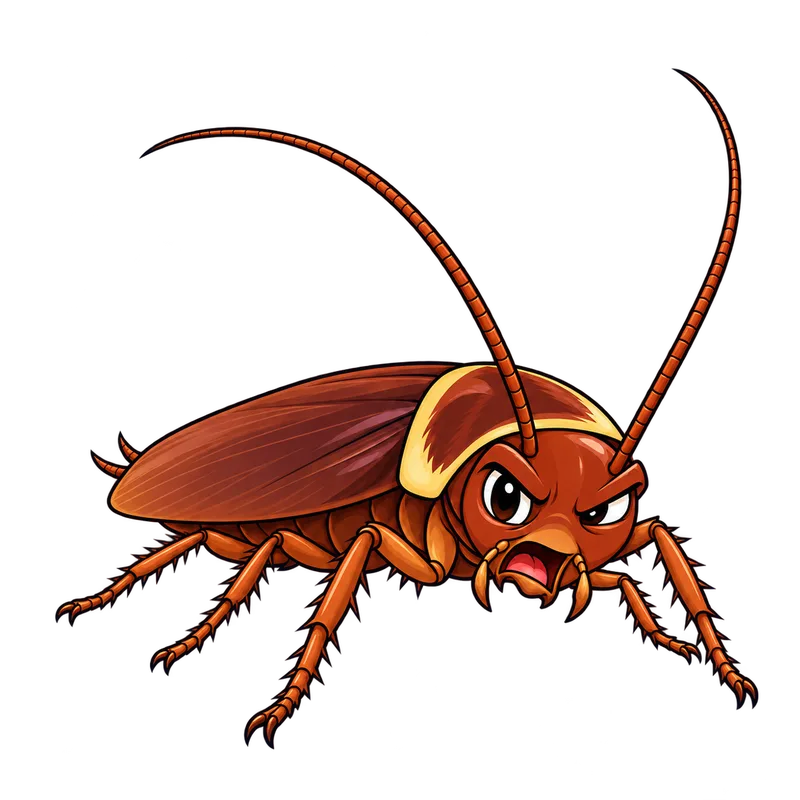
German cockroach egg cases and American cockroach egg cases differ in size, color, texture, egg count, and how the mother carries them. A German cockroach capsule is light tan, about a quarter of an inch long with distinct ridges, and holds up to 40 eggs. An American cockroach capsule is dark and smooth, measures about three-eighths of an inch, and holds only 12 to 16 eggs.
What is actually going on
Imagine you are wiping down the kitchen counter on a Tuesday evening, you slide the toaster away from the wall, and you spot a tiny, pale, ribbed capsule sitting there or attached to a small bug scuttling for cover. Or perhaps you are clearing out the basement and find a dark, polished object that looks suspiciously like a dried kidney bean glued to the baseboard near the floor drain. You are looking at cockroach egg cases, known technically as oothecae, but the two main pests you likely have in mind tell two completely different stories about your house.
German cockroach eggs and American cockroach eggs differ fundamentally in size, color, texture, egg count, and how the mother treats them. The German cockroach ootheca is a small, light tan capsule about a quarter of an inch long with roughly 16 distinct ridges running across it, housing 30 to 40 eggs. Crucially, the female German roach carries this capsule attached to her abdomen until just hours before the nymphs hatch.
The American cockroach ootheca, by contrast, is much larger at about three-eighths of an inch long, smooth-surfaced, dark brown or black, and contains only 12 to 16 eggs. Instead of hauling it around for weeks, the female American roach carries it for barely a day before gluing it into a hidden, moist crevice and leaving it to fend for itself.
How to tell for sure
If you are staring at an egg case right now and trying to figure out which household invader dropped it, you usually need to look at three things: the dimensions, the surface pattern, and whether a live bug was attached to it.
Grab a magnifying glass if you have one, because details matter here. A German cockroach egg case is about a quarter of an inch long, light brown, and looks almost like a tiny accordion or a ribbed coin purse because of its 16 transverse ridges. If you found it still attached to the rear end of a light brown insect bearing 2 dark stripes down its head, you are dealing with a German cockroach.
If the capsule is larger, roughly three-eighths of an inch, and looks smooth and dark like a polished bean with no distinct ridges, you are usually looking at an American cockroach egg case, or perhaps an Oriental cockroach case if you found it in a damp basement. American roach egg cases are never carried around for weeks, and they are usually glued firmly to walls, pipes, or wooden framing in dark, humid utility areas.
One common doubt people raise is whether a stray egg case found on the floor can still hatch if they crush the adult. With German cockroaches, a female carrying a fully mature case right on the brink of hatching might drop it when disturbed, and those final-stage eggs can sometimes survive. However, if a German egg case is detached more than a day or two before its natural hatching time, the embryos almost always die from drying out because they rely entirely on moisture from the mother's body. American egg cases, once hardened and glued in place, are self-contained vaults that protect their contents against the surrounding air, which is why a simple spray often fails to penetrate them.
What usually comes next
Spotting an egg case means you are past the point of a single accidental hitchhiker and likely dealing with an active population, so your most practical move is to figure out where the moisture and heat are gathering.
German cockroaches need warmth and humidity right up against their hiding spots, which is why their egg cases and nests almost always cluster around kitchen sinks, dishwashers, warm appliance motors, and refrigerator drip pans. American cockroaches usually wander in from the outside, coming up through municipal sewer lines, damp crawlspaces, or commercial basements to seek out floor drains and pipe chases. Fixing a leaky pipe or drying out a soggy utility room changes the indoor climate enough to make your house far less welcoming to whatever hatched those eggs.
When you clean up the area, use a vacuum with a fine filter to suck up shed skins, droppings, and any loose egg cases tucked into cabinet seams. Do not rely on store-bought bug bombs to clear them out, because those aerosol mists settle mostly on open horizontal surfaces and rarely reach deep into the dark cracks where German females hide their families or where American roaches glue their capsules.
When to get help
There are moments when a weekend cleanup is simply not going to cut through the problem, and you need to hand the reins to a professional pest control operator.
If you live in an apartment building or a townhouse complex, roaches frequently travel through shared walls, utility pipes, and crawlspaces, meaning treating just your own kitchen is like bailing out a sinking boat with a teaspoon. You should also call in an expert if you manage a commercial facility or food business, or if you notice American cockroaches steadily marching into your living spaces from nearby sewer networks or dry floor traps.
Pay attention to your health as well. Cockroach debris, including cast skins, saliva, and dried droppings, carries potent allergens that trigger chronic asthma and severe allergic reactions, particularly in young children. If anyone in your household suffers from persistent breathing trouble or sudden allergy flare-ups, consult a qualified clinician or an urgent care provider for medical guidance. When store-shelf baits and basic cleaning fail to stop an infestation, a licensed applicator can bring in specialized treatments and insect growth regulators to handle the job safely.