
How do you get rid of wood roaches?
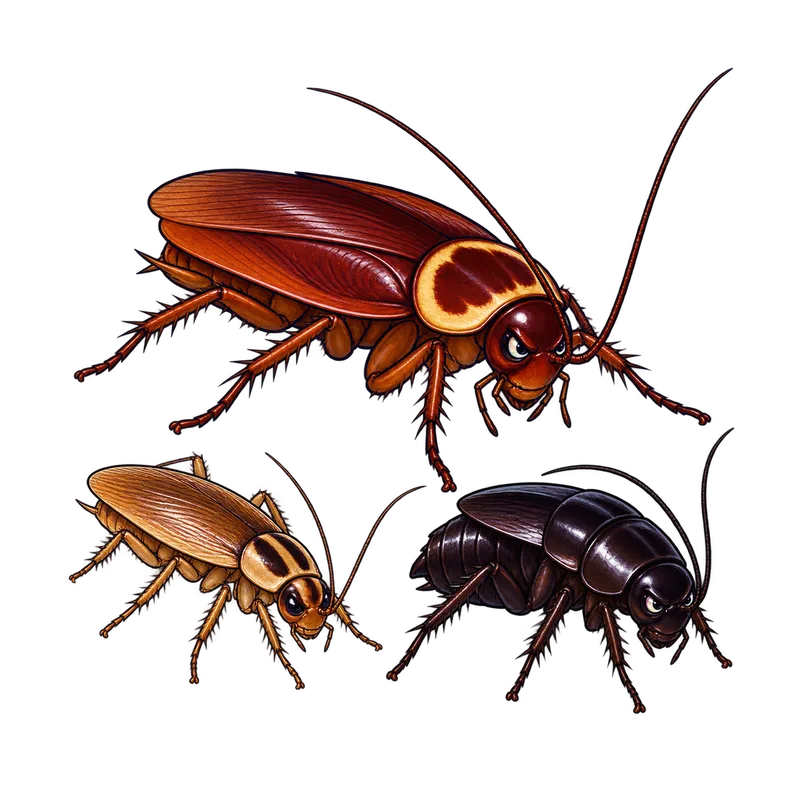
Getting rid of wood roaches does not require indoor chemical treatments because these insects only enter homes by accident from the yard. You can manage them by storing firewood away from your foundation, clearing leaf litter from your walls, and replacing bright outdoor bulbs with warm yellow LED lights.
What is actually going on
Picture this on a warm summer evening. You are sitting on the porch enjoying a quiet hour, you step back inside through the screen door, and five minutes later you spot a sizeable brown insect marching across your living room rug. Panic usually follows right about then because nobody wants to think about a cockroach infestation in their house. Before you reach for the nearest heavy shoe or run to buy a cart full of bug bombs, take a breath. What you are looking at is almost certainly a wood roach, and its presence inside your home is nothing more than a case of mistaken identity.
Getting rid of wood roaches does not require indoor chemical warfare, foggers, or sticky bait traps because these creatures do not belong inside your house in the first place. They are strictly outdoor insects that live beneath the loose bark of rotting logs, in decaying tree stumps, and among damp piles of forest leaves. They do not feed on human food crumbs, they do not nest behind your drywall, and they cannot reproduce inside a human dwelling. When they show up in your living space, they have only arrived by accident.
Male wood roaches have fully functional wings and a strong attraction to artificial light, which means your glowing porch lamp or light spilling through an open window acts like a beacon, drawing them out of the nearby trees and straight through any unsealed gap they can find. Other times, they hitch a ride indoors on your shoulder when you carry in a stack of firewood during the chill of autumn or winter.
The most important thing to understand is that your indoor air is simply too dry for them. Domestic heating and air conditioning create a desert environment for an insect that evolved to live in damp, rotting timber. A wood roach trapped inside is on a strict biological clock and will dehydrate and die on its own within a short time. Your job is not to poison your carpets, but to cut off their access routes from the yard and stop inviting them in by accident.
How to tell for sure
Correct identification matters because treating a wood roach like a common indoor pest will only waste your time and money. You usually do not need a microscope or an expert to figure out what is crawling across your floor, provided you know what physical traits to look for on the insect.
Male wood roaches usually measure about three-quarters of an inch to an inch long, display a rich chestnut or dark brown color, and possess long wings that stretch past the tip of their abdomen. If you spot one flying toward a lamp or buzzing around a window screen at night, it is almost always an adult male wood roach out looking for a mate. Females look quite different, usually measuring a half-inch to three-quarters of an inch, with short, stubby wing pads that cover only a portion of their backs. Female wood roaches are entirely flightless and tend to stay hidden outdoors under logs, which is why homeowners rarely encounter them unless they are carried inside on firewood.
You can easily separate wood roaches from the pest species that actually infest homes by checking their markings. German cockroaches are smaller and feature two dark, parallel stripes running down the head shield, while brown-banded roaches show light horizontal bands across their bodies. Wood roaches have neither of these patterns. Instead, they feature a distinctive pale, translucent border running along the outer edges of their head shield and front wings. If your visitor has that pale, see-through margin and lacks dark stripes, it is a wood roach. Oriental roaches can look somewhat similar to female wood roaches, but Oriental roaches have a solid, dark head shield without any pale borders at all.
What usually comes next
Since indoor treatments do not work at all against bugs that simply wander in from the yard, your practical strategy needs to focus entirely on the exterior boundary of your house. You are managing an outdoor reservoir, not an indoor colony.
Start by looking at your firewood storage habits, because bringing logs inside is the number one vector for winter and autumn intrusions. Store your firewood at least twenty feet away from your foundation walls and elevate the stack off the bare ground on a metal or wooden rack. Never store logs indoors in a basement or attached garage where warming temperatures can trick dormant wood roaches into waking up and crawling into your living areas. Bring inside only the few logs you plan to burn right away, and knock off any loose bark or hitchhiking insects outside before you cross the threshold.
Next, look at the immediate perimeter of your foundation. Clear away fallen tree limbs, rotting stumps, heavy leaf litter, and deep wood mulch from a band twelve to eighteen inches wide right against the house walls. Wood roaches love that kind of decaying organic matter, and keeping it away from your siding deprives them of a home base.
Lighting is your next best line of defense on summer nights. Traditional white incandescent or bright mercury-vapor bulbs act like magnets for flying male wood roaches. Replacing those outdoor entrance fixtures with warm-yellow LED bulbs or sodium-vapor lights drastically reduces the nocturnal pull, effectively putting sunglasses on your house so the insects fly past instead of gathering at your door. Finally, tackle basic physical exclusion by installing tight door sweeps, fixing torn window screens, and sealing up gaps around utility pipes and foundation cracks with exterior caulk.
When to get help
While wood roaches are entirely harmless to your home and do not bite or feed on structural timber, there are moments when bringing in a professional or seeking outside assistance makes practical sense.
If your home sits directly within a dense woodland canopy, you will likely experience a steady stream of migrating males during peak summer months no matter how diligent you are with yard cleanup. In those stubborn cases, a licensed pest management professional can apply a targeted exterior perimeter barrier spray using liquid synthetic pyrethroids along your foundation and entry frames to knock down the heavy invasion pressure. Always remember that outdoor pesticide barriers must be handled carefully, as formulations like permethrin or bifenthrin are highly toxic to honeybees and aquatic life, and must never be allowed to run off into storm drains.
If you have family members suffering from severe asthma or chronic allergies, keep in mind that shed insect skins and proteins can occasionally act as airborne respiratory irritants, even if the roaches are only visiting from the yard. If anyone in your household develops unexplained skin reactions or persistent health issues after finding insects, consult a qualified clinician or contact your local poison control center for guidance rather than guessing at the cause.