
How do you get rid of brown-banded cockroaches?
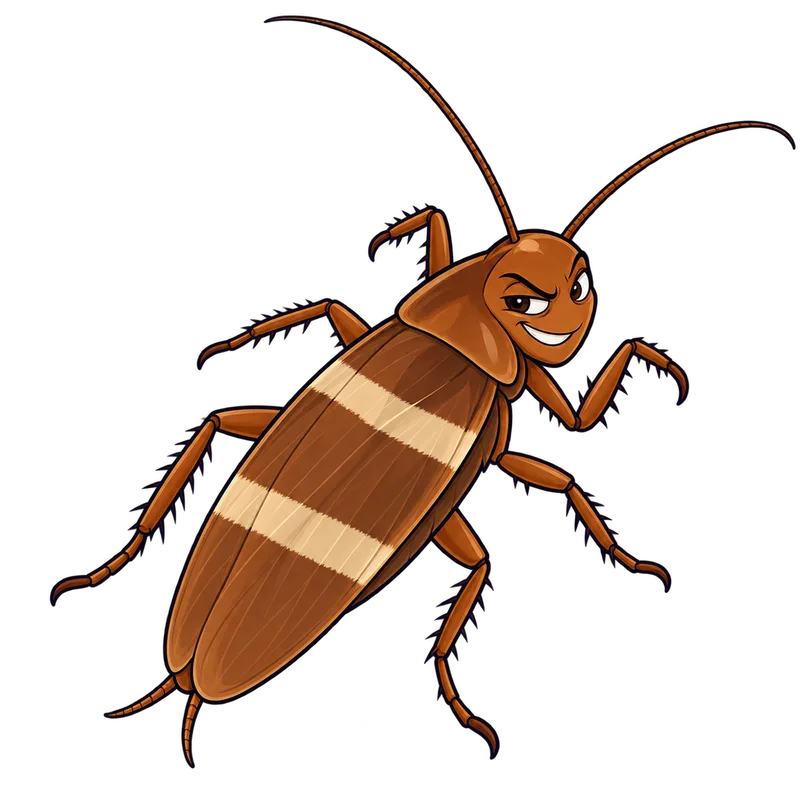
Getting rid of brown-banded cockroaches requires an integrated approach that targets their high and dry hiding spots, unlike standard kitchen pests. You need to use targeted baits, deploy insect growth regulators to stop reproduction, and clear out glued egg cases tucked away in dark corners while avoiding traditional moisture focused cleaning and foggers.
What is actually going on
You spot a small, frantic bug scurrying across the wall of the guest bedroom, well away from any plumbing, and you immediately think you have a standard kitchen pest on your hands. If German roaches are the basement dwellers clinging to wet kitchen pipes, brown-banded roaches are the upper-bunk campers. They head straight for the warmest, highest, and driest corners of the room. You will find them in bedrooms, home offices, and living rooms rather than under the kitchen sink.
Getting rid of brown-banded cockroaches means throwing out the playbook you might use for other household bugs. Because they do not need freestanding water and thrive in temperatures above eighty degrees, they scatter broadly across a house. Think about the back of your television, your Wi-Fi router, or the warm motor housing of a bedside clock. Those electronics run warm all day, generating a cozy sanctuary right in the middle of a dry living room.
Traditional moisture-focused cleaning and localized sprays around the sink simply will not touch them. An effective elimination strategy requires an integrated approach. You have to find where they are hiding high up on walls or inside electronics, use targeted baits that they take back to their nests, deploy insect growth regulators to stop them from reproducing, and clear out the tiny glued egg cases tucked away in dark corners.
How to tell for sure
Physical identification must precede any control measures, mostly because treating the wrong insect with the wrong method wastes time while the population grows. Brown-banded cockroaches are small, usually measuring about one-half to five-eighths of an inch in length. They are light brown to dark chestnut brown.
The easiest way to tell them apart from their kitchen-dwelling cousins is to look just behind the head. German roaches have two dark parallel stripes on that shield. Brown-banded roaches usually exhibit a solid dark bell-shaped pattern on that shield instead, with no longitudinal stripes. Both adults and nymphs usually possess two pale, light yellow or golden-brown transverse bands running across the base of the wings and the abdomen.
Behavior and body shape also give them away. Adult males usually have slender, narrow bodies with fully developed wings that extend past the tip of the abdomen, and they fly readily when disturbed. Adult females are usually darker, broader, and teardrop-shaped with shortened wings that do not cover the abdomen, meaning they cannot fly.
You also want to keep an eye out for their egg cases, which look very different from other species. Unlike other roaches that carry their eggs around until they are ready to hatch, brown-banded females act like tiny movers with double-sided tape. They usually carry the pea-sized, light brown egg case for only a day or two before permanently gluing it to hidden, elevated surfaces like furniture undersides, ceiling corners, closet shelves, or behind picture frames.
What usually comes next
Once you figure out what you are dealing with, take a breath and map out the terrain before you buy anything. Grab a flashlight and a small inspection mirror, then start looking where gravity does not usually matter. Check living rooms, high closet shelves, the backs of clocks, furniture joints, and heat-emitting electronics. Setting out sticky monitoring traps near high wall junctions and behind upper furniture can help you pinpoint the exact spots they call home.
After mapping the infestation, focus on cleaning up and physical removal. Vacuum visible cockroaches, shed skins, and tiny dark fecal speckling using a vacuum fitted with a HEPA filter. Clear out clutter and cardboard boxes from upper storage spaces, and store dry goods or pet food in sealed glass or rigid plastic containers.
As for chemical control, skip the total-release aerosol foggers or bug bombs entirely. They just throw chemical mists into open floor spaces, miss high cracks or electronic housings, and the repellent sprays only push the bugs deeper into walls and uninfested rooms. Instead, apply tiny, pinhead-sized drops of insecticidal gel bait directly into high cracks, crevices, and furniture joints. Combine these baits with insect growth regulators to short-circuit the reproductive cycle, and puff light layers of dry dusts like boric acid or silica aerogel into dry wall voids. Applying boric acid is not like building sandcastles. Think of it like dusting a countertop with flour before rolling dough. If you can see thick white clumps, the roaches will see the obstacle and simply walk right around it.
When to get help
There are moments when do-it-yourself efforts run into hard limits, and you need to hand the job over to a licensed professional. If you live in a multi-family apartment building or a townhouse, treating your own unit alone rarely fixes the problem. Roaches travel easily between connected units through electrical conduits and wall voids, meaning property managers must inspect and treat all adjacent spaces at the same time.
You should also call a professional if you spot roaches crawling around in broad daylight, which usually points to a heavy population and overcrowded hiding spots. Sensitive environments like schools, daycares, hospitals, and commercial food facilities are strictly regulated by law, requiring certified applicators who know how to apply treatments safely within those guidelines. Finally, if you have tried a thorough baiting and sanitation program for a couple of weeks and still see active bugs, a professional pest management company can track down missed hideouts or stubborn population resistance.
If you or anyone in your home experiences severe allergic reactions, asthma attacks triggered by indoor allergens, or respiratory distress from exposure, contact a qualified healthcare provider, urgent care service, or regional poison control center immediately.