
What does a brown-banded cockroach nymph look like?
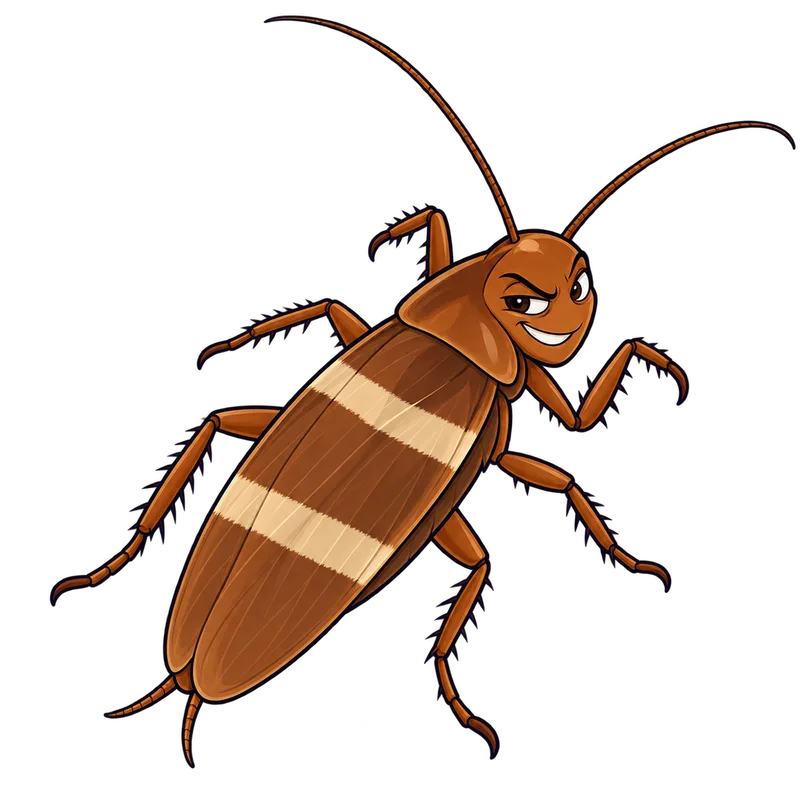
A brown-banded cockroach nymph is a tiny, wingless insect ranging from the size of a sesame seed up to half an inch long. Its body is light brown to dark chestnut, crossed horizontally by two pale yellow or golden bands that wrap around the middle like saddle belts.
What is actually going on
You are standing in the hallway, staring at a tiny, fast-moving bug you just spotted scuttling across the upper corner of the wall near the ceiling molding. You squash it, grab a paper towel, and realize it does not look quite right for a standard kitchen pest. It is small, dark, and marked with pale stripes, yet you are nowhere near the sink or the dishwasher. What you are looking at is likely a brown-banded cockroach nymph, and finding it up high rather than down low changes everything about how you need to think about your house.
A brown-banded cockroach nymph is the immature, wingless stage of a species that behaves very differently from the German cockroaches most people picture when they think of an infestation. While other roaches crowd around damp floor drains and leaky kitchen pipes, these insects prefer high-altitude real estate. They thrive in warm, dry environments exceeding eighty degrees Fahrenheit, making the upper reaches of your rooms, your ceilings, and the warm interior electronics like televisions and routers their preferred territory.
Female brown-banded cockroaches do not carry their egg cases around until they hatch. Instead, they drop them or glue them to hidden structural surfaces within a day or two of forming them. They tuck these tiny, light-brown, bean-shaped egg cases behind picture frames, beneath the upper ledges of wooden furniture, inside closets, and along ceiling moldings. When the nymphs finally emerge, they are tiny, wingless, and ravenous, feeding on starches, paper, envelope glue, and wallpaper paste rather than just kitchen food crumbs.
How to tell for sure
If you want to know whether that small insect is genuinely a brown-banded nymph, you need to look at its back and head. A newly hatched nymph usually starts out tiny, roughly the size of a sesame seed, and grows through several molts until it reaches about half an inch long, resembling a small office staple.
The most reliable giveaway is the pattern on its back. The body ranges from light brown to dark chestnut, crossed horizontally by two pale yellow or golden bands that wrap around the middle like little saddle belts. These crosswise stripes are usually much more distinct on the immature nymphs than on the adults. Behind the head, the shield is solid brown or displays a dark bell-shaped pattern, and it completely lacks the two dark, vertical parallel stripes that run down the back of a German cockroach nymph.
You usually have to look closely, sometimes needing a magnifying lens or a clear macro photograph on your phone, because these nymphs move fast and like to stay out of direct light. Keep in mind that right after a nymph sheds its skin during a molt, it turns completely white or ivory for a few hours before its new shell hardens and darkens, meaning you might occasionally catch one looking completely pale and blank.
What usually comes next
Spotting even one of these nymphs usually means you are dealing with an established indoor population, because they complete their entire lifecycle inside heated structures. Your first instinct might be to scour the kitchen sink and spray baseboards, but that usually fails because these bugs live in entirely different zones of your home.
You need to shift your inspection upward and outward. Grab a flashlight and check the upper wall junctions, the backs of hanging wall clocks, the undersides of wooden tables, and the warm crevices of electronic appliances. Toss out any old stacks of corrugated cardboard stored in warm closets or attics, since cardboard provides both a dark hiding place and a starch-rich glue diet that these insects love. Deploying sticky glue traps flat along upper shelves, closet floors, and near electronics can help you track where the nymphs are traveling.
For treatment, place registered cockroach baits or containerized bait stations near those verified upper-room harborages rather than down on the floor. Incorporating insect growth regulators can also help disrupt the nymphal molting cycle and stop them from reaching maturity. Remember that all pesticide product label directions carry legal authority, so you must read and follow the label exactly as written.
When to get help
If you spot brown-banded cockroach nymphs scattered across multiple rooms, upper walls, or adjacent multi-family apartment units, do-it-yourself traps and localized sprays are rarely enough to break the cycle. That is the time to bring in a certified pest management professional who can conduct a thorough structural inspection and apply comprehensive baiting and growth regulator treatments across the affected areas.
Pay close attention to health risks as well, because cockroach nymphs shed their skins multiple times and leave behind fecal deposits that generate potent allergens. These airborne proteins frequently trigger bronchial asthma, allergic rhinitis, and severe respiratory reactions, particularly in children and sensitive individuals. If anyone in your household experiences acute respiratory distress, severe asthma attacks, or sudden allergic symptoms, seek medical care from a healthcare clinician or emergency provider immediately.