
What do German cockroach egg cases look like?
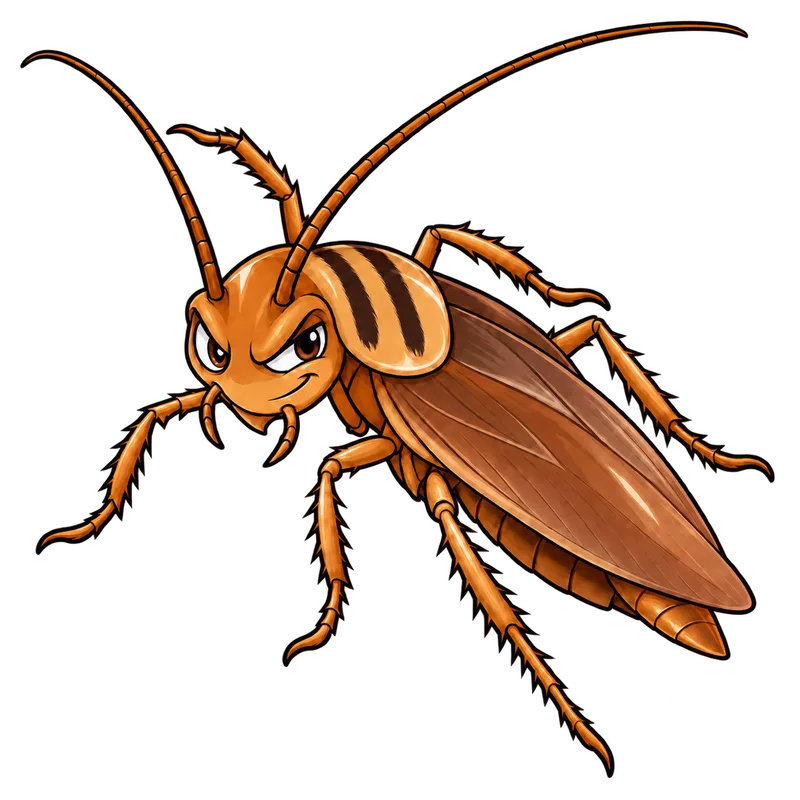
German cockroach egg cases look like tiny, stiff leather purses or long-grain rice measuring about one-quarter of an inch in length. They range in color from light tan to yellowish-brown, and they feature about 16 tiny vertical ridges running down the sides.
What is actually going on
Imagine you walk into the kitchen late at night, flick on the overhead light, and spot a medium-brown cockroach scuttling across the baseboard. If you look closely enough at the rear end of that insect, you might notice something unusual sticking out. It looks almost like a tiny, stiff leather purse or a miniature pod hitched to her backend. You are not imagining things. That is a German cockroach egg case, known scientifically as an ootheca, and it holds the blueprint for a whole lot more trouble.
So what do German cockroach egg cases actually look like? If you picture a single grain of long-grain rice or the pink rubber eraser on the back of a standard wooden pencil, you are right in the ballpark. They measure about one-quarter of an inch in length. Their color ranges from a light tan to a yellowish-brown, and they have a distinct capsule shape where the length is more than twice the width. If you had a magnifying glass handy, you would see about 16 tiny vertical ridges running down the sides, looking a bit like the pleats on an accordion or the stitched seams of a tiny purse.
The most fascinating and unsettling part of this setup is that the female does not drop her eggs right away like other roach species do. She carries that capsule attached to her abdomen throughout almost the entire incubation period. Think of it as a rigid, protective backpack she refuses to take off. Inside that single capsule, she is guarding anywhere from 30 to 50 developing eggs. She walks around feeding, hiding, and evading detection while keeping those future generations safe and humidified. She only drops the case into a sheltered crack or crevice during the final day or two before the eggs hatch.
How to tell for sure
Finding an egg case in your home usually means you are dealing with a reproducing population, but making a positive identification helps you figure out the scale of the problem. A healthy, viable German cockroach egg case is plump, firm, light brown, and entirely sealed. If you happen to spot one that looks dark, collapsed, and hollow with a split seam running along the top edge, that is usually an old husk left behind after the nymphs have already hatched and scattered.
People often wonder if stepping on a cockroach egg case will spread tiny babies all over the floor like a shaken snow globe. You can usually stop worrying about that particular nightmare. Crushing an ootheca physically destroys the delicate embryos inside. Even if a case gets knocked off the female's body prematurely during a scuffle, it usually dries out and fails to hatch unless it was already within 24 to 48 hours of its natural hatch time. The developing embryos depend entirely on the moisture balance maintained by the mother, so early detachment is normally fatal to them.
You also want to make sure you are not misidentifying the pest. For instance, brown-banded cockroaches produce egg cases that are also about a quarter of an inch long, but they look quite different upon closer inspection. Brown-banded egg cases have only about 8 vertical ridges instead of 16, contain fewer eggs, and are glued high up on dry surfaces like the backs of picture frames or under furniture. German cockroaches, by contrast, prefer low, warm, humid microenvironments near kitchens and bathrooms, and they carry their cases rather than gluing them.
What usually comes next
Spotting an egg case or a carrying female means your next practical move should focus on disrupting their breeding grounds instead of just chasing individual adults. Since a single female produces several egg cases in her lifetime, leaving behind hiding spots or moisture sources is an open invitation for the next wave to take over. You want to make one deliberate choice about sanitation and physical removal, starting with a thorough inspection of the usual warm, damp harborages near your plumbing, under the refrigerator, or inside appliance voids.
Physical removal works wonders for dropped cases and hidden adults. Using a vacuum cleaner equipped with a high-efficiency particulate air filter allows you to suck up loose egg cases, nymphs, and adults from tight crevices and cabinet undersides in one pass. Once you finish vacuuming, the bag must be sealed tightly and hauled out to an exterior trash can immediately so that any hatching nymphs cannot crawl back out into your living space.
At the same time, you have to cut off their access to water and shelter. Repairing a slow leak under the sink or clearing out stacks of corrugated cardboard boxes removes the exact humid microenvironments where gravid females love to drop their cargo. Regarding chemical control, the product label is the law, and directions governing application sites or safety equipment must always be followed to the letter. Over-the-counter gel baits or insect growth regulators are common choices for interrupting their life cycle, but the specifics depend heavily on the layout of your home and the severity of the issue.
When to get help
There comes a point where do-it-yourself methods stop working, and recognizing that boundary saves you time and frustration. If you live in a multi-family housing complex, an apartment building, or a shared commercial space, an isolated treatment in your own unit rarely solves the root issue because the insects easily travel through walls and utility lines. Persistent daytime sightings of females carrying egg cases usually indicate an overcrowded harborage and a severe population density that demands a coordinated building-wide response.
When over-the-counter baits and thorough cleaning fail to make a dent in the numbers, it is time to call a licensed pest management professional. They have the training and access to specialized structural treatments needed to reach deep into wall voids where household vacuums and consumer sprays cannot go.
Keep health risks in mind as well. Cockroach debris, cast skins, and droppings release potent airborne allergens that can trigger severe allergic rhinitis and asthma attacks, particularly in children. If anyone in your household suffers from persistent breathing difficulties, wheezing, or suspected allergic reactions, consult a qualified medical clinician right away. For any accidental exposure to pesticides, contact poison control immediately.