
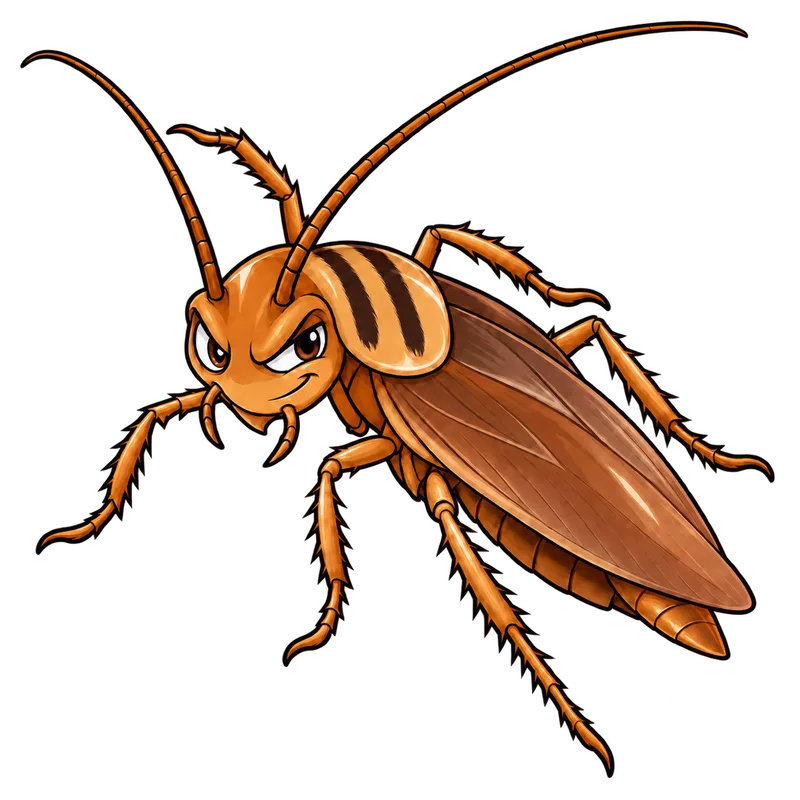
German cockroach
Blattella germanica
- Size
- 1/2 to 5/8 inch (13 to 16 mm)
- Color
- Light tan to light brown with two dark stripes
- Habitat
- Warm humid indoor kitchens, bathrooms and appliances
- Diet
- Grease, starch, glue, soap and scraps
- Life cycle
- Egg in carried ootheca, nymph, adult; no pupa
The German cockroach, Blattella germanica, is the small cockroach most likely to be living inside a building rather than wandering in from the yard. You meet it in kitchens, bathrooms, break rooms and restaurant prep areas, usually after dark and usually near water, heat and crumbs.
Identity
The mark to trust is not “small and brown,” because several roaches manage that. Look at the shield behind the head, the pronotum: an adult is about 1/2 to 5/8 inch (13 to 16 mm) long, light tan to light brown, with two dark parallel stripes running lengthwise down that shield. At arm’s length those stripes read as a little dark racing stripe on a tan back; up close they are crisp and hard to mistake.
The wings are the trap. Adults have fully developed wings lying flat over the abdomen, sometimes reaching the tip or just past it, so people assume flight is coming. It is not. A German cockroach can look dressed for the airport and still be strictly a runner. If a small striped roach lifts off toward a porch light, you are probably looking at the Asian cockroach instead.
The egg case gives away the female. She carries a light tan ootheca, about 1/4 inch (6 mm) long, sticking out from the rear of the abdomen until the eggs are nearly ready to hatch. Each capsule holds roughly 30 to 50 eggs, which is why one “pregnant-looking” roach is not a quirky sighting but a small nursery with legs.
Habitat & behaviour
This species is built for indoor life in temperate climates: warm, humid, cluttered and close to plumbing. It favors microclimates around 70 to 75 F, tucked behind refrigerators, under sinks, inside dishwasher voids, around stoves, in cabinet hinges, along baseboards and inside appliance motors that stay gently warm. It can survive about two weeks without food, but only a few days without water, which explains why the spot under the sink often beats the cookie jar.
It eats like a raccoon in a pantry. Grease, meat scraps, starches, sweets and baked goods are preferred, but hunger broadens the menu to wallpaper paste, book binding glue, envelope adhesive, soap, hair, shed skins and dead insects. That flexibility is why “we keep a clean kitchen” helps, yet does not make a building immune; roaches also arrive in cardboard boxes, grocery bags, beverage cartons, used appliances and secondhand furniture.
German cockroaches are nocturnal and thigmotactic, meaning they like tight cracks where their backs and bellies touch surfaces at once. They gather where fecal and cuticular pheromones say “good hiding here,” then spill out along edges and corners at night. Daylight sightings are not charming boldness; they usually mean the harborage is crowded enough that some individuals are being pushed out.
Visual variations
There are three life stages: egg inside the ootheca, nymph and adult. No larva, no pupa, no dramatic cocoon phase. The female typically produces 6 to 8 capsules in her adult life and carries each one until a day or two, sometimes only hours, before hatching, because a capsule knocked loose too early often dries out and fails.
Nymphs hatch wingless and look almost like a different insect, being smaller, dark brown to black, with a pale tan streak running down the middle of the back between darker sides. They molt 6 to 7 times, and right after a molt the new skin is briefly white before it hardens and darkens. Late nymphs may show small wing pads, but functional wings appear only at adulthood.
Adults are the tan, striped form. Males are a little narrower and more tapered toward the rear, while females are broader and often darker, especially when the ootheca is protruding. Under warm indoor conditions, egg to adult can take 40 to 125 days, while cooler or less stable conditions stretch it toward 60 to 250 days. Adult females may live 140 to 200 days, long enough to make it was just one an optimistic sentence.
Why it matters
A German cockroach infestation is mainly a health and contamination problem, not a wood-chewing structural one. Roaches move between drains, garbage and food surfaces, carrying bacteria such as Salmonella and Shigella on legs and bodies, and leaving fecal spotting, regurgitated fluid and a musty, fetid odor in cabinets and stored food. Their shed skins, saliva and droppings also add allergens to indoor dust, and cockroach exposure remains a known asthma trigger, especially for children in dense housing. Anyone with breathing symptoms, severe allergy concerns or suspected foodborne illness should talk with a clinician rather than diagnosing the cause from a bug sighting.
Precise identification matters because the lookalikes behave differently. The Asian cockroach is nearly the same size and has the same two pronotal stripes, but it lives outdoors in leaf litter and mulch and flies readily to lights, whereas the German cockroach stays indoors and does not fly. The brown-banded cockroach lacks those two lengthwise stripes, shows two pale crosswise bands, and prefers drier, higher spots like ceilings and picture frames. American and Oriental cockroaches are much larger and darker, tied to basements, sewers and drains. So the useful field rule is simple: tan adult, two dark stripes, kitchen or bathroom at night, full wings but no flight, and a female carrying her egg case until the last moment.
Similar species
 American cockroachPeriplaneta americana
 Oriental cockroachBlatta orientalis
 Brown-banded cockroachSupella longipalpa
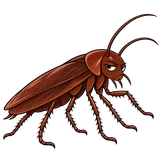 Smokybrown cockroachPeriplaneta fuliginosa
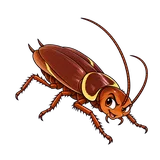 Australian cockroachPeriplaneta australasiae
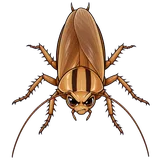 Asian cockroachBlattella asahinai