
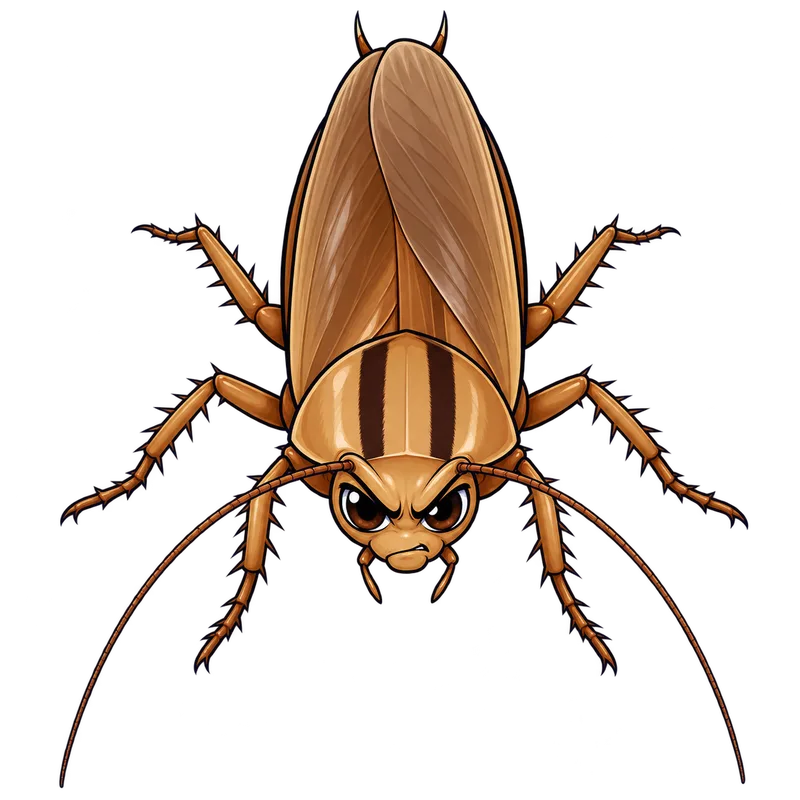
Asian cockroach
Blattella asahinai
- Size
- 1/2 to 5/8 inch (13 to 16 mm)
- Color
- Light tan, two dark parallel stripes on pronotum
- Habitat
- Lawns, leaf litter, mulch, shaded turf
- Diet
- Decaying plant matter, fungi, organic debris
- Life cycle
- Egg, nymph, adult; about 65 days total
The Asian cockroach (Blattella asahinai) is the roach that does the one thing you thought roaches never do: it flies, straight at your porch light, on purpose. It is an outdoor species at heart, native to Asia, introduced into Florida in the early 1980s and now established across the state and up into South Carolina, and what brings it to your attention is almost always that flight.
Identity
Here is the awkward part. At rest, on a wall, it looks exactly like a German cockroach. Same body length, 1/2 to 5/8 inch (13 to 16 mm). Same light tan color. Same two dark parallel stripes running down the pronotum, the shield-like plate that covers the head when you look at it from above. Those stripes are visible to the naked eye, and a 10x hand lens makes them unmistakable, but they will not separate the two species, because both carry them. Anyone who tells you the stripes settle the question has not met both roaches.
So forget the stripes for a moment and watch the behavior. A disturbed German cockroach runs. A disturbed Asian cockroach takes off, and flies well, because both sexes have fully developed wings that reach to or just past the tip of the abdomen, with working flight muscles behind them. If the roach on your window screen flew there, toward the light, on a warm evening, you are almost certainly looking at Blattella asahinai. If it scurried away from the light in your kitchen, that points the other way. The nymphs offer a second clue: Asian cockroach nymphs have pale margins along the outer edges of the abdomen, while German cockroach nymphs carry a light streak down the center of the back instead.
Habitat & behaviour
This is a lawn animal, not a kitchen animal. It lives in shaded turfgrass, fallen leaves, compost, flower beds and, above all, organic mulch, feeding as an omnivorous scavenger on decaying plant material, fungi and general organic debris. In damp, heavily mulched Florida landscapes, field populations have been measured at over 250,000 individuals per acre, which is less a population and more a weather system.
Its daily rhythm explains everything about how people meet it. Most pest roaches avoid light. This one is drawn to it, strongly, and at dusk the adults leave the leaf litter and fly toward illuminated porches, exterior walls, window screens and open doors. So when one turns up in your living room, did it march up from a nest behind the refrigerator? No. It flew in through a gap, chasing the lamp. That distinction matters, because a few indoor sightings on summer evenings are lost visitors, not a breeding infestation. The actual reservoir is the mulched bed outside the window.
One spring note: fresh mulch laid thick against a foundation creates exactly the moist, shaded microhabitat this species builds its numbers in. The seasonal surge people notice in early to mid spring often follows a weekend of enthusiastic gardening.
Visual variations
The species passes through three stages: egg, nymph and adult, with no pupal stage in between. The female carries her egg case, a small light brown bean-shaped capsule called an ootheca, protruding from the tip of her abdomen while the embryos develop inside. It holds an average of 38 eggs and is noticeably smaller than a German cockroach's egg case. Outdoors she averages two of these in a lifetime, though laboratory females manage five or six, and the full run from egg to adult takes roughly 65 days under good conditions.
Nymphs are wingless, smaller and darker than the adults, with those pale abdominal margins doing the identifying work. Right after each molt, and they molt several times, the nymph is soft and white for a few hours until the new skin hardens and darkens. A pale ghostly roach in the leaf litter is usually just a freshly molted one, not a different species.
Adults are the winged form, and unusually for cockroaches, there is no dramatic difference between the sexes. Male and female are the same size, both fully winged, both capable fliers. Compare that with the brown-banded cockroach, where the female has reduced wings and stays grounded, and you see why the flying roach at the light could be either sex of this species.
Why it matters
The honest answer is: less than its reputation, but not nothing. Asian cockroaches do not damage timber, they do not colonize kitchens, and they will not set up a self-sustaining indoor population the way German cockroaches do. The harm they do carry is the standard cockroach package. They forage across decaying matter and filth, so they can passively move bacteria such as Salmonella and Shigella onto food and food-contact surfaces, and their droppings, saliva and shed skins contain allergen proteins that can trigger rhinitis, rashes and asthma attacks in sensitized people, children especially. Anyone dealing with worsening asthma or a strong allergic reaction should see a clinician rather than troubleshoot it alone.
Precise identification matters here more than usual, because the two lookalikes demand opposite responses. A German cockroach problem is treated indoors, in cracks and crevices. An Asian cockroach problem lives in the mulch, and indoor sprays accomplish little while the lawn keeps breeding replacements. If you are unsure which one you have, a pest control professional can confirm it, and in commercial or multi-family buildings, treatment decisions belong to a licensed applicator in any case.
Similar species
 Turkestan cockroachShelfordella lateralis / Blatta lateralis / Periplaneta lateralis
 Florida woods cockroachEurycotis floridana
 Pennsylvania wood cockroachParcoblatta pennsylvanica
 Field cockroachBlattella vaga
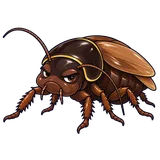 Surinam cockroachPycnoscelus surinamensis
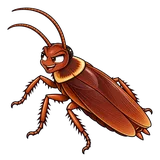 Brown cockroachcombinações Periplaneta/Validiblatta brunnea: confirmar