
German vs American cockroaches: how can you tell?
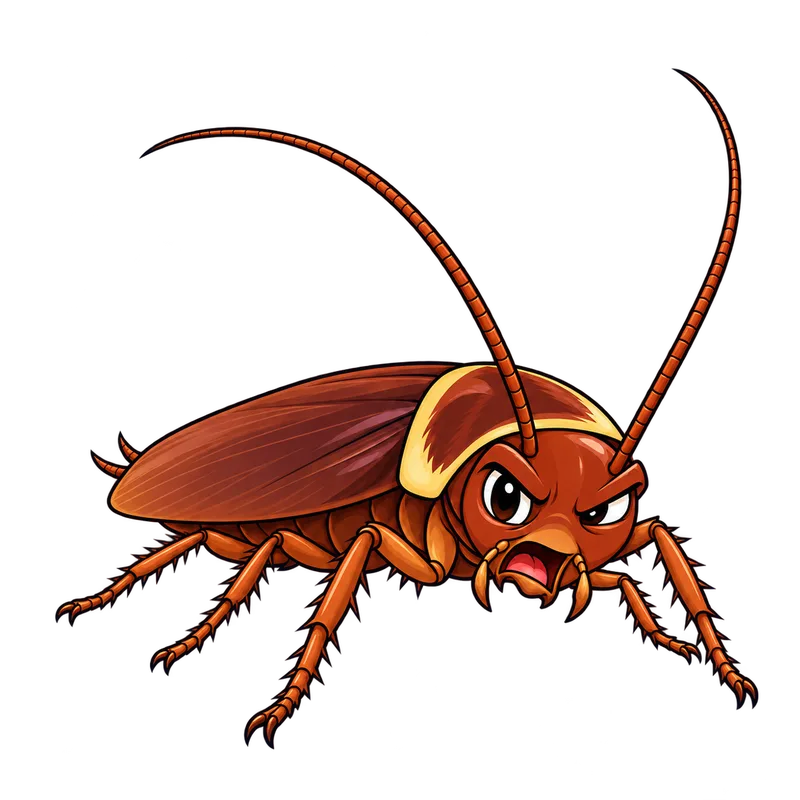
To tell a German cockroach and an American cockroach apart, look at their size, color, and markings. German cockroaches are small, measuring one-half to five-eighths of an inch long with two dark parallel stripes behind the head. American cockroaches are massive at one and a half to two inches long, displaying a uniform reddish-brown body with a pale yellow ring.
What is actually going on
You turn on the kitchen light at midnight, and a small brown bug scurries across the counter and disappears behind the toaster. Or perhaps you walk down into the basement and spot a giant reddish-brown insect scuttling toward a floor drain. Either way, you are dealing with a cockroach, but your strategy changes entirely depending on which species has moved in. People often lump every single crawler into the same category, but telling a German cockroach apart from an American cockroach is the most important step before you do anything else.
The confusion is completely understandable because both pests are built to survive and both love human dwellings. Yet they live entirely different lives. One is a tiny, high-speed apartment dweller that sets up camp right inside your kitchen cabinets and carries her eggs around like a backpack until they hatch. The other is a massive, lumbering outdoor voyager that occasionally wanders up from the municipal sewer lines or a damp crawl space to explore your lower level.
Treating a German infestation the same way you treat an American roach visitor is a recipe for frustration. A bug bomb that clears out a stray basement wanderer will do little more than scatter a hidden kitchen colony deeper into your walls. Size, color, and where you find them tell you everything you need to know about what is happening behind the scenes.
How to tell for sure
Size is usually the quickest giveaway. An adult German cockroach is small, measuring about one-half to five-eighths of an inch long, which is roughly the width of a standard paperclip. An adult American cockroach is massive by comparison, stretching one and a half to two inches long, easily matching the length of an adult thumb or a house key.
If you want to be completely certain, look at the pattern just behind the head on the plate-like shield called the pronotum. German cockroaches feature two dark, parallel longitudinal stripes running down their tan or light brown backs. American cockroaches lack those stripes entirely and instead display a uniform reddish-brown or mahogany body bordered by a pale yellow ring around that front shield.
Behavior and habitat also set them apart clearly. German roaches are obligate indoor pests that require the warmth and humidity of your kitchen or bathroom, hiding near the motor housing of the refrigerator or underneath the dishwasher. They have fully developed wings but do not fly. American roaches prefer very warm, damp spaces like boiler rooms, steam tunnels, and floor drains, and while they rarely sustain powered flight, they are capable of gliding downward when startled from a high perch.
You also have to watch out for clever lookalikes. The Asian cockroach looks almost identical to the German roach with its twin stripes, but it lives outdoors in leaf litter and flies directly toward porch lights at night. Meanwhile, mid-stage American nymphs can grow to a size that overlaps with adult German roaches, but those nymphs are a shiny, uniform reddish-brown without a single stripe on their backs.
What usually comes next
Once you figure out which roach you are dealing with, your next move needs to be focused cleaning and sealing rather than random spraying. If you have the small, striped German variety, your kitchen is where the war is happening. Vacuum up every stray crumb, wipe away the grease film behind the stove, and move open cereal and flour boxes into thick plastic bins with snap-on lids. Fix that dripping under-sink pipe and dry the basin completely before bed because these bugs cannot survive long without a steady drink.
If you caught sight of the large American wanderer, turn your attention to the basement and utility rooms instead. Pour water down every floor drain once a month so the traps do not dry out and let sewer smells and crawlers straight up into your house. Grab a tube of caulk and seal up gaps around baseboards and where pipes poke through the walls from the outside.
As for chemical treatments, skip the store-bought bug bombs entirely. Those pressurized cans mostly coat your toaster and counters while pushing surviving roaches deeper into wall voids and behind electrical switch plates. Instead, squeeze out tiny, pea-sized dabs of professional gel bait directly into the dark cracks and crevices where the insects actually hide during the day. If you lay down sweet gel bait and the bugs completely ignore it, you might be dealing with a population that has learned to taste sugar as bitter, meaning you will need to swap over to a protein-based formula.
When to get help
Some situations simply grow too large for weekend DIY projects and call for a trained professional. If you live in an apartment building or a townhouse complex, spraying your own kitchen is like bailing water from a sinking boat with a spoon while your neighbors keep the taps running. Shared walls and common plumbing chases mean multi-family buildings need a coordinated treatment plan that covers every unit at the same time.
You should also pick up the phone and call an exterminator if you have followed all the baiting rules for a month and the numbers are not dropping at all, which usually means the insects have developed resistance to common poisons or new bugs are constantly crawling in from the street drains.
On the health front, roach droppings, cast-off skins, and dried saliva contain strong proteins that trigger bad asthma attacks and constant indoor allergies, especially in young children. If anyone in your house starts having trouble breathing, breaks out in severe rashes, or shows signs of acute distress, talk to a doctor, visit an urgent care clinic, or call poison control right away.