
How do you get rid of Oriental cockroaches?
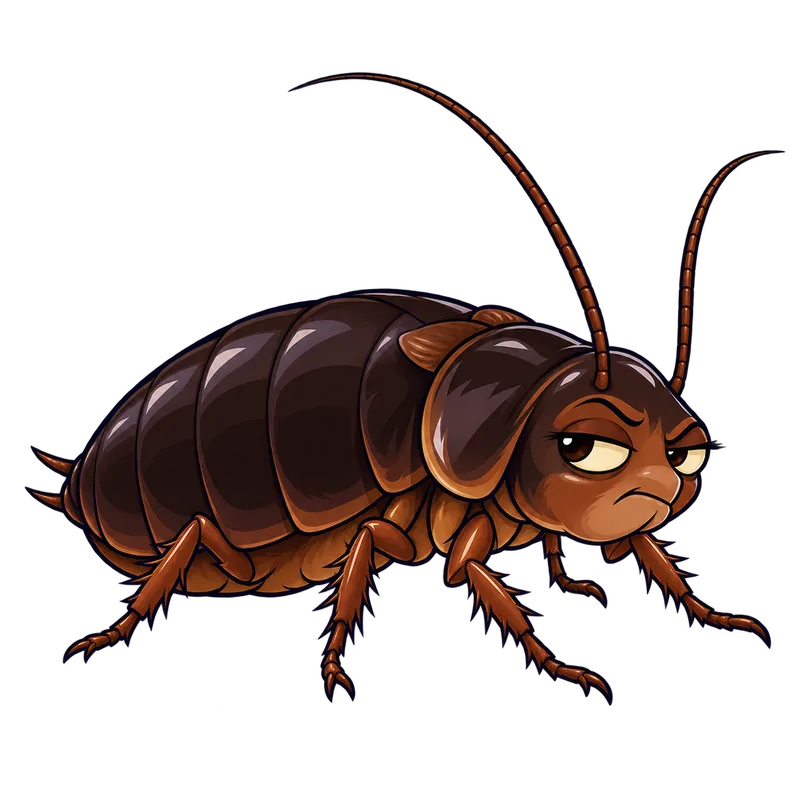
To get rid of Oriental cockroaches, you need to cut off their water supply and block their entry points. The success of this method depends on sealing foundation gaps, keeping floor drains filled with water, running a dehumidifier, and placing slow acting bait stations near walls.
What is actually going on
You flip on the kitchen light at midnight, and a dark, glossy insect scrambles in a clumsy hurry toward the gap beneath the washing machine. If you live in a place where people call them water bugs, you probably assume you have a cleanliness problem on your hands. With Oriental cockroaches, that assumption is usually wrong. These structural pests, meaning creatures that live both outdoors in debris and indoors in ground-level microclimates, are not looking for your leftover crumbs as much as they are looking for moisture, cool shelter, and a break from the weather.
Unlike German cockroaches that thrive in warm, dry upper living spaces and reproduce rapidly in your kitchen cabinets, Oriental cockroaches prefer temperatures below 84 degrees Fahrenheit and demand dampness. They set up shop in subterranean spaces like basements, cellars, crawl spaces, utility chases, sump pumps, and unsealed floor drains. During warm months, outdoor populations hide out in heavy leaf litter, thick mulch, and damp woodpiles, only to push indoors when seasonal shifts, heavy rainfall, or lawn maintenance disrupt their outdoor quarters.
People often wonder why they keep seeing these roaches in spotless homes where no food is left sitting out. The answer lies in how they travel. They move up from municipal sewer lines through dry P-traps, squeeze through uncaulked foundation gaps, and enter through gaps under exterior doors. Because neither males nor females can fly, and females only possess short, rudimentary wing pads that make them look somewhat like heavy beetles, they stay firmly at ground level. They are entirely bound by their need for water and cool shade. If your basement has a damp corner or a weeping foundation wall, you have practically rolled out the welcome mat.
How to tell for sure
Before you try to fix anything, you need to know what you are looking at. Oriental cockroach adults are typically 1 to 1 and 1/4 inches long, while females can sometimes reach 1 and 1/2 inches. They are a very distinct glossy dark brown to black color with a solid dark plate just behind the head, without any light borders or stripes. Males have wings that cover about three quarters of their abdomen, while females have short, useless wing lobes. Nymphs are smaller, wingless, and dark brown to black with subtle dark transverse bands.
People frequently confuse them with other species, and that mistake usually leads to wasted effort. If you spot a small, tan roach with two dark stripes behind its head scurrying across a kitchen counter, you are looking at a German cockroach, which calls for an entirely different strategy focused on upper kitchens. If you find a massive, reddish-brown roach gliding through a very warm boiler room, you likely have an American cockroach. Oriental roaches are the ones you usually find scuttling low to the ground in unlit, cool, damp spaces, often giving off a strong, musty odor if the population is dense enough.
You should also look for their egg capsules, known as oothecae. Females produce dark reddish-brown, bean-shaped capsules measuring about 3/8 of an inch long, containing 16 eggs. Instead of carrying them around until they hatch, the female glues them to a protected surface near moisture within a day of forming them. Finding these capsules, along with cast-off skins and small dark droppings in a damp corner, usually confirms you are dealing with a reproducing population rather than a single lost traveler from the yard.
What usually comes next
When you decide you have had enough of these things and want them gone, the first temptation is usually to grab a bug bomb off the shelf. Try to resist that impulse. Those aerosol cans just spray fine mist onto open surfaces, completely missing the deep cracks and drain pipes where these roaches actually spend their time. To make matters worse, the explosive propellant often just drives the survivors deeper into your walls, and those cans can turn into actual fire hazards if they ignite near a water heater pilot light.
Instead of looking for a quick fix that misses the target entirely, you want a method that cuts off their water supply and blocks their way in. Begin by walking the perimeter of the foundation and sealing up any gaps, cracks, and mortar holes with silicone caulk or cement. Put solid door sweeps on every door that leads outside, and cover floor drains and vents with fine wire mesh. After that, deal with the dampness. Pour a bucket of water down basement floor drains every week so the U-shaped traps stay full, wrap any sweating cold water pipes, and plug in a dehumidifier if the air feels thick.
Only once you have kept them out and dried out their hiding spots should you turn to targeted chemical products. Place slow-acting bait stations containing ingredients like boric acid or hydramethylnon right along the edges of the walls and near floor drains where the roaches walk. You can also puff specialized dusts into dry wall cavities and tight structural spaces, which work by drying out the outer shell of the insects. Stay away from broad sprays across open floors, since the product instructions on professional insecticides limit those treatments to precise cracks and crevices anyway.
When to get help
There are times when handling things on your own stops making sense and you need to call in a professional exterminator. If your checks show that the roaches are crawling up directly from main city sewer pipes or unsealed concrete slab gaps, you are looking at a bigger structural problem that needs commercial equipment. Pouring pesticides down public storm drains or main sewer lines is against the law and can easily contaminate local water supplies.
You should also bring in a licensed pest control operator if you live in a shared building or apartment complex. Treating your single unit while ignoring the apartments next door or the shared basement is pointless because the roaches will simply move through the walls. Professionals are likewise the right call if your sticky traps show no reduction in numbers after three solid weeks of sealing gaps, setting baits, and running dehumidifiers.
On the health side, keep in mind that Oriental cockroaches can carry bacteria like salmonella and E. coli across your floors, while their shed skins and droppings release proteins that trigger asthma attacks and allergies. When you are cleaning up after an infestation, never use a dry broom, since sweeping turns the dried droppings into invisible dust that floats right into your lungs; always wipe surfaces with a damp cloth or a vacuum with a specialized high-efficiency filter. If anyone in your house starts having severe allergic reactions, skin issues, or sudden asthma trouble, talk to a doctor right away. Finally, if your roach trouble happens to overlap with a wall space where bats are living, keep in mind that bats are protected by wildlife laws, and you need to call a state wildlife agency or a professional before sealing up any holes.