
Cockroach droppings vs termite droppings: what clues help?
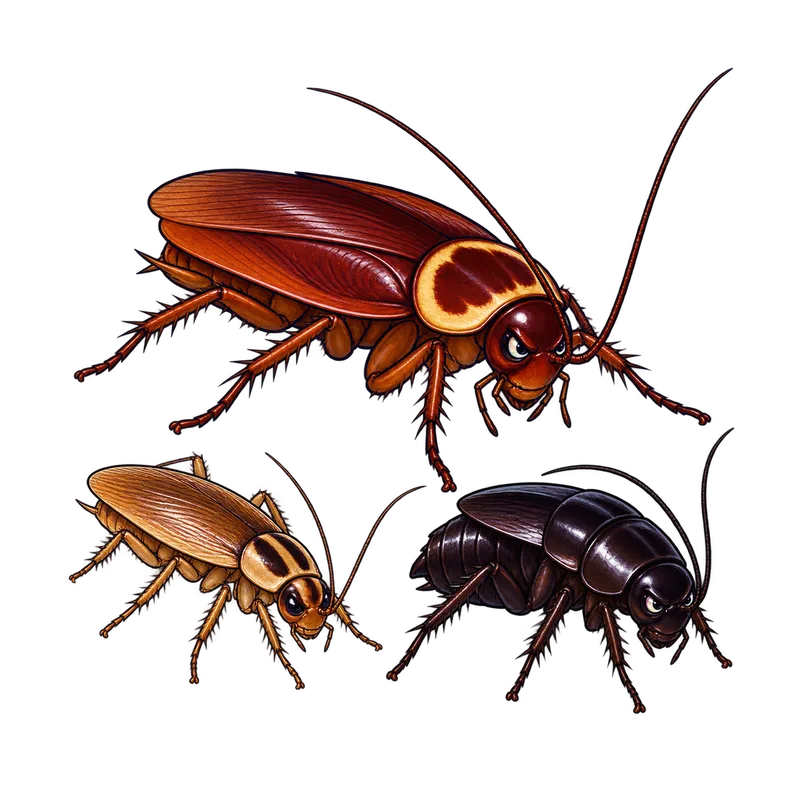
Cockroach droppings appear as dark smears, small specks, or cylindrical pellets near food sources and plumbing, while drywood termite droppings are hard, uniform pellets averaging zero point eighty-five millimeters long with six distinct sides. Telling them apart depends on examining the shape and texture of the material, along with checking whether the debris falls from tiny holes in wood.
What is actually going on
You spot a tiny pile of dark, hard grains sitting right on the windowsill or gathered on the floorboards underneath an old bookshelf, and you immediately wonder what has moved into the woodwork. It is easy to assume that any specks or droppings found indoors must point back to a standard household pest like a cockroach, or perhaps wood-chewing insects. When people talk about cockroach droppings versus termite droppings, they are usually trying to make sense of mysterious little pellets or debris appearing out of nowhere in a quiet corner of the house.
The confusion is completely natural because insects do not leave neat little name tags next to their waste. Cockroaches leave irregular fecal specks or cylindrical droppings near food sources, kitchen counters, and damp harborages as they move through urban buildings. Termites, on the other hand, handle their waste entirely differently depending on the species. Drywood termites push hard, uniform fecal pellets out of tiny exit holes into neat conical piles. Subterranean termites do not drop dry pellets at all, choosing instead to mix their liquid waste with soil to build mud shelter tubes.
To be entirely transparent about what science can and cannot tell us here, the available technical records give us exceptionally precise measurements for drywood termite pellets, but they do not provide specific microscopic dimensional comparisons for cockroach droppings. That means you cannot rely on a direct size chart to separate a cockroach speck from a tiny wood-boring fragment without looking closer at where you found it and what it actually feels like.
How to tell for sure
Finding the culprit usually comes down to looking closely at the physical shape and texture of the material under a 10x magnification lens. Drywood termite pellets are quite distinctive once you get close to them. They average about zero point eighty-five millimeters long, which is less than a 25th of an inch, and each pellet features six distinct, concavely depressed sides separated by six sharp longitudinal ridges. To the naked eye, they look like coarse brown pepper grains or tiny footballs, but under a lens they reveal that geometric six-sided symmetry.
Cockroach droppings usually lack this rigid architectural geometry. Depending on the species, cockroach waste appears as dark smears, small pepper-like specks, or ridged cylindrical droppings found near plumbing fixtures, pantries, or baseboards rather than under tiny round holes in dry wood.
If you are looking at wood damage, you might actually be dealing with beetles or ants rather than termites or roaches. True powderpost beetles produce an extremely fine, flour-like dust with zero pellets, while furniture and deathwatch beetles leave gritty frass containing tiny bun-shaped pellets. Carpenter ants do not digest wood at all, so they kick out coarse, fibrous wood shavings mixed with dead insect parts through narrow slit openings.
You can run a few simple checks to clear up the mystery. Rub a pinch of the material between your fingers. If it feels like baking flour, you likely have powderpost beetles. If it feels like gritty cornmeal, think about furniture beetles. If the material consists of hard, rolling granules that do not crush into powder, you are usually looking at drywood termite pellets. You can also clean up the pile, place a piece of dark paper beneath the spot, and check back in a few days. Fresh pellets streaming down from a round one-millimeter kickout hole confirm that an active infestation is underway, whereas finding old pellets in a dry attic or wall void can simply mean leftover evidence from an old, inactive problem.
What usually comes next
Once you have examined the particles and formed a solid idea of what insect you are dealing with, your next practical decision is to determine whether the activity is current or historic. Because drywood termite pellets can sit undisturbed in a dry wall void or attic for years without decomposing, sweeping them up and waiting to see if new ones appear is usually the most sensible first step. If the pile returns within days, you know you are dealing with an active colony inside the timber.
Do not try to guess a do-it-yourself chemical mixture or invent your own treatment plan. Pest control products are strictly governed by their product labels, and altering application methods or concentrations can create safety risks without solving the underlying pest issue. When an active wood-destroying insect or severe urban pest infestation is confirmed, managing it typically requires specialized equipment, structural inspections, or professional treatments.
When to get help
Certain situations demand professional intervention right away rather than a wait-and-see approach. If you discover structural timber that sounds hollowed out or yields easily under the pressure of a screwdriver, you are looking at a potential structural integrity hazard that requires a qualified pest management professional to evaluate. Whole-structure fumigation, specialized soil termiticide barriers, and invasive structural inspections must be performed by licensed applicators.
In some jurisdictions, discovering specific reportable timber pests carries legal notification requirements that mandate contacting local agricultural or biosecurity authorities. Furthermore, if you are dealing with heavy cockroach infestations, remember that these insects carry disease-causing pathogens and potent allergens linked to severe asthma and dermatitis. If anyone in the household experiences persistent health concerns, allergic reactions, or unexplained symptoms, consult a qualified clinician or seek guidance from medical professionals immediately.