
How do you get rid of American cockroaches?
Getting rid of American cockroaches requires a methodical approach that cuts off their entry points, starves them of water, and cleans up hidden breeding spaces. Seal foundation cracks and gaps around plumbing, install drain check valves, and use slow-acting gel baits rather than bug bombs. Bringing in a licensed pest management company is necessary if home treatments fail after two or three weeks.
What is actually going on
Imagine walking down to the basement on a warm Tuesday evening to fetch a roll of paper towels, flicking on the light, and watching a reddish-brown insect the size of your thumb bolt across the concrete floor toward the drain. That is usually an American cockroach. Seeing one indoors tends to ruin your evening because these creatures are the largest house-infesting roaches around, measuring between 34 to 54 mm long. Unlike their smaller cousins who live entirely inside kitchen cabinets, American cockroaches often treat your home as a vacation rental while keeping their main residence in municipal sewer lines, damp utility tunnels, or dark, humid boiler rooms. They migrate upward through floor drains, foundation gaps, and plumbing chases, especially when heavy rain floods their underground haunts or summer heat drives them searching for water. Because a single female can live up to 440 days and hide her bean-shaped egg cases in places you cannot reach, a random spray from the hardware store rarely solves the issue. Getting rid of them requires a methodical approach that cuts off their entry points, starves them of water, and cleans up the hidden spaces where they breed.
How to tell for sure
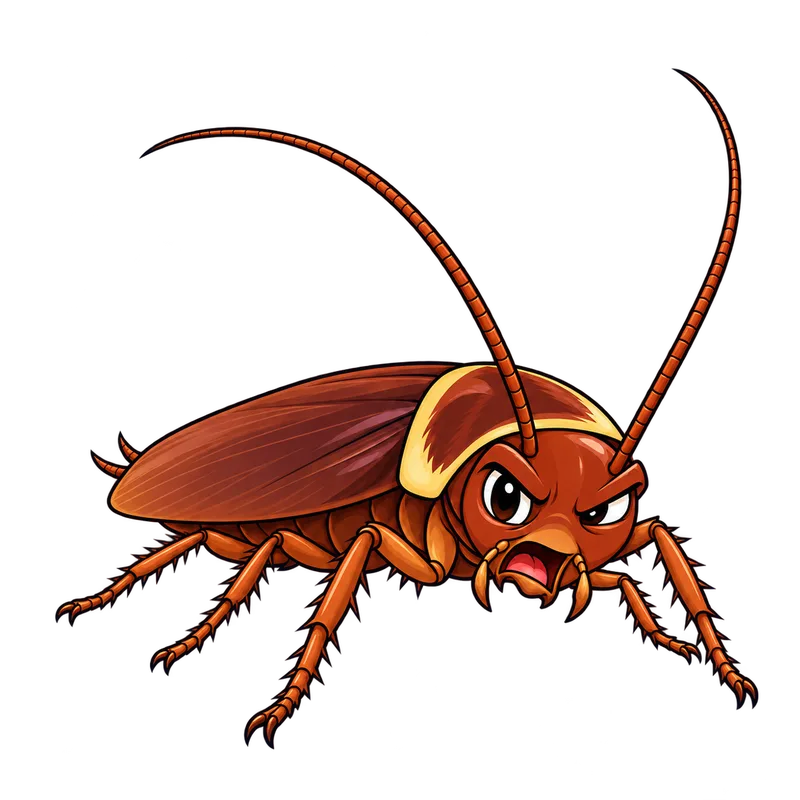
Before you start buying supplies, make sure you are actually dealing with an American cockroach and not an interloper like an oriental cockroach or a smokybrown roach. Adult American cockroaches are reddish-brown with a distinct pale yellow or tan margin surrounding the shield-like plate right behind the head, and their fully developed wings cover their entire bodies. Their nymphs are wingless, uniform grayish-brown to shiny reddish-brown, and grow larger through a series of molts without ever changing their basic shape. If you find an ootheca, which is the technical name for the dark brown or black bean-shaped egg capsule measuring about 3/8 inch long, you are usually looking at a package containing about 12 to 16 eggs. The females usually glue these cases into protected cracks within twenty-four to forty-eight hours of forming them, rather than carrying them around until they hatch. You can usually confirm their travel corridors by placing sticky glue traps flat against wall-floor junctions or near basement floor drains. If you spot similar-looking large brown roaches near an exterior door, they can sometimes be lookalikes such as the Australian cockroach, which features a bright yellow streak at the base of its front wings.
What usually comes next
Once you have pinned down the culprit, your best bet is to focus on blocking entry and cleaning up rather than grabbing a spray can. Start by sealing up the hidden highways they use to get inside. Put silicone caulk or expanding foam into cracks in your foundation walls, and stuff deep gaps around plumbing pipes with copper mesh or stainless steel wool before sealing them tight. Check that every outside door has a solid sweep installed, and fit fine-mesh screens or check valves over your basement floor drains so they cannot climb straight up out of the municipal sewer lines. Keep in mind that total-release foggers, which people call bug bombs, are a complete waste of time and money for this job. They never reach deep wall voids or drain lines, and their chemical propellants just chase the roaches further into your walls while coating your counters in toxic residue. Instead, grab a vacuum cleaner fitted with a high-efficiency particulate air filter to suck up live roaches, shed skins, and egg cases without blowing allergens around the room. Follow that up by placing tiny, pea-sized dabs of slow-acting gel bait or tamper-resistant bait stations inside cabinet corners and utility chases where hungry roaches will find them and carry the poison back to the nest.
When to get help
There are moments when standard DIY efforts hit a brick wall, and knowing when to quit saves you weeks of aggravation. If your house shares walls with other units in a multi-family apartment building, treating your own kitchen will not stop roaches that are freely moving through shared plumbing chases and electrical conduits from next door. Likewise, if the infestation starts deep inside a municipal sewer main, your home treatments will only buy you temporary peace until the public works department handles the wider utility network. You should also bring in a licensed pest management company if your personal baiting and sealing efforts fail to reduce roach sightings within two to three weeks. On the health front, remember that cockroach droppings, saliva, and cast skins contain heavy proteins that routinely trigger chronic allergic rhinitis and severe childhood asthma. If anyone in your household suffers from severe allergic reactions, breathing difficulties, acute asthma attacks, or signs of foodborne illness after potential pathogen exposure, get them to a qualified medical clinician or urgent care facility right away.