
Do German cockroaches fly?
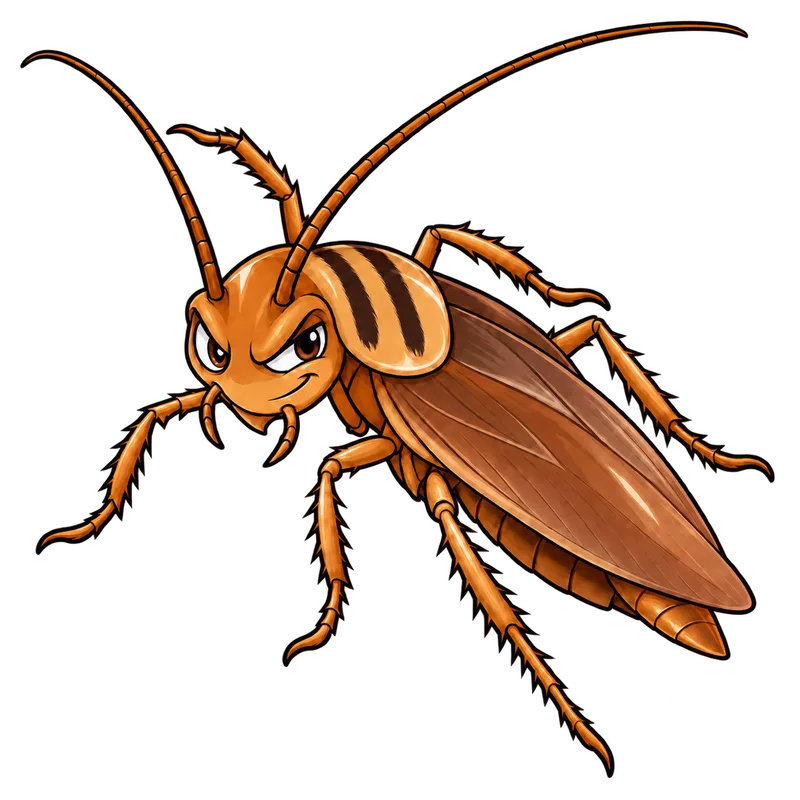
No, adult German cockroaches cannot fly. Even though they have fully developed wings, they lack the muscle power and neurological coordination needed to get airborne. If you see a small roach flying toward a light, it is usually an outdoor Asian cockroach or a male Brown-banded cockroach instead.
What is actually going on
Picture walking into the kitchen late at night, flicking on the light, and watching a small, light brown insect dart across the counter like it is running late for an appointment. It moves with astonishing speed, vanishing into the tiny gap beneath the refrigerator before you can grab a paper towel. Naturally, you might wonder if this unwelcome visitor is about to take to the air and land on your shoulder. The short answer is no. Adult German cockroaches possess fully developed wings, but they are functionally flightless and cannot fly under any operational conditions.
If they have wings, why cannot they use them? Think of an adult German cockroach as an airplane with a complete fuselage and wings, but no engine. While they look equipped for flight on paper, they lack the neurological coordination and the necessary flight muscle power to get airborne. Evolution took a different route with these insects. Because they spend their lives indoors, squeezed into the cozy motor voids of refrigerators, behind cabinet hinges, and inside warm wall crevices, they never needed to fly. They evolved to be elite indoor sprinters instead of aviators, relying on spiny legs and rapid running to escape danger.
So why do people sometimes claim they saw a flying German cockroach? That usually comes down to a case of mistaken identity. Several other species look remarkably similar or share living spaces with them, and some of those lookalikes are strong fliers. When a small roach flutters toward a porch light or a television screen, it is almost never a German cockroach. It is usually an outdoor Asian cockroach or a male Brown-banded cockroach.
How to tell for sure
Relying on a quick glance while panicking in the dark is a reliable way to misidentify a pest. To know for certain what you are dealing with, look for a few specific physical cues. Adult German cockroaches usually measure between one-half and five-eighths of an inch long. Their bodies are a light brown or tan color, and the dead giveaway is the presence of two dark, parallel longitudinal stripes running down the shield right behind the head. Nymphs, which are the immature stages, are smaller, darker, and completely wingless, though they share those same two dark stripes on the back.
Behavior offers another clear indicator. If the insect is scurrying horizontally across your kitchen counters, darting behind the toaster, or hiding in pantry cracks, it fits the profile of a German cockroach. If the insect actively flies toward overhead room lights or flutters across the room, it is usually an Asian cockroach that wandered in from outdoor mulch or pine straw. In homes kept very warm, a flying roach near the ceiling is usually a male Brown-banded cockroach, which prefers dry, elevated spots rather than damp kitchen sinks.
Female German cockroaches also carry a distinctive identifier. Unlike other roach species that drop or glue their egg cases out of sight, a female German roach carries her light tan egg capsule attached to the rear of her abdomen like a sturdy backpack. She keeps it there until just a day or two before the eggs hatch. Spotting that egg case confirms you are dealing with an active breeding population that requires immediate attention.
What usually comes next
Tackling these pests at home requires a steady hand and a bit of detective work instead of blind panic. Grabbing a aerosol fogger is a very common reaction, but it tends to make things worse. Setting off one of those canisters is a bit like setting off an air horn in a crowded room, because the chemical mist fails to reach the dark crevices where the insects hide. Instead, it just irritates them and scatters the population deeper into your walls, bedrooms, and even through shared apartment vents.
Your best bet is starting with a thorough check of warm, damp spaces where food and moisture are easy to find. Look under the kitchen sink, around leaky pipes, and right beneath the warm motor housing of your refrigerator. Taking away what they love makes a massive difference. Fix plumbing drips, wipe down the counters every single night, keep pantry goods locked up in thick plastic containers, and vacuum up crumbs religiously. Using a vacuum with a fine particle filter also helps suck up live insects, shed skins, and egg cases safely.
When you decide to use chemical treatments, skip the sprays and opt for targeted gel baits or enclosed bait stations placed directly inside the cracks where the pests live. Always read and follow the product label instructions word for word. That label is not just a polite suggestion, and using any pesticide in a way that contradicts its written directions violates the law.
When to get help
Some situations simply grow too large for store bought remedies and call for professional hands. If you share walls in an apartment building, a townhouse, or a duplex, treating just your own kitchen will rarely solve the underlying issue. The insects easily travel through shared utility pipes and wall voids, meaning a coordinated building wide treatment is usually the only way to clear them out.
Spotting them in the daylight is another big warning sign. These bugs are naturally nocturnal, so seeing them stroll across a counter in the middle of the afternoon usually means the population has completely outgrown its hiding spots. If an infestation sticks around even after you have cleaned everything and applied proper baits, a licensed pest control operator has access to specialized growth regulators and dusts that can break the breeding cycle.
When health worries enter the picture, reaching out to medical professionals is the safest route. German cockroach droppings, saliva, and cast skins carry strong proteins that frequently trigger stubborn allergies and severe childhood asthma, especially in little ones. They also carry unwanted bacteria like Salmonella on their bodies. Anyone dealing with sudden breathing trouble, ongoing allergic reactions, or skin flare ups should contact a doctor, an urgent care clinic, or a poison control center immediately.